Color chart ‘Qu 1’ — History & Facts
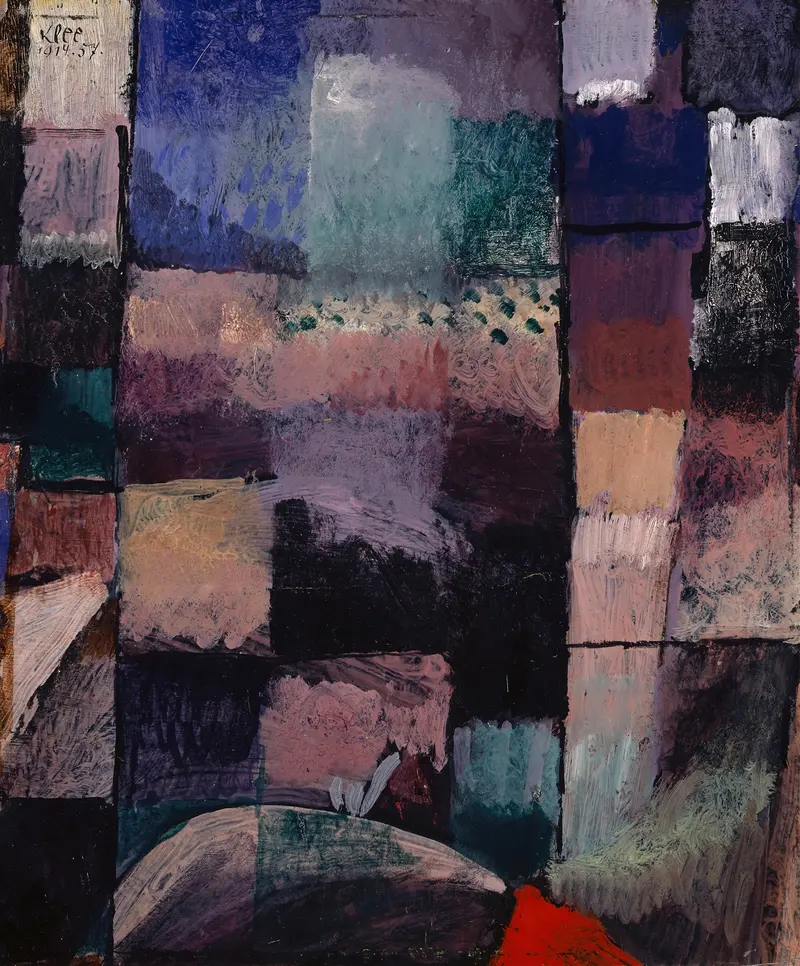
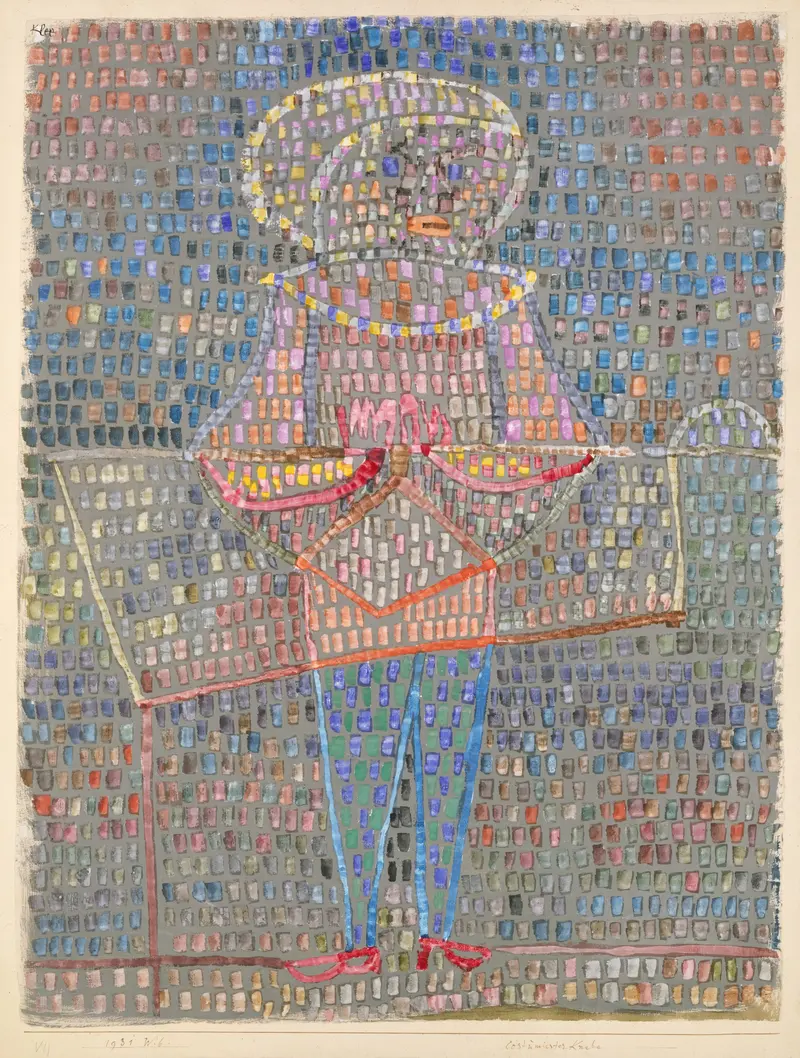
In Color chart ‘Qu 1’, Paul Klee presents a vibrant array of colors arranged in a grid-like pattern. The painting features a variety of hues, from deep blues to bright yellows, creating a sense of rhythm and harmony. Shapes are abstract, with no distinct figures or landscapes, inviting viewers to focus on color interaction.
This work exemplifies Klee's exploration of color theory and abstraction. The painting is characterized by its precise geometric arrangement of colors, showcasing Klee's interest in color relationships. Each square of color is carefully chosen to create a visual dialogue, emphasizing contrasts and complements. The medium is likely oil on canvas, typical of Klee's work during this period.
The dimensions are approximately 40 x 30 cm, making it a compact yet impactful piece. Paul Klee was a Swiss artist associated with the Bauhaus movement, known for his unique approach to color and form. Color chart ‘Qu 1’ reflects his fascination with color theory, as he believed that color could convey emotions and ideas. An interesting fact about this work is that it serves as a visual representation of Klee's theories on color, making it not just an artwork but also a study in color dynamics.