
Como and Lake Como — History & Facts
A hush seems to settle over the town of Como in this view by Jean-Baptiste-Camille Corot, painted in 1834. The first thing that catches the eye is the way the domed church rises from the cluster of rooftops, its reflection just visible in the still water below. The gentle, almost smoky palette draws you in, guiding your gaze from the shadowed foreground, over the leafy bank and placid lake, to the sunlit facades and the dark, sheltering hills beyond.
Corot’s brushwork is soft and suggestive, as if the scene is half-remembered, the details melting into the atmosphere—an effect that makes the viewer linger, searching for the quiet life behind each window and under each rooftop. This painting belongs to a period when artists, especially those traveling from France, were captivated by the landscapes of Italy. In the early nineteenth century, the lure of the Italian lakes drew painters eager to capture the interplay of light and land, the harmony of nature and architecture. Works like this, whether painted for private collectors or as studies for larger compositions, were part of a growing fascination with the picturesque and the poetic in landscape.
The date of 1834 places this piece early in Corot’s career, a time when he was absorbing the lessons of the Italian countryside and experimenting with the atmospheric effects that would later define his style. History has kept few traces of this specific work, now documented in the Yorck Project’s great digital collection, but its quiet mood and measured light invite you to look again and imagine the world as Corot saw it.
More Artworks by Jean-Baptiste-Camille Corot
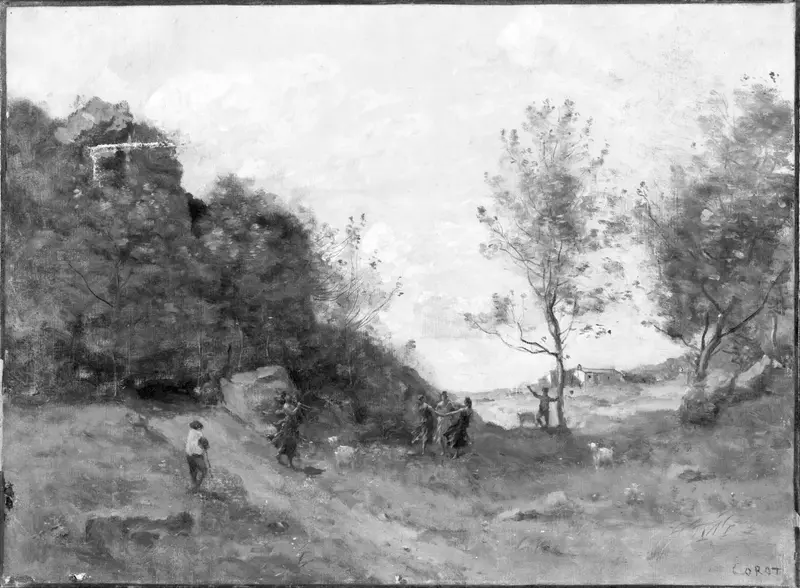
Goatherd in a Landscape
Jean-Baptiste-Camille Corot
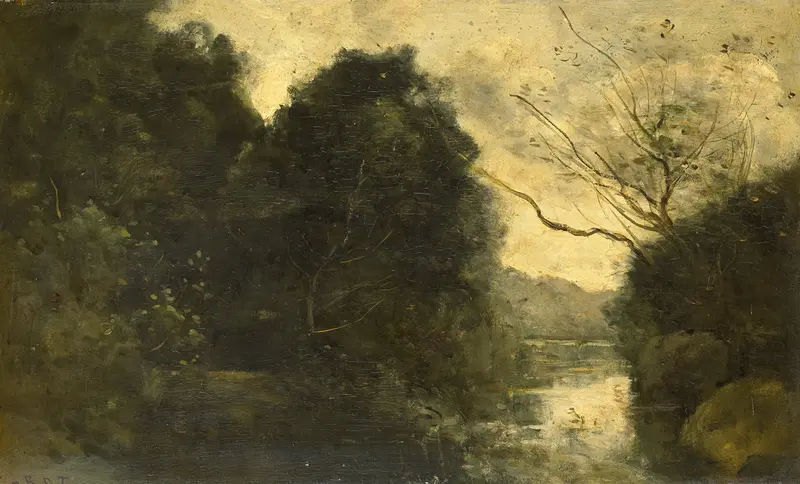
Pond in the Woods
Jean-Baptiste-Camille Corot
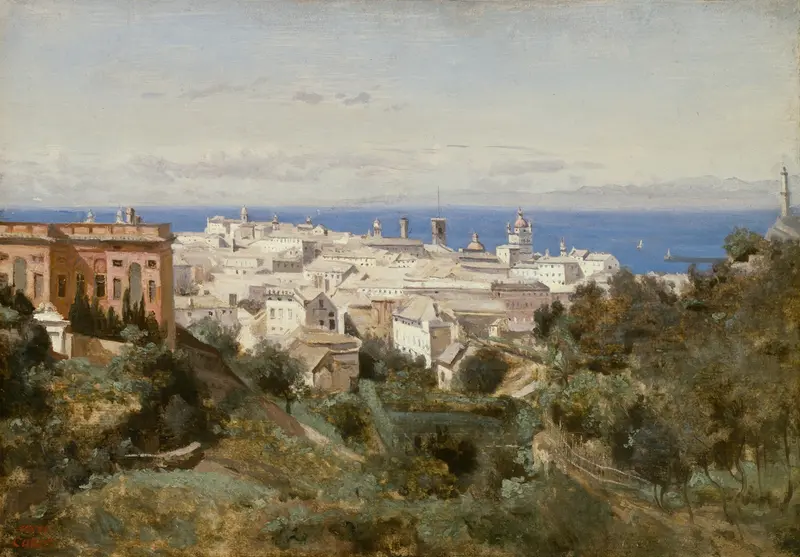
View of Genoa
Jean-Baptiste-Camille Corot

La solitude. Souvenir de Vigen (Limousin)
Jean-Baptiste-Camille Corot

Landscape with Pollard Willows
Jean-Baptiste-Camille Corot
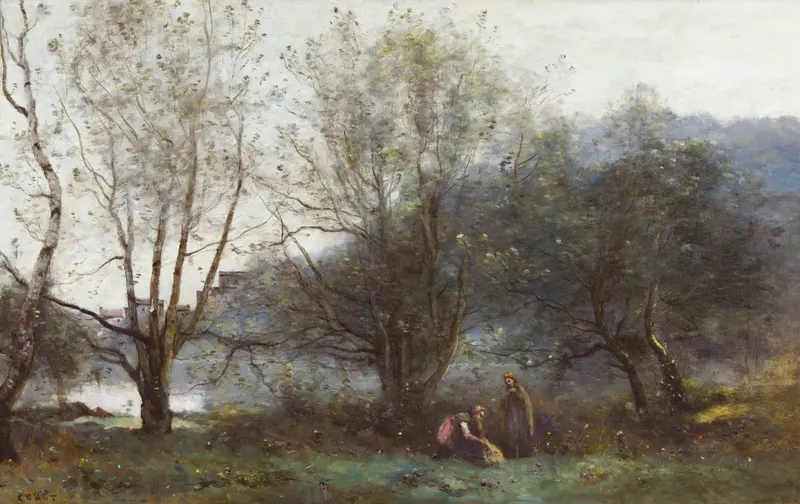
Les Étangs De Ville D’avray
Jean-Baptiste-Camille Corot
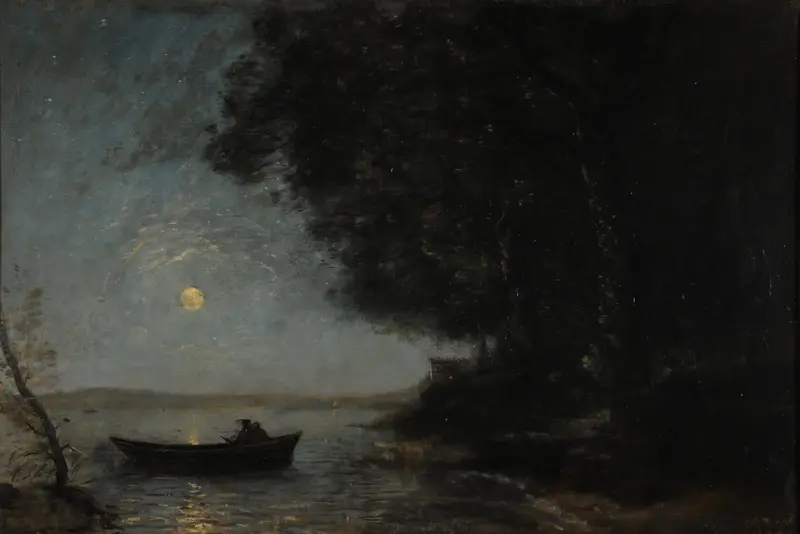
Le lac ; effet de nuit
Jean-Baptiste-Camille Corot
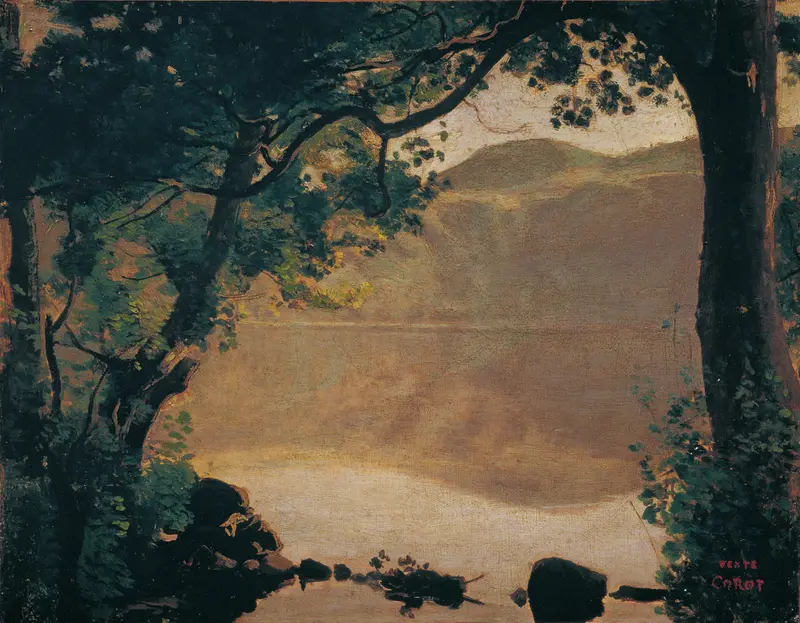
Der Nemisee
Jean-Baptiste-Camille Corot

Les Maisons Cabassud À Ville D’avray
Jean-Baptiste-Camille Corot
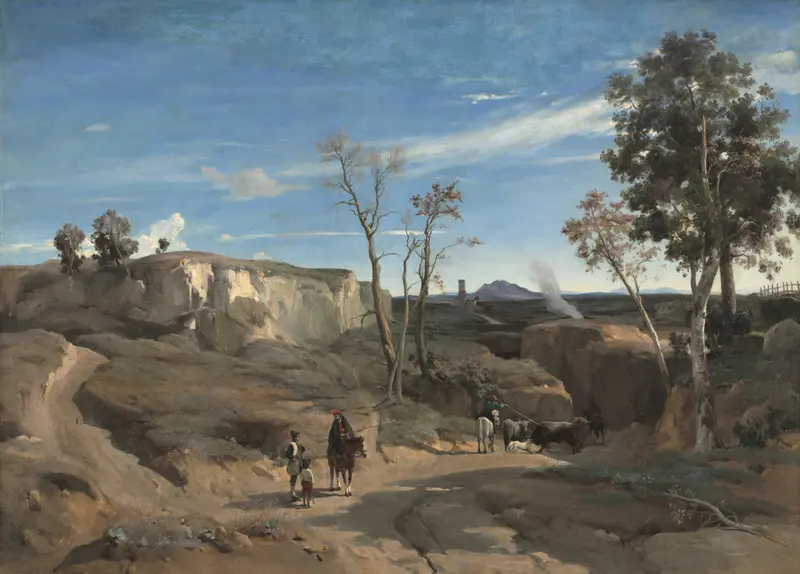
La Cervara, the Roman Campagna
Jean-Baptiste-Camille Corot
More Landscape Art

The Starry Night
Vincent van Gogh

View of Delft
Johannes Vermeer

Water Lilies
Claude Monet

The Grand Canal, Venice, looking north-west from the Ca' Corner to the Ca' Contarini degli Scrigni, with the campanile of Santa Maria della Carità
Canaletto

Windsor Castle
Canaletto

The Grand Canal looking North-East from the Palazzo Dolfin-Manin to the Rialto Bridge
Canaletto