
Connecticut Hillside — History & Facts
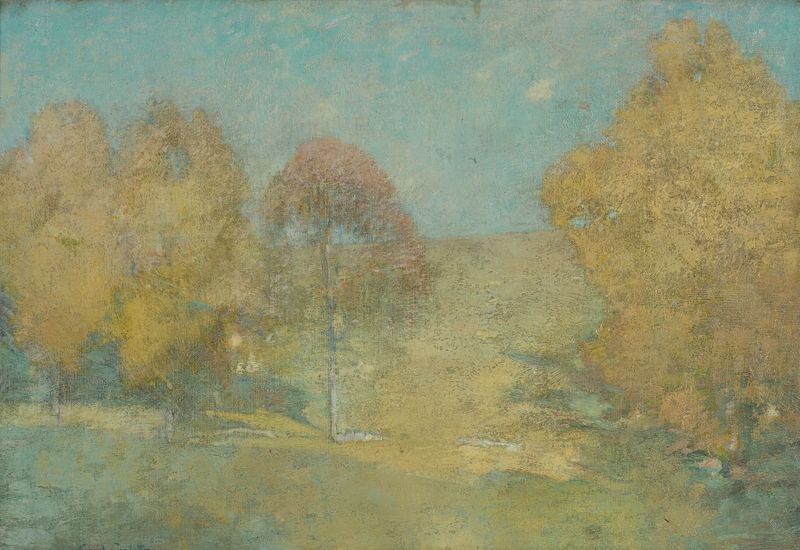
In Connecticut Hillside, fear lingers beneath the tranquil surface, whispering secrets of nature’s unyielding power. Look to the foreground where a gentle slope rises, cloaked in an array of greens, fading into shadows as the hillside ascends. The soft, muted palette doesn't shy away from contrast; it creates a dichotomy of warmth and chill, inviting yet unsettling. The delicate brushwork reveals the intricacies of foliage, while clouds hover ominously overhead, hinting at an impending storm.
Here, light spills across the canvas, guiding the viewer’s gaze through the undulating landscape. Yet, it is in the details where deeper truths emerge. The starkness of the bare trees suggests an eerie vulnerability, juxtaposed against the lushness of the underbrush; their skeletal forms seem to reach for solace in the sky, reminding us of fragility amidst nature's bounty. A hidden tension arises from the darker patches that threaten to engulf the serene scene, evoking the unsettling feeling that beauty can mask an underlying peril.
This is a landscape that speaks not just of peace, but of the fear that lurks in the heart of nature, waiting to unveil itself. In 1920, Emil Carlsen worked in a world that was grappling with the aftermath of war and the complexities of modern life. Settling in Connecticut, he drew inspiration from his surroundings, translating the lush hillsides into a quiet yet powerful visual language. This was a time when artists were moving toward introspection, reflecting on the balance of beauty and fear inherent in the world around them.
More Artworks by Emil Carlsen
Browse all →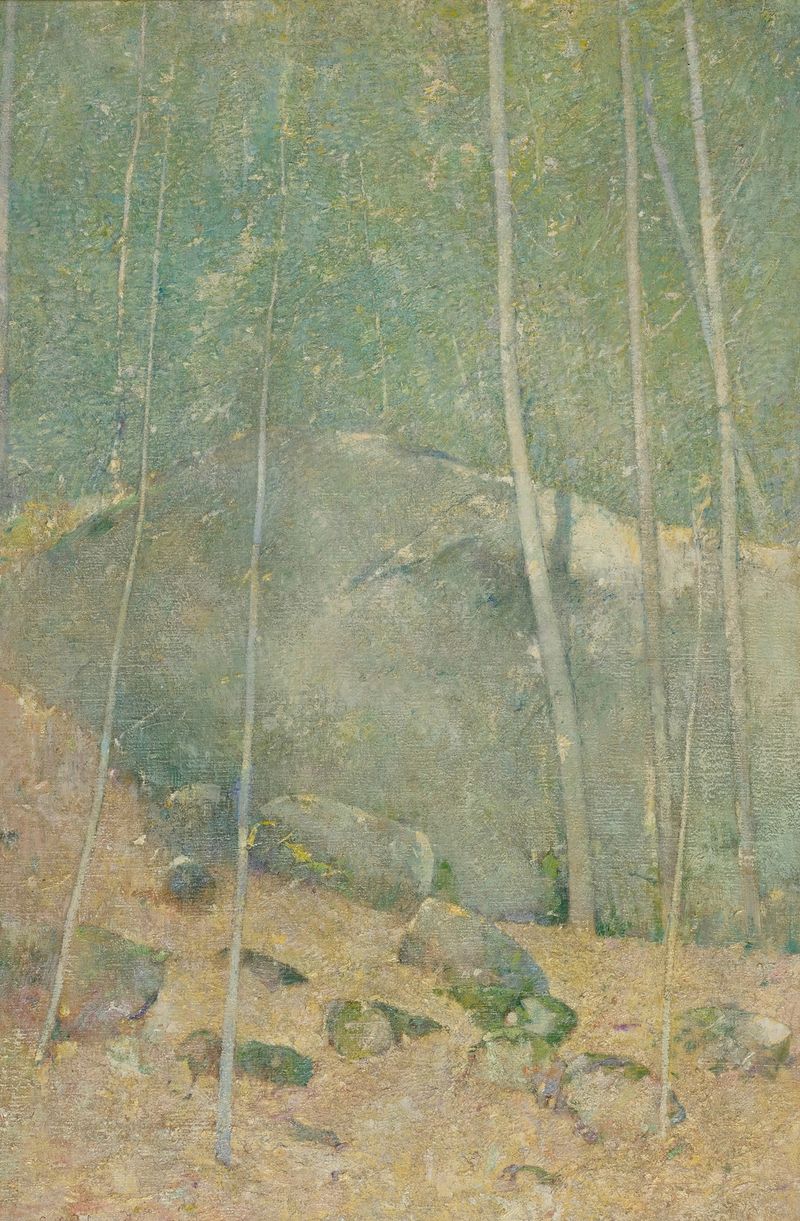
In The Maine Woods
Emil Carlsen
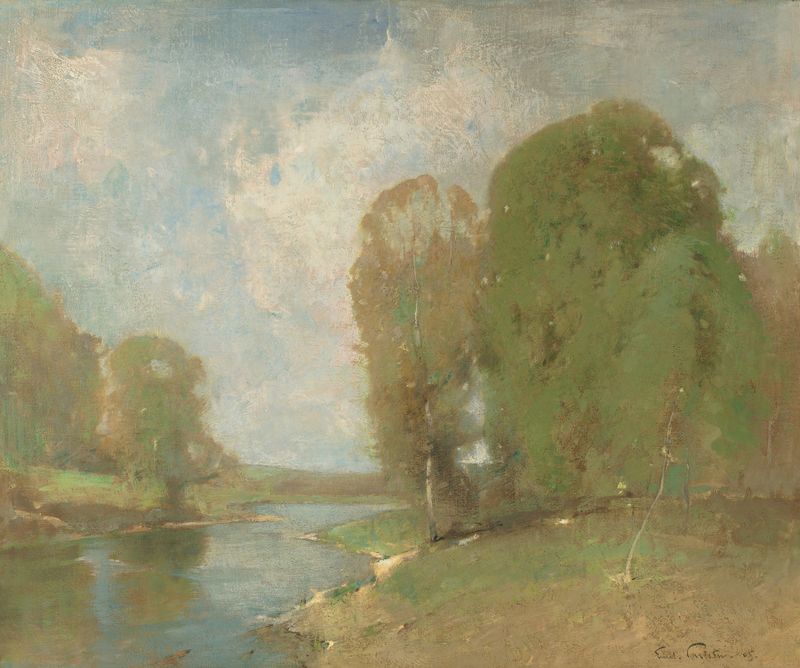
Meadow Brook
Emil Carlsen

Bald Head Cliff, York, Maine
Emil Carlsen
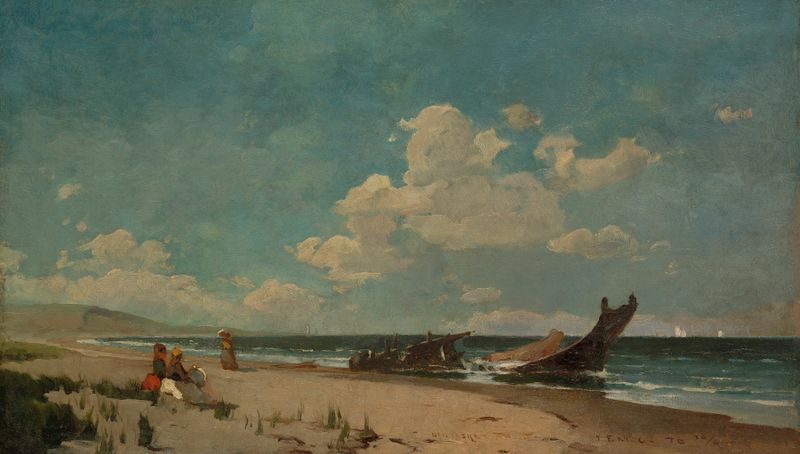
Nantasket Beach
Emil Carlsen

Nantasket Beach
Emil Carlsen

Fishing Boat on Shore
Emil Carlsen
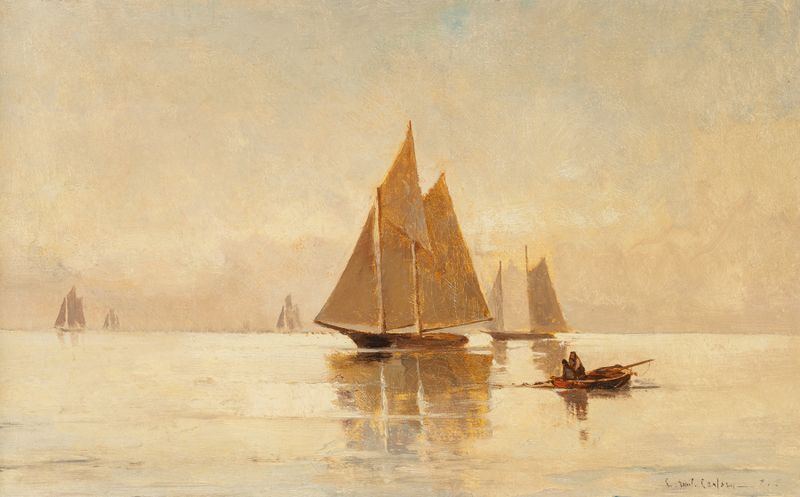
Sailboats in the Evening
Emil Carlsen

The South Strand
Emil Carlsen

In the Pine Woods
Emil Carlsen
Autumn Morning-Fading Moon
Emil Carlsen





