
Cour de ferme, 10 rue de l’Epée de Bois — History & Facts
This sentiment lingers in the air, a whisper of nostalgia that beckons the viewer to explore the depths of memory and decay captured on canvas. Within the stillness of Cour de ferme, 10 rue de l’Epée de Bois, one finds a poignant meditation on the passage of time and its silent erasure of life’s vibrancy. Look to the center of the composition, where the rustic courtyard unfolds, inviting you into its weathered embrace. The earthy tones of ochres and umbers dominate, echoing the warmth of old stones worn smooth by countless footsteps.
Shadows stretch languidly across the cobblestones, hinting at the cycle of days that have come and gone, while the light filters softly through the overhanging eaves, casting a gentle glow that contrasts with the desolation that surrounds it. Each brushstroke feels deliberate, a testament to the artist's keen eye for detail and texture, pulling the viewer deeper into this moment frozen in time. Hidden within the quiet atmosphere lies a profound commentary on nostalgia and transience. The peeling paint on the walls tells stories of a once-thriving household, now resigned to memories and fading echoes.
A solitary chair, positioned almost defiantly in the foreground, invites contemplation about solitude and the remnants of human presence, while a cluster of potted plants, struggling for life, symbolizes resilience amidst decay. These elements create a stark yet tender reminder of the impermanence that shapes our lives and spaces. Fédor Hoffbauer painted this piece during a tumultuous period between 1915 and 1945, a time marked by upheaval across Europe. Living in Paris, he was influenced both by the changing world around him and the evolution of artistic movements, from Impressionism to Surrealism.
As he sought to capture the essence of everyday life through his art, Hoffbauer embraced a sense of history that resonates deeply within this work, reflecting the resilience and fragility of existence itself.
More Artworks by Fédor Hoffbauer
Browse all →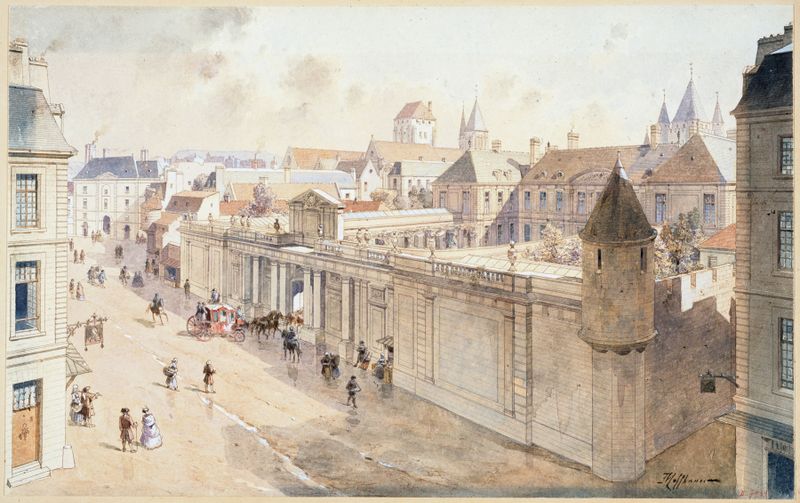
Le palais du Grand Prieur au Temple, en 1770
Fédor Hoffbauer
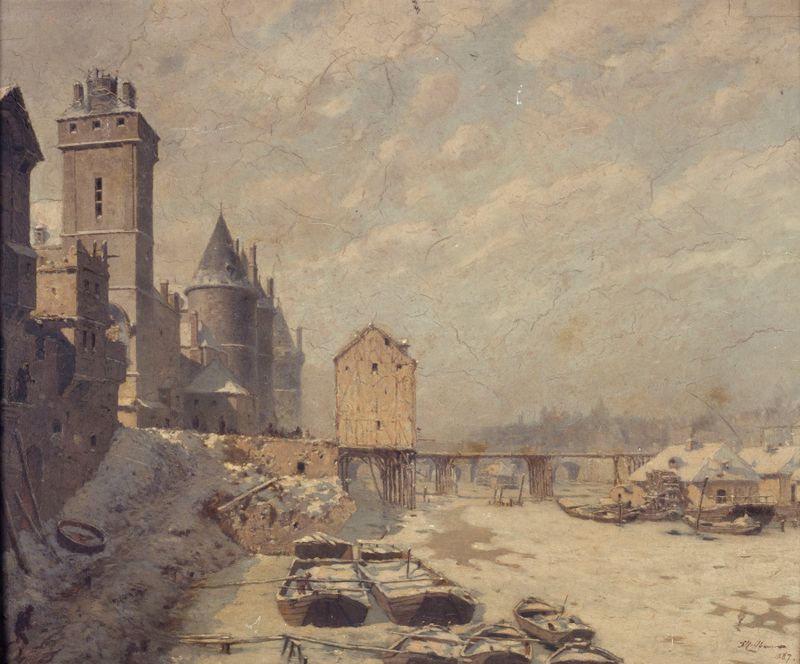
La tour de l’Horloge, la Conciergerie et le pont au Change, en 1621
Fédor Hoffbauer

Banquet des officiers de la marine Russe, dans la salle des fêtes à l’Hôtel de Ville. Fêtes Franco-Russes à Paris
Fédor Hoffbauer

Le Grand Châtelet et le pont de Bois, 1621-1645
Fédor Hoffbauer
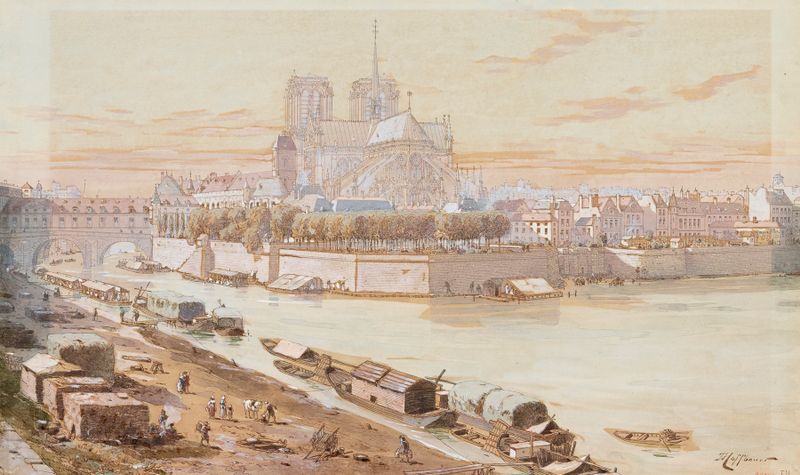
Notre-Dame et l’Evêché en 1750
Fédor Hoffbauer

Vue panoramique de Paris en 1588, depuis les toits du Louvre, avec le Pont-Neuf en construction
Fédor Hoffbauer
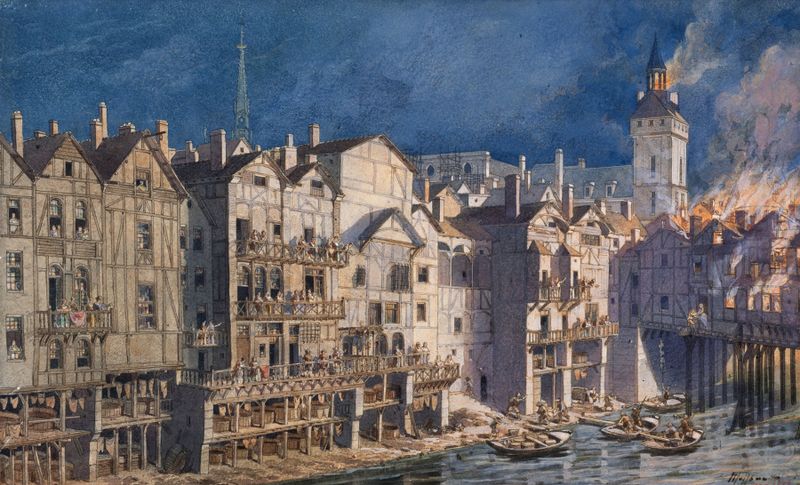
La Cité entre le pont Notre Dame et le pont au Change en 1621
Fédor Hoffbauer

L’Hôtel de Ville et le pont d’Arcole en 1842
Fédor Hoffbauer

Le Cimetière des Innocents en 1750
Fédor Hoffbauer
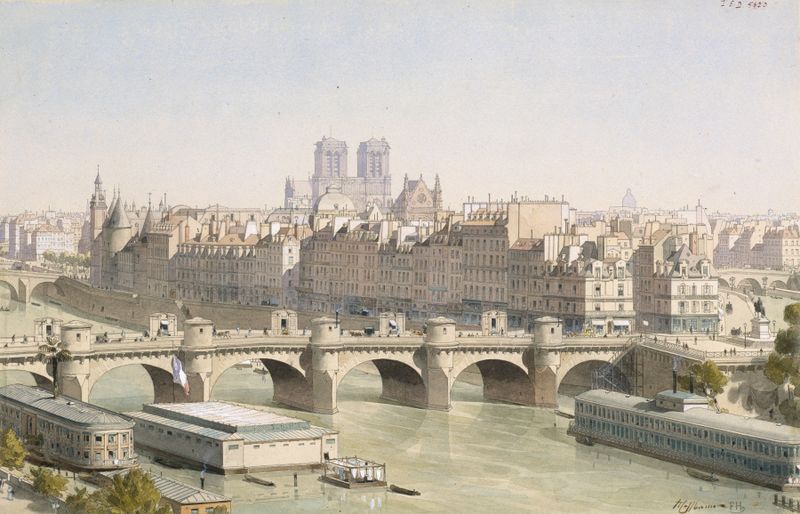
Vue de l’île de la Cité et le pont-Neuf avec ses boutique, vers 1840
Fédor Hoffbauer





