
Cowshed on the Island of Saltholm — History & Facts
As the hands of history turn, fleeting moments of life crave permanence, tethered to the canvas through colors and brushstrokes. Look to the center of the composition, where a humble cowshed stands stoically against a tranquil landscape. The muted greens and browns envelop it, while soft strokes evoke a sense of nostalgia. Notice how the warm sunlight kisses the roof, contrasting with the shadows that gather beneath, suggesting the passage of time and the inevitability of decay.
Each stroke seems to breathe life into the scene, drawing you into the serene yet melancholic atmosphere. Within the simplicity of this pastoral setting lies a profound commentary on mortality. The cowshed, a symbol of rural life, stands as a reminder of the cycles of existence — the thriving life of the fields juxtaposed against the stillness of time. The surrounding landscape, while vibrant, hints at transience; the fleeting beauty of nature colliding with the permanence of the structure.
Here, Philipsen captures not just a moment, but the essence of life's ephemeral nature and the quiet acceptance of its passage. In 1890, Theodor Philipsen painted this work while living in Denmark, a time when the art world was embracing Impressionism and its focus on light and atmosphere. The artist, inspired by the natural beauty of the Danish countryside, sought to capture its essence through a lens of nostalgia and reflection. This period marked a significant shift in his style, blending realism with impressionistic techniques, ultimately laying the groundwork for his future explorations of light and landscape.
More Artworks by Theodor Philipsen
Browse all →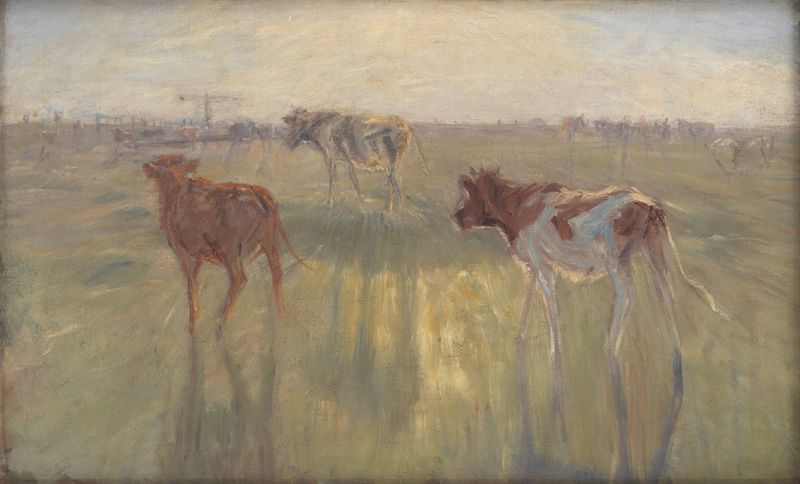
Cattle Seen against the Sun on the Island of Saltholm
Theodor Philipsen

Køer og gæs ved Nyværk på Saltholm (udkast til dekoration af punchebolle)
Theodor Philipsen

Long Shadows. Cattle on the Island of Saltholm
Theodor Philipsen

Camels in a Street in Tunisia
Theodor Philipsen

Late Autumn Day in the Jægersborg Deer Park, North of Copenhagen
Theodor Philipsen
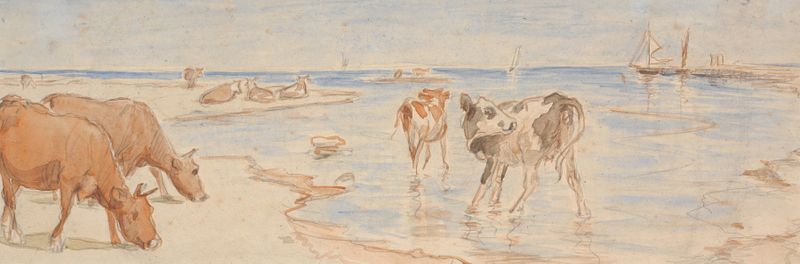
Køer og kalve nær indskibningsstedet på Saltholm (udkast til dekoration af punchebolle)
Theodor Philipsen

Evening Landscape
Theodor Philipsen

Malkepladsen ved Dyrehavegård
Theodor Philipsen

A River near Meilgård Manor, Jutland
Theodor Philipsen

Isola del Liri, Italy. Overcast Day
Theodor Philipsen





