
Camels in a Street in Tunisia — History & Facts
Shadows weave through the vibrant streets, each one whispering stories of the past, capturing a moment suspended in time. In Camels in a Street in Tunisia, the interplay of light and shadow invites us to contemplate the nuanced layers of life that exist within its frame. Look to the left, where the warm hues of the market buildings bathe the scene in a golden light. The camels, with their gentle forms and timeless grace, stand at the center, their silhouettes caught in a soft embrace of shadow, creating a contrast that anchors the composition.
Notice how the artist skillfully uses brushwork to delineate the textures of the camels' fur and the cobblestones beneath them, revealing a world full of tactile richness. The surrounding figures, slightly blurred, hint at the bustling life that teems beyond this tranquil moment. The contrast between light and shadow serves as a metaphor for the dualities of experience — the visible and the hidden, the known and the unknown. Each figure in the painting seems to navigate their own path, evoking feelings of solitude and connection in a shared space.
The shadows extend beyond mere absence of light; they symbolize history, the weight of cultural significance, and the stories interwoven in the fabric of daily life—a reminder of the unseen lives that pulse beneath the surface. In 1882, Theodor Philipsen was immersed in the vibrant artistic milieu of Europe, where he sought to capture the essence of everyday life in his travels. Painted in Tunisia, this work reflects his fascination with the locale's unique atmosphere, a juxtaposition of East and West. At this time, Philipsen was exploring the subtleties of light in his pieces, influenced by the Impressionist movement, which was reshaping art across the continent.
More Artworks by Theodor Philipsen
Browse all →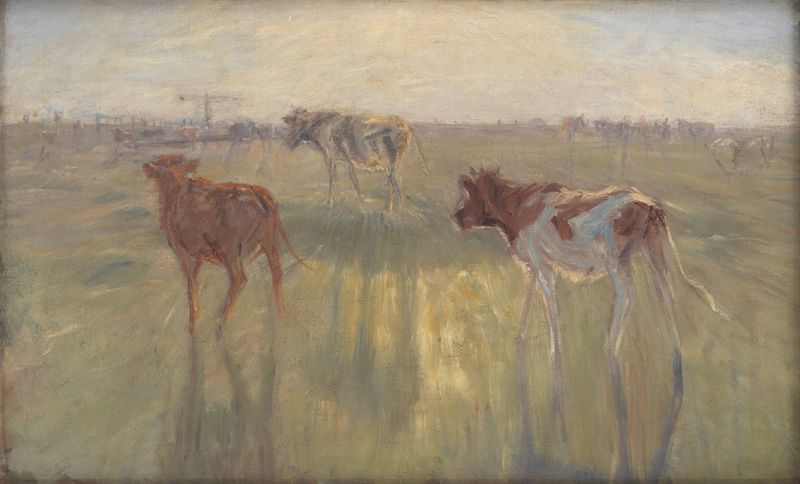
Cattle Seen against the Sun on the Island of Saltholm
Theodor Philipsen

Køer og gæs ved Nyværk på Saltholm (udkast til dekoration af punchebolle)
Theodor Philipsen

Long Shadows. Cattle on the Island of Saltholm
Theodor Philipsen

Cowshed on the Island of Saltholm
Theodor Philipsen

Late Autumn Day in the Jægersborg Deer Park, North of Copenhagen
Theodor Philipsen
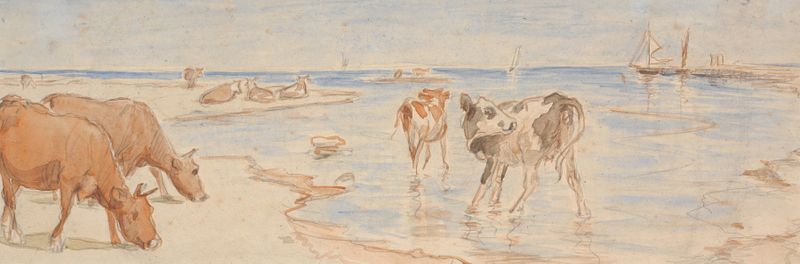
Køer og kalve nær indskibningsstedet på Saltholm (udkast til dekoration af punchebolle)
Theodor Philipsen

Evening Landscape
Theodor Philipsen

Malkepladsen ved Dyrehavegård
Theodor Philipsen

A River near Meilgård Manor, Jutland
Theodor Philipsen

Isola del Liri, Italy. Overcast Day
Theodor Philipsen





