
Køer og gæs ved Nyværk på Saltholm (udkast til dekoration af punchebolle) — History & Facts
In the stillness of a pastoral landscape, the essence of void speaks volumes. A fleeting moment captured in time, where nature's whispers intertwine with the weight of existence, begging us to listen. Look to the foreground where a few cows graze leisurely, their gentle forms bathed in the soft warmth of sunlight filtering through the clouds. Notice how the light plays off their backs, enhancing the rich hues of brown and cream.
To the left, a group of geese is poised by the water's edge, their reflections shimmering in the tranquil surface. The composition balances these elements harmoniously, guiding the viewer's gaze across the expanse of the scene, from the lush greenery to the expansive sky above, painted in soothing blues and soft whites. Within this serene tableau lies a deeper tension—the juxtaposition of stillness and the pulse of life. The cows and geese seem content yet imbued with a sense of yearning, hinting at the longing for a more profound connection with the world around them.
The empty spaces between the animals speak to the void of isolation, contrasting with their collective presence and creating an emotional interplay that resonates with the viewer, urging contemplation on the nature of existence. In 1893, Køer og gæs ved Nyværk på Saltholm emerged from the brush of Theodor Philipsen during a time of artistic exploration in Denmark. Immersed in the natural world, he sought to capture its unadorned beauty, reflecting the harmony and tranquility of rural life. This period marked a shift towards impressionistic techniques that celebrated the subtleties of light and color, positioning Philipsen as a key figure in the evolving art scene.
More Artworks by Theodor Philipsen
Browse all →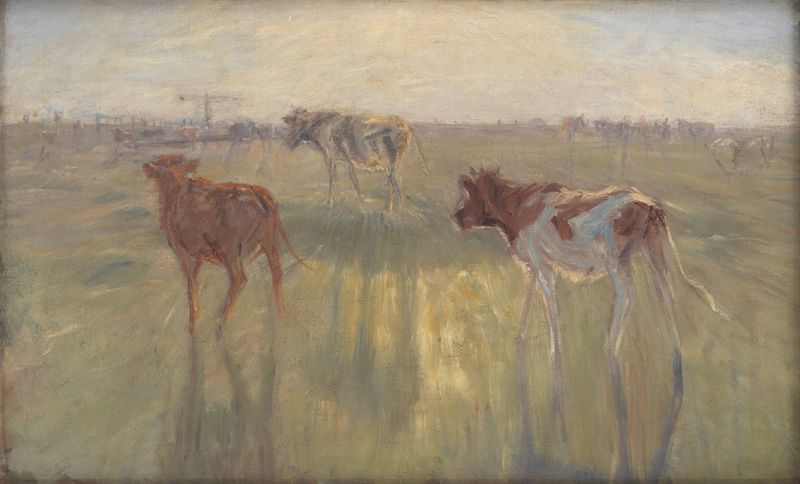
Cattle Seen against the Sun on the Island of Saltholm
Theodor Philipsen

Long Shadows. Cattle on the Island of Saltholm
Theodor Philipsen

Camels in a Street in Tunisia
Theodor Philipsen

Cowshed on the Island of Saltholm
Theodor Philipsen

Late Autumn Day in the Jægersborg Deer Park, North of Copenhagen
Theodor Philipsen
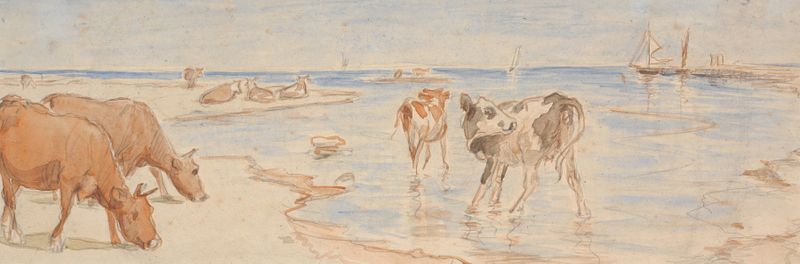
Køer og kalve nær indskibningsstedet på Saltholm (udkast til dekoration af punchebolle)
Theodor Philipsen

Evening Landscape
Theodor Philipsen

Malkepladsen ved Dyrehavegård
Theodor Philipsen

A River near Meilgård Manor, Jutland
Theodor Philipsen

Isola del Liri, Italy. Overcast Day
Theodor Philipsen





