
Crimea. Bridge in Koreiz — History & Facts
The eye is drawn first to the bridge, a sturdy arch of pale stone that seems to glow in the filtered sunlight, half-claimed by the wild greenery of Koreiz. Brushstrokes tumble across the canvas in loose, confident sweeps, guiding us from the sunlit parapet down through the tangled foliage and into the cool shadow beneath the arch. The artist’s choice of palette—warm ochres for the masonry, lush greens and blues for the surrounding trees—suggests a landscape both inviting and untamed.
Notice how the thick trunks of the trees rise behind the bridge, their leaves catching the sky’s reflection, while a trickle of water below hints at the quiet persistence of nature. The scene is still, yet alive with movement: the dappled light, the shifting greens, the gentle arc of the bridge itself. Painted in 1924, this work belongs to a period when Russian artists like Apollinari Mikhailovich Vasnetsov were turning their gaze toward the southern landscapes of Crimea, drawn by the region’s dramatic contrasts and storied past. Such paintings were often created for collectors or as studies for larger compositions, capturing the fleeting effects of light and season.
The bridge, likely an old structure by the time Vasnetsov painted it, becomes a symbol of endurance amid change—a fitting motif in the early Soviet era, when artists navigated new aesthetic and political landscapes. Today, the painting resides in a Russian collection, its quiet lyricism offering a window onto both a vanished Crimea and the restless creativity of the 1920s. Let your gaze linger on the brushwork and the interplay of stone and leaf; the story is in the looking.
More Artworks by Apollinari Mikhailovich Vasnetsov

Landscape With Lake
Apollinari Mikhailovich Vasnetsov
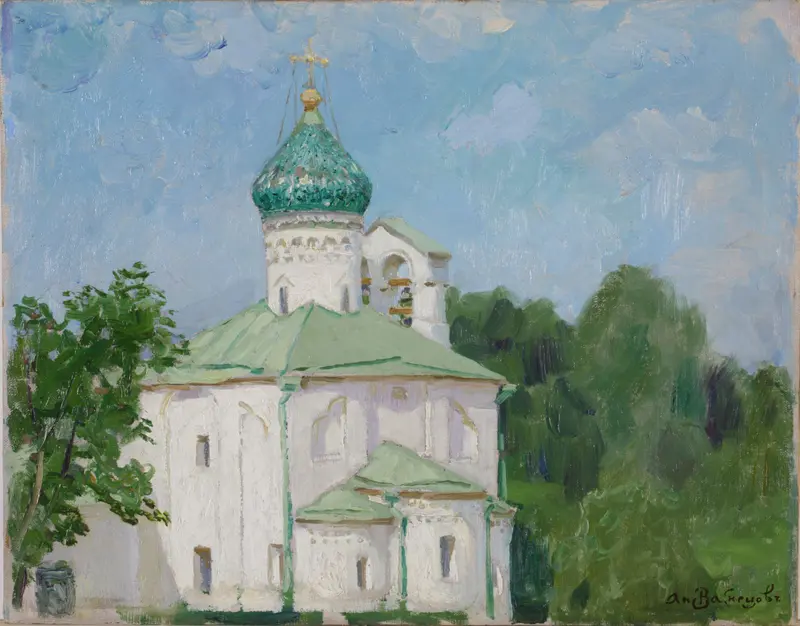
Sergius Luzhki
Apollinari Mikhailovich Vasnetsov
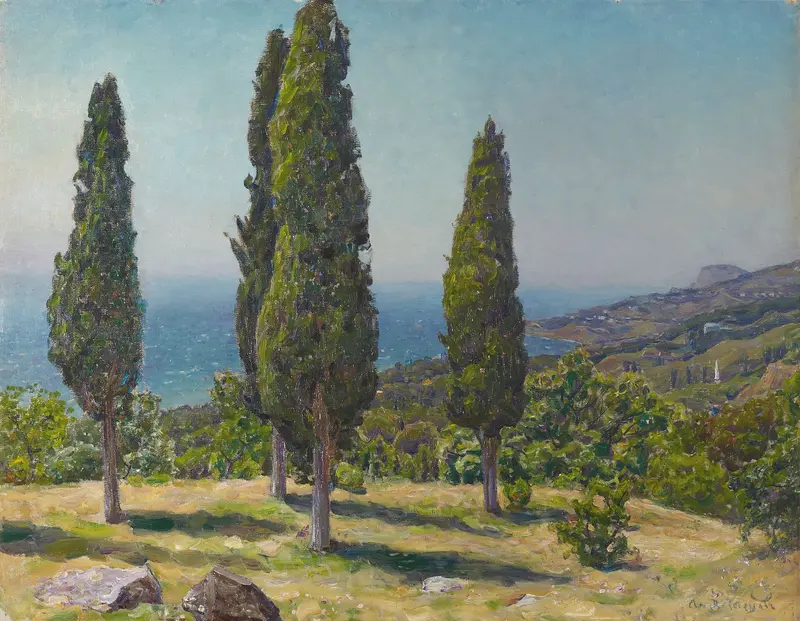
cypresses. Crimea
Apollinari Mikhailovich Vasnetsov
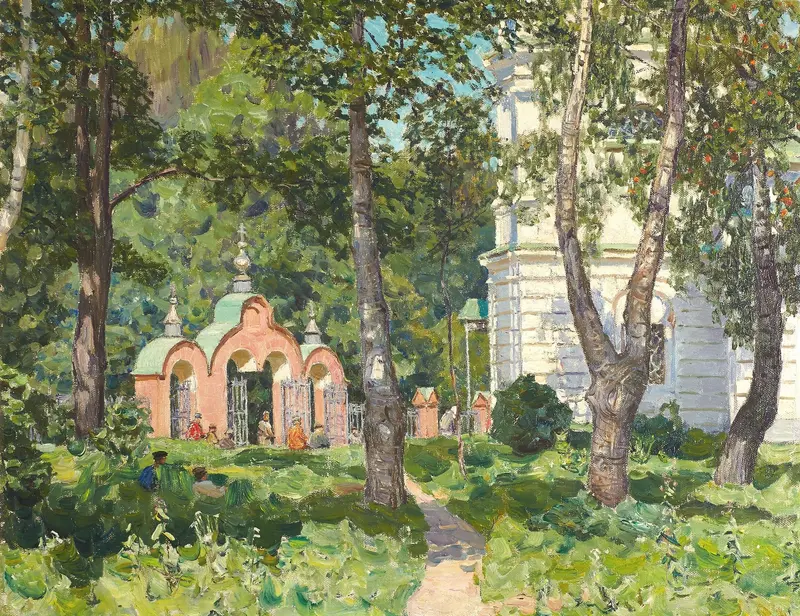
Demyanovo. At the churchyard
Apollinari Mikhailovich Vasnetsov
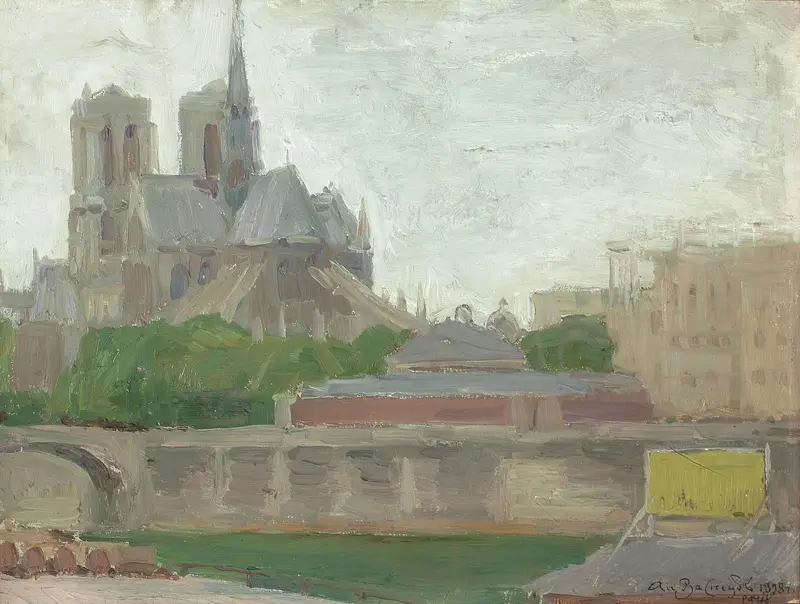
Notre Dame de Paris
Apollinari Mikhailovich Vasnetsov
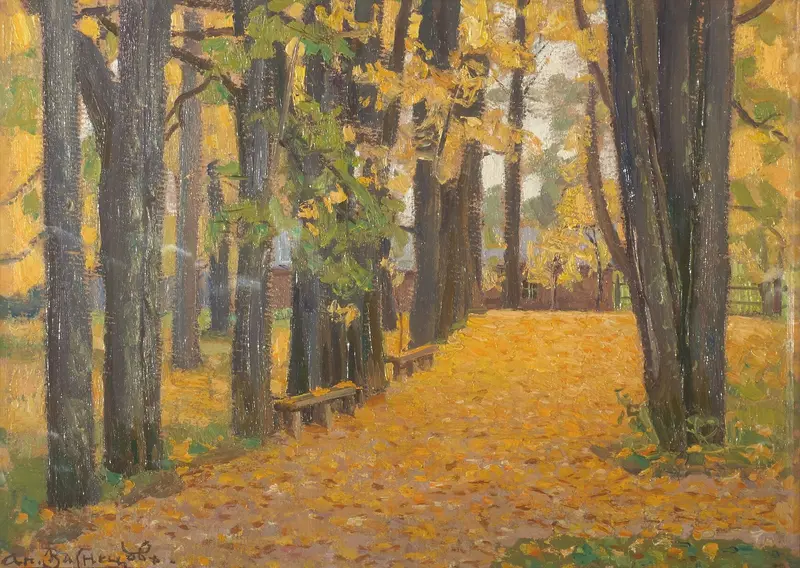
Autumn park
Apollinari Mikhailovich Vasnetsov
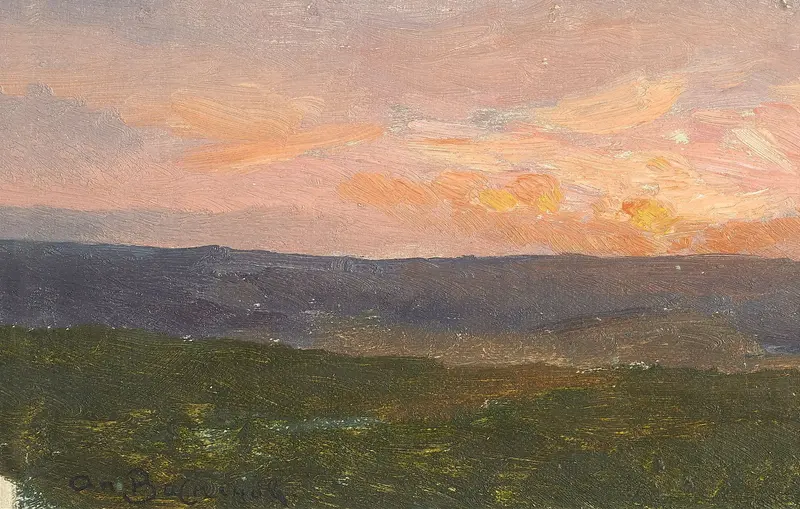
Sunset. Shurma
Apollinari Mikhailovich Vasnetsov

Via delle Tombe Pompeii
Apollinari Mikhailovich Vasnetsov
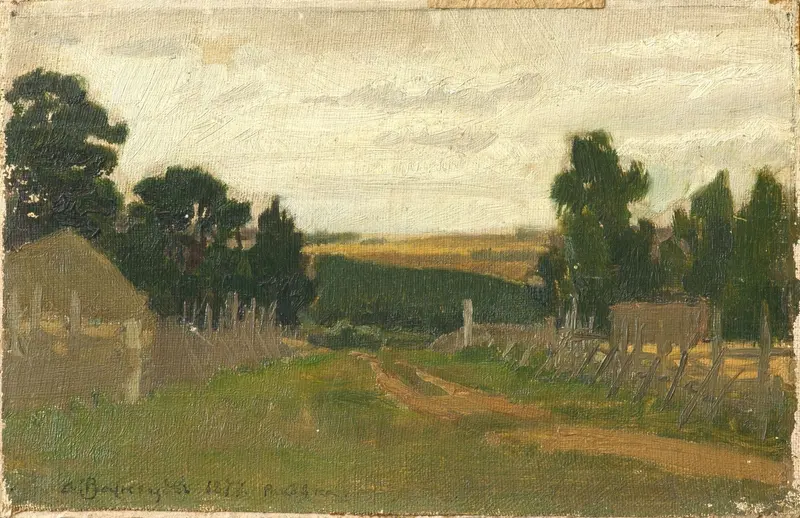
Rakovka
Apollinari Mikhailovich Vasnetsov
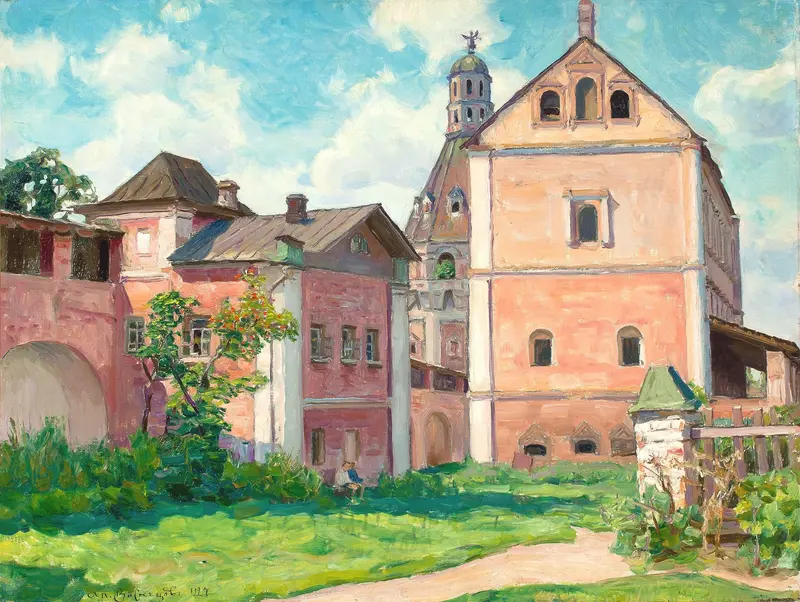
Simonov tower
Apollinari Mikhailovich Vasnetsov
More Landscape Art

The Starry Night
Vincent van Gogh

View of Delft
Johannes Vermeer

Water Lilies
Claude Monet

The Grand Canal, Venice, looking north-west from the Ca' Corner to the Ca' Contarini degli Scrigni, with the campanile of Santa Maria della Carità
Canaletto

Windsor Castle
Canaletto

The Grand Canal looking North-East from the Palazzo Dolfin-Manin to the Rialto Bridge
Canaletto