
Crucifixion — History & Facts
The first thing that seizes the viewer in Crucifixion by Antonello da Messina is the stark, almost mathematical clarity with which the cross divides the world behind it. The vast, pale sky presses down on the solitary figure of Christ, whose body is rendered with a cool precision that draws the eye inexorably to his bowed head and outstretched arms. Below, the ground is littered with skulls and bones—a reminder that this is Golgotha, the place of the skull, and a silent warning of mortality.
The two mourners, Mary and John, sit apart in stillness, their gestures restrained, their faces caught between grief and contemplation. Every element in the painting is placed to lead the gaze back to the central drama, yet the landscape behind, with its distant towers and gentle hills, seems to stretch on forever, as if the world itself is pausing to witness the scene. Painted in 1475, this work belongs to a moment when artists across Italy were experimenting with new ways to make sacred stories immediate and real. Antonello da Messina was among those who brought the clarity and oil technique of Northern painters into the Italian tradition, marrying it to a sense of calm geometry and luminous color.
Scenes of the Crucifixion were commissioned for churches and private devotion, intended to prompt meditation on suffering and redemption. Yet, history has kept few traces of this particular painting’s early life; it survives now in digital collections, a quiet testament to the era’s search for both emotional truth and pictorial order. Look again at the horizon: it is not just a backdrop, but a bridge between the agony in the foreground and the world that continues beyond.
More Artworks by Antonello da Messina

San Cassiano Altarpiece
Antonello da Messina

Pietà
Antonello da Messina
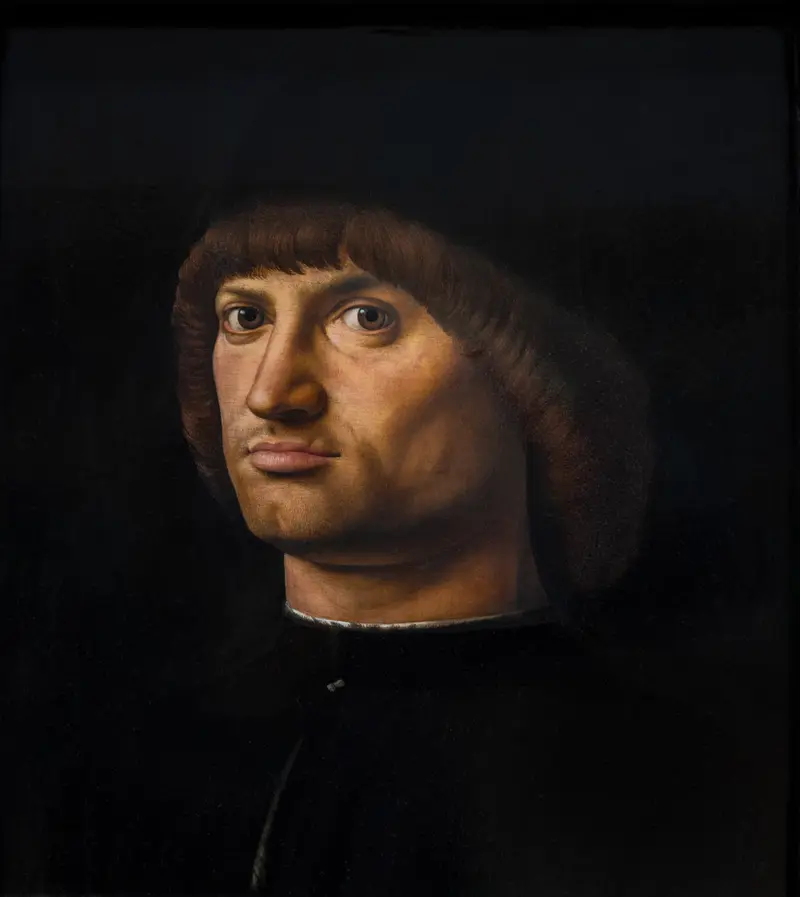
Portrait of a Man, called condottiere
Antonello da Messina
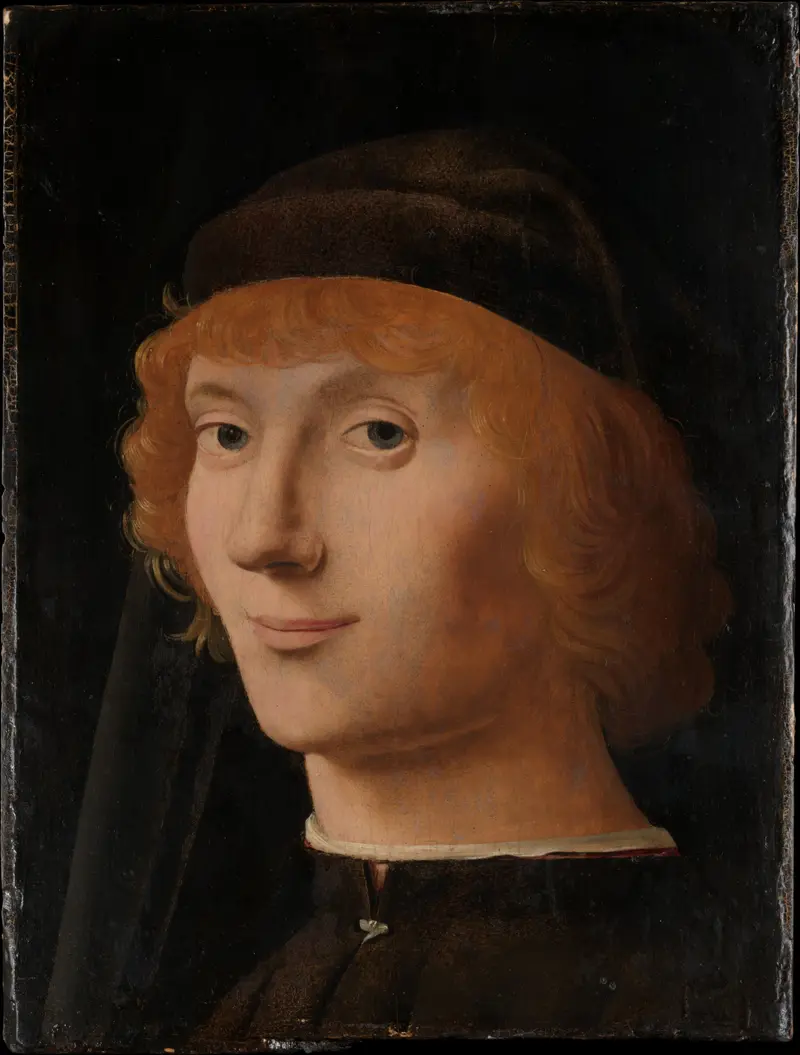
Portrait of a Young Man
Antonello da Messina
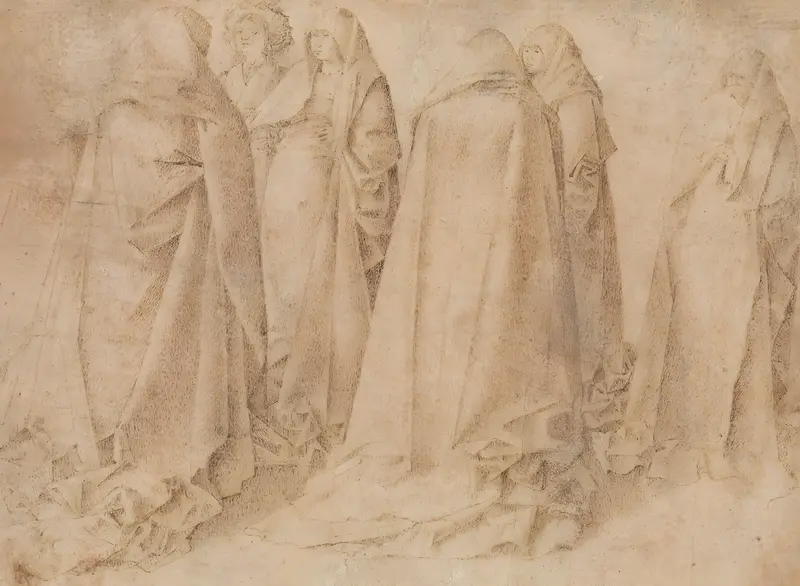
Group of Draped Figures
Antonello da Messina
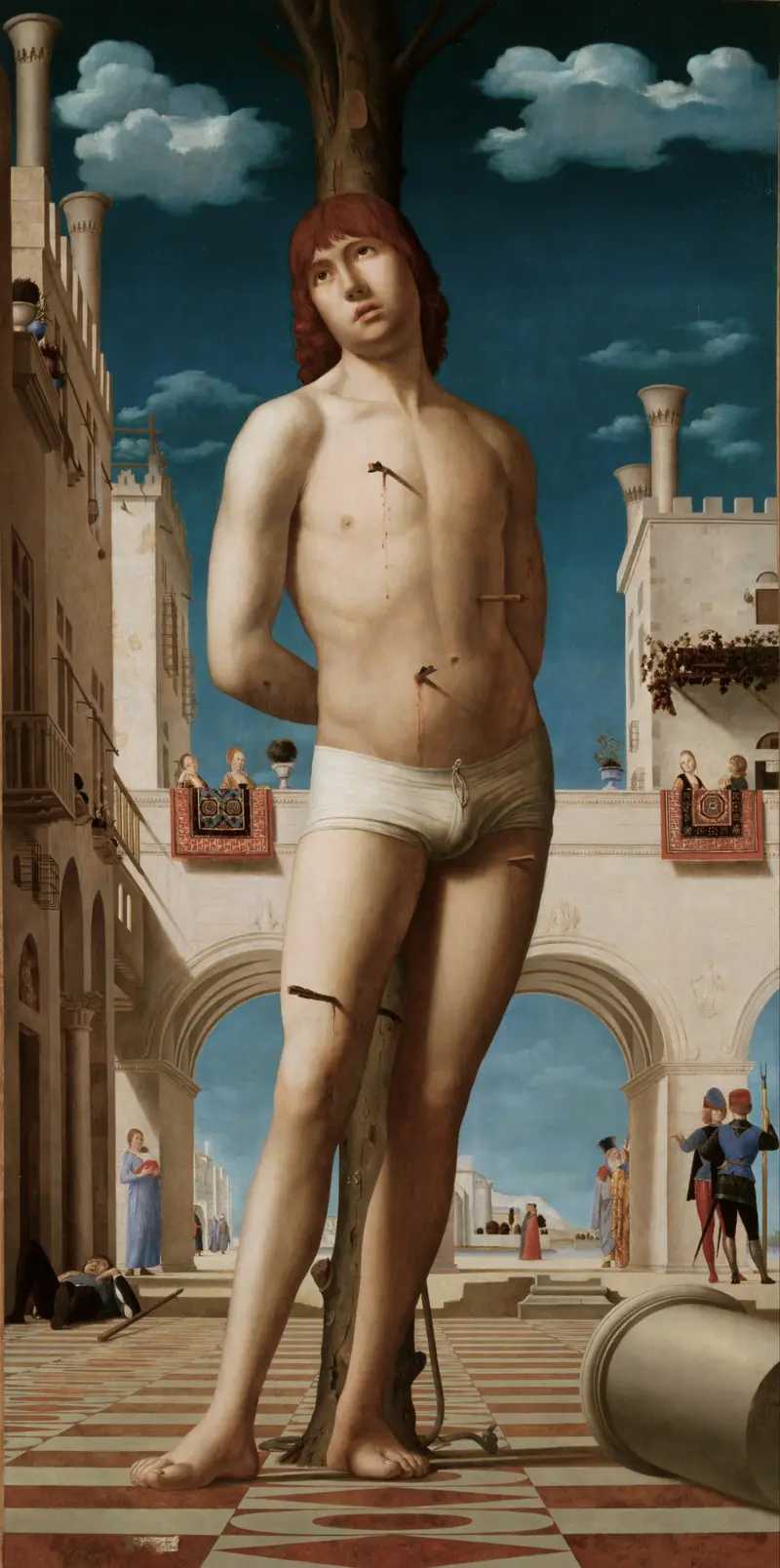
Saint Sebastian
Antonello da Messina
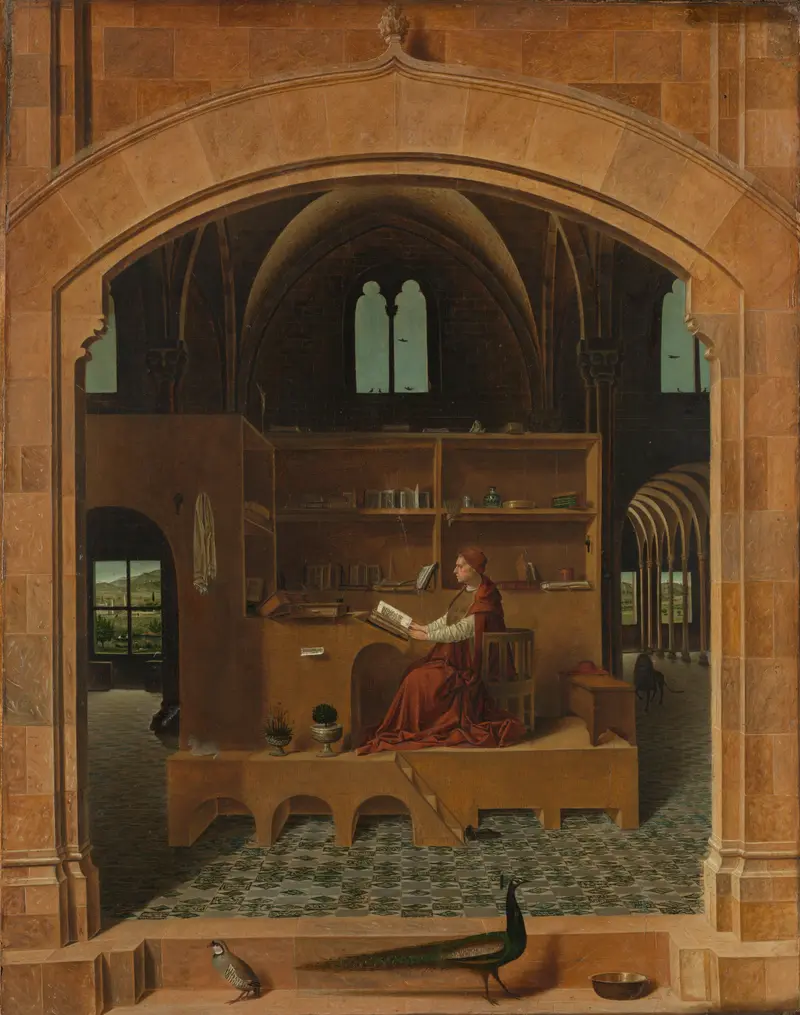
St. Jerome in His Study
Antonello da Messina
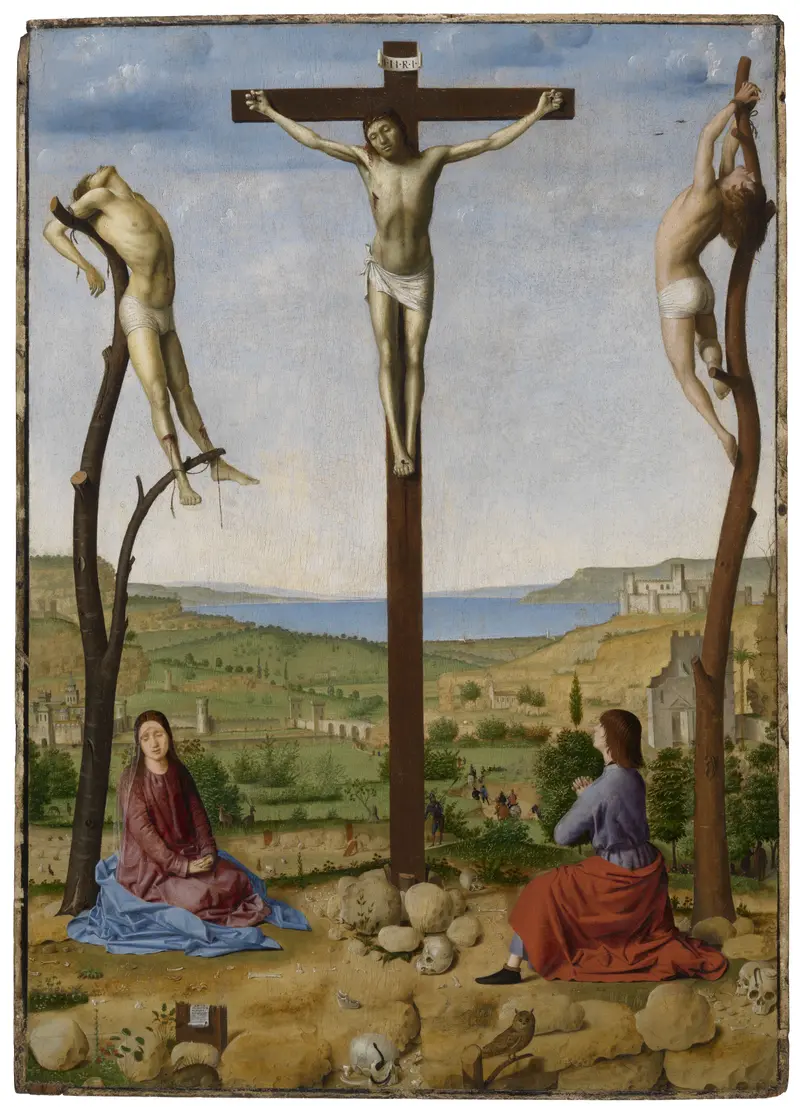
Calvary
Antonello da Messina
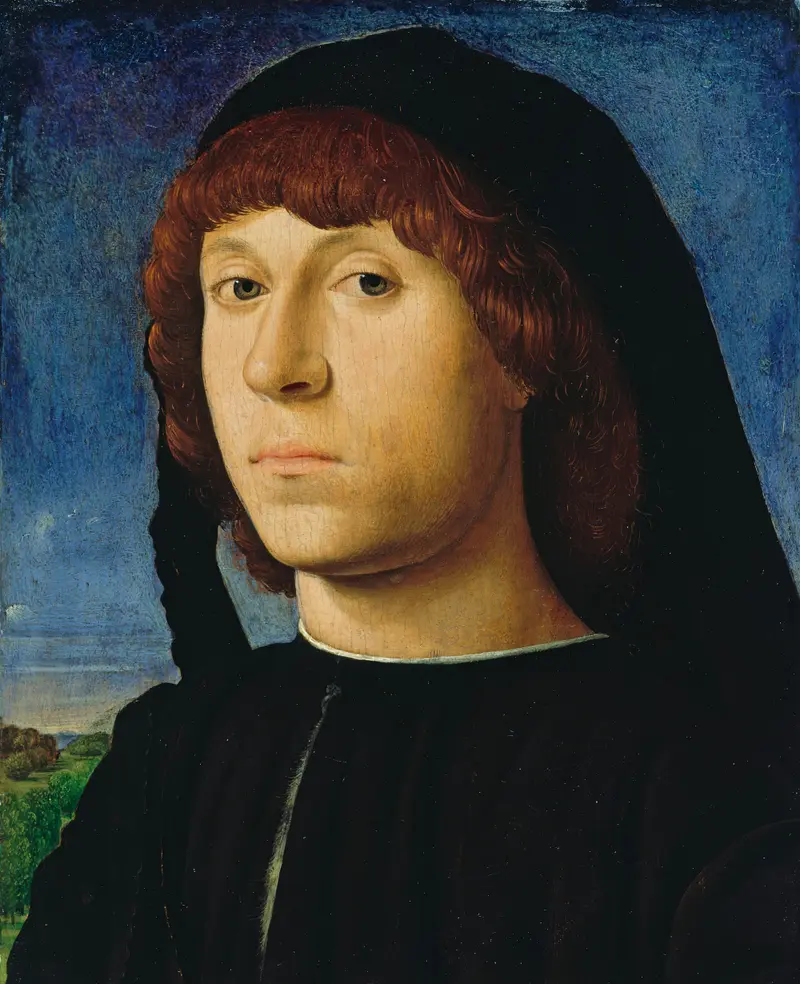
Portrait of a Man
Antonello da Messina
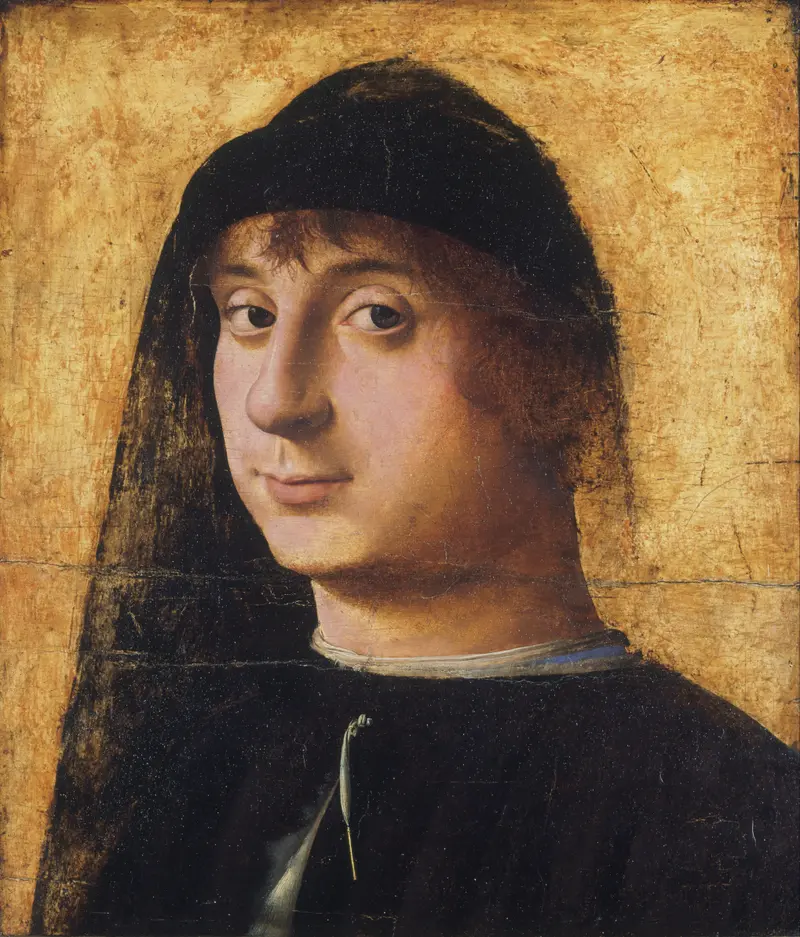
Portrait of a Young Gentleman
Antonello da Messina





