
Cutting on the Manchester and Liverpool Railway — History & Facts
Can beauty exist without sorrow? Arthur Fitzwilliam Tait’s Cutting on the Manchester and Liverpool Railway invites us to ponder the poignant balance between progress and loss. Look to the left where a rugged, verdant hillside rises, its lush green punctuated by the dark, raw edges of a freshly cut landscape. Notice how the steam locomotive emerges from the right, a piercing white plume contrasting against the blue sky. The play of light highlights the train's gleaming metal, embodying the triumph of engineering, while shadows deepen the crevices of the earth, hinting at the destruction wrought by human ambition.
The composition draws the eye along the track, leading us into the embrace of progress, yet leaving an unsettling echo of the untouched wilderness behind. Within the scene, the juxtaposition of nature’s beauty and industrial advancement reveals an emotional tension. The train symbolizes the relentless march of progress, yet the surrounding landscape mourns softly for what is lost. One can almost hear the sigh of the earth beneath the weight of this iron beast — a reminder that each step forward may come at the cost of something precious.
The delicate details, like the rustling leaves and the churning steam, evoke a yearning for harmony between these two worlds. In 1840, Tait crafted this work during a transformative time for the British landscape, as the Industrial Revolution was reshaping cities and countryside alike. Living in America, he reflected on these changes, channeling both his reverence for nature and his awareness of the complexities brought on by modernization. This painting stands as a testament to a moment where beauty and sorrow intertwined, capturing a fleeting glimpse of a world in transition.
More Artworks by Arthur Fitzwilliam Tait
Browse all →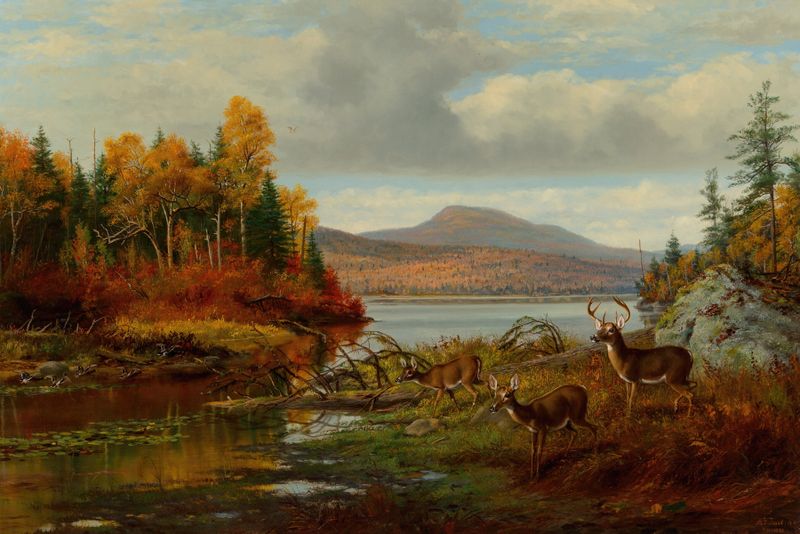
Late Autumn, Long Lake, Hamilton Co., New York, Adirondacks
Arthur Fitzwilliam Tait

View on Long Lake
Arthur Fitzwilliam Tait

Deer Stalking in Scotland; Getting Ready
Arthur Fitzwilliam Tait

Todmorden Viaduct on the Manchester and Leeds Railway, England
Arthur Fitzwilliam Tait
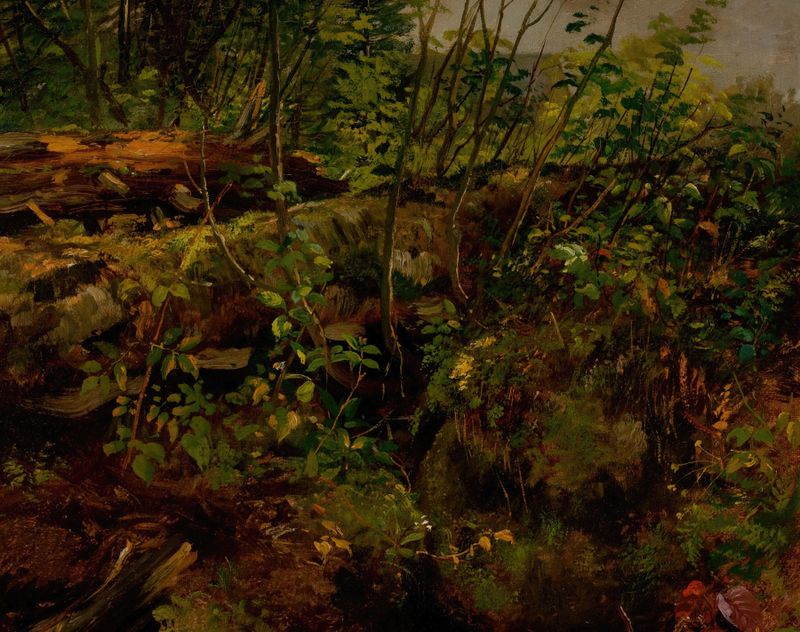
Study from Nature
Arthur Fitzwilliam Tait
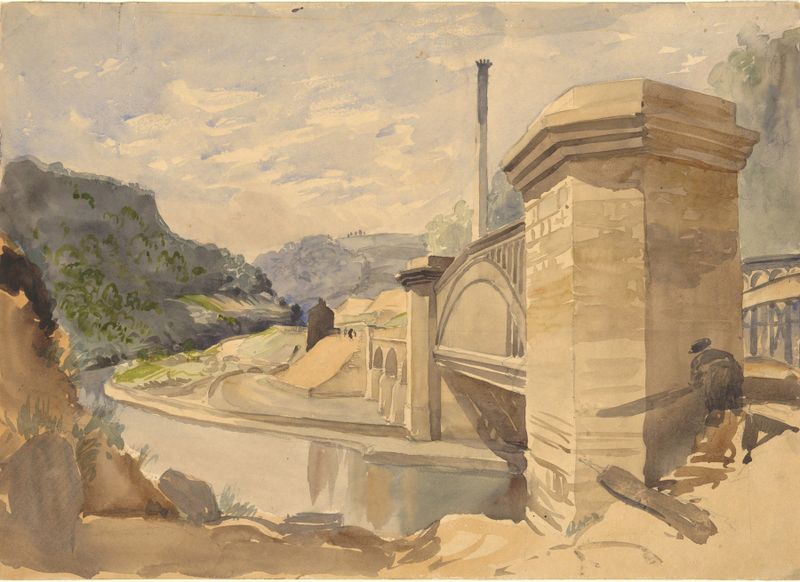
Todmorden, Yorkshire, England
Arthur Fitzwilliam Tait





