
Dance at the Inn — History & Facts
Could a single brushstroke hold eternity? In the dance of life captured within a rustic inn, hope flickers like candlelight, revealing the joy hidden in everyday moments. Look to the center of the canvas where figures swirl in a spirited dance, their bodies alive with movement and exuberance. Notice the warm ochres and deep browns that dominate the palette, enhancing the inviting atmosphere of the inn. The light, spilling through the window, casts gentle highlights on the dancers’ faces, illuminating their expressions of delight and camaraderie.
The careful placement of the musicians in the background anchors the scene, their instruments poised to further inspire revelry. Yet, amid the mirth, there is a subtle tension. The contrasting shadows that linger in the corners of the room suggest a world beyond the inn, perhaps fraught with uncertainty or hardship. One dancer, slightly apart from the others, seems lost in thought, hinting at the complexities of human experience beneath the surface of joyous celebration.
It is this blend of light and shadow, cheer and contemplation, that elevates the work from mere depiction to a profound commentary on the nature of hope. Created between 1650 and 1654, this piece emerged during a time of flourishing genre painting in the Dutch Golden Age. Adriaen van Ostade, active in Haarlem, was celebrated for his ability to portray the nuances of peasant life with empathy and impact. The era was marked by social change and emerging middle-class values, which fostered an appreciation for the simple yet rich experiences of daily living, resonating powerfully through this enchanting scene.
More Artworks by Adriaen van Ostade
Browse all →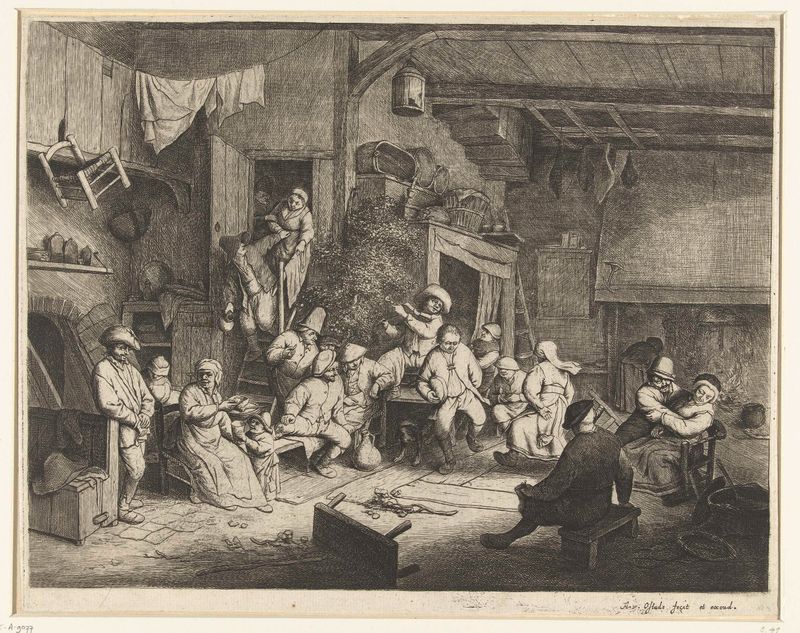
Dans in de herberg
Adriaen van Ostade

Travellers Halted At A Country Inn
Adriaen van Ostade
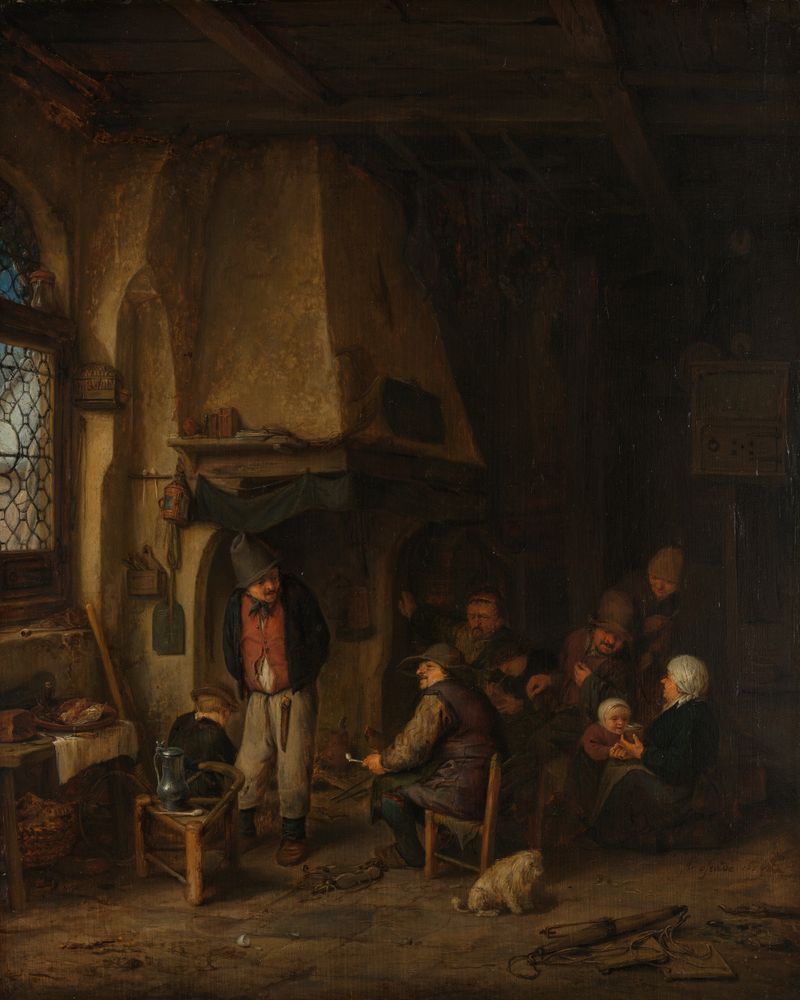
‘The Skaters’: Peasants in an Interior
Adriaen van Ostade

Dans in de herberg
Adriaen van Ostade

Merrymakers in an Inn
Adriaen van Ostade
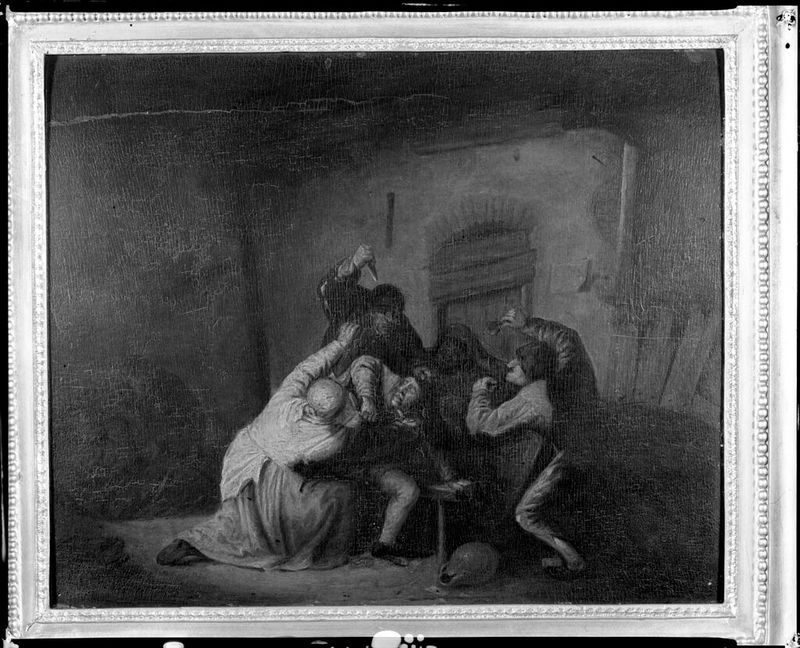
Peasants Brawling in a Tavern
Adriaen van Ostade
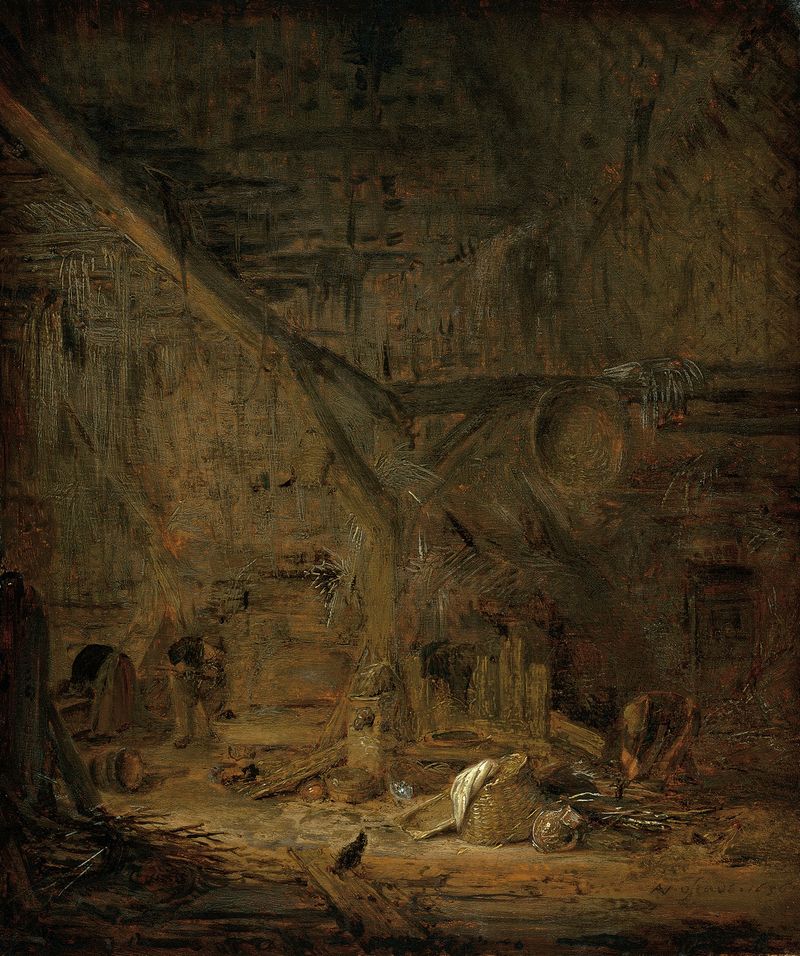
Interior of a Barn
Adriaen van Ostade

Man with a Tankard at a Window
Adriaen van Ostade
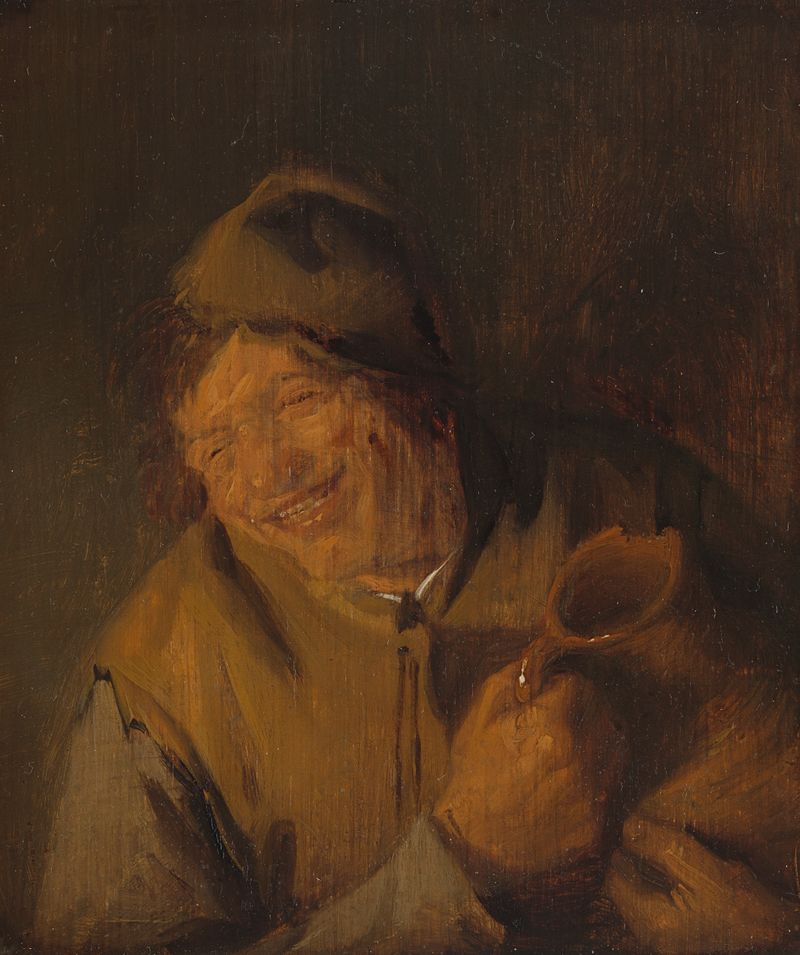
The Merry Peasant
Adriaen van Ostade

Boerengezin in interieur
Adriaen van Ostade





