
Dans in de herberg — History & Facts
In the swirling chaos of revelry, laughter dances on the edge of sorrow, hinting at stories untold. The tavern, alive with life, serves as both sanctuary and stage, reveling in the tensions that weave through the fabric of human experience. First, allow your gaze to settle on the lively group engaged in merriment at the center. Notice how the warm, amber light spills from their mugs, illuminating their faces with a soft glow.
The artist employs rich, earthy tones, contrasting the vibrant warmth of camaraderie with the shadowy corners of the room, where solitude and despair lurk just beyond the joviality. Every brushstroke captures the fleeting nature of joy, inviting you to explore the scene’s layered complexity. As you delve deeper, consider the fine details: the rugged fingers of a man capturing the moment in song, or the fleeting glance of a woman whose smile masks a heavy heart. The interplay between the joyful celebration and hints of melancholy reflects the duality of existence, where chaos and beauty coexist.
The scene evokes a profound sense of transience, suggesting that within this moment of chaos lies both liberation and entrapment. Painted between 1650 and 1654 in the Netherlands, the artist emerged amidst a flourishing of genre painting, where everyday life became the subject of admiration. During this period, Adriaen van Ostade explored themes of social interaction and human emotion with a keen eye, responding to the vibrancy and complexities of his time. His mastery of light and shadow imbues the scene with a palpable energy that speaks to both the joys and sorrows of human experience.
More Artworks by Adriaen van Ostade
Browse all →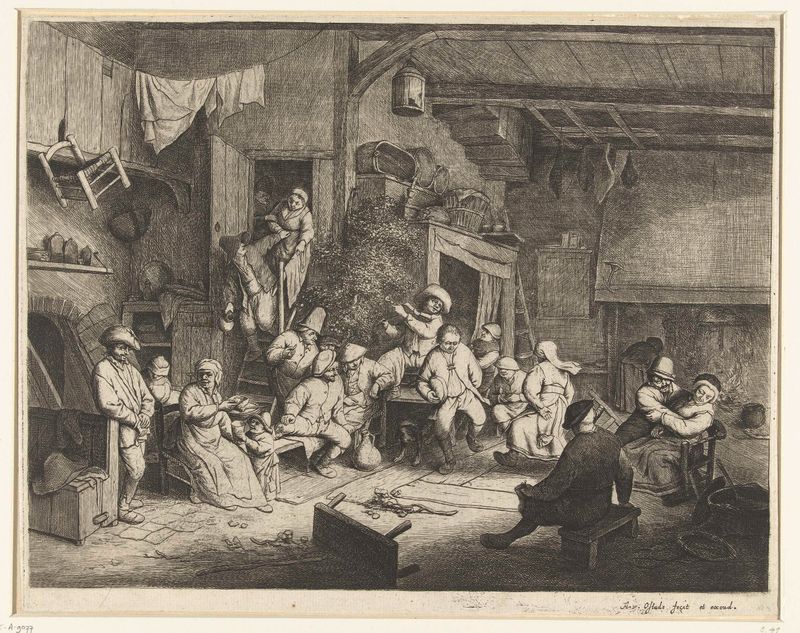
Dans in de herberg
Adriaen van Ostade
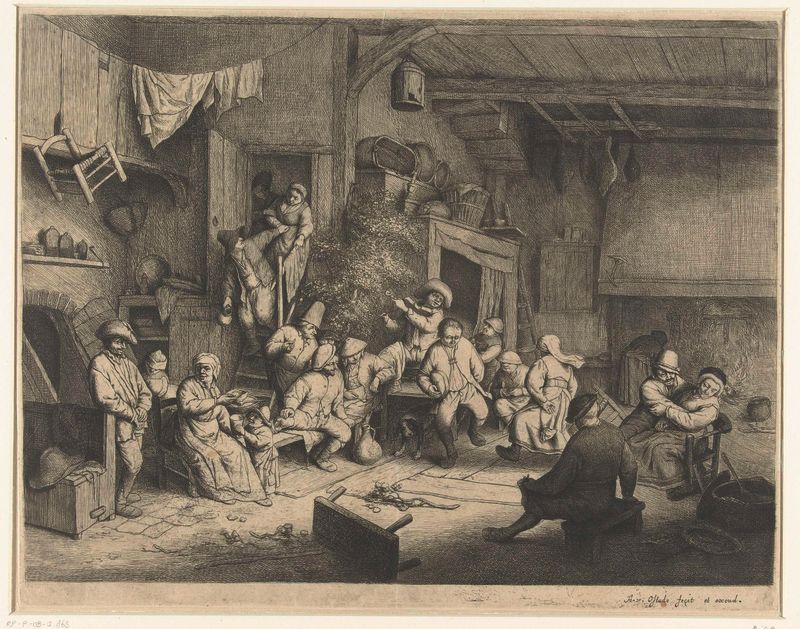
Dance at the Inn
Adriaen van Ostade

Travellers Halted At A Country Inn
Adriaen van Ostade
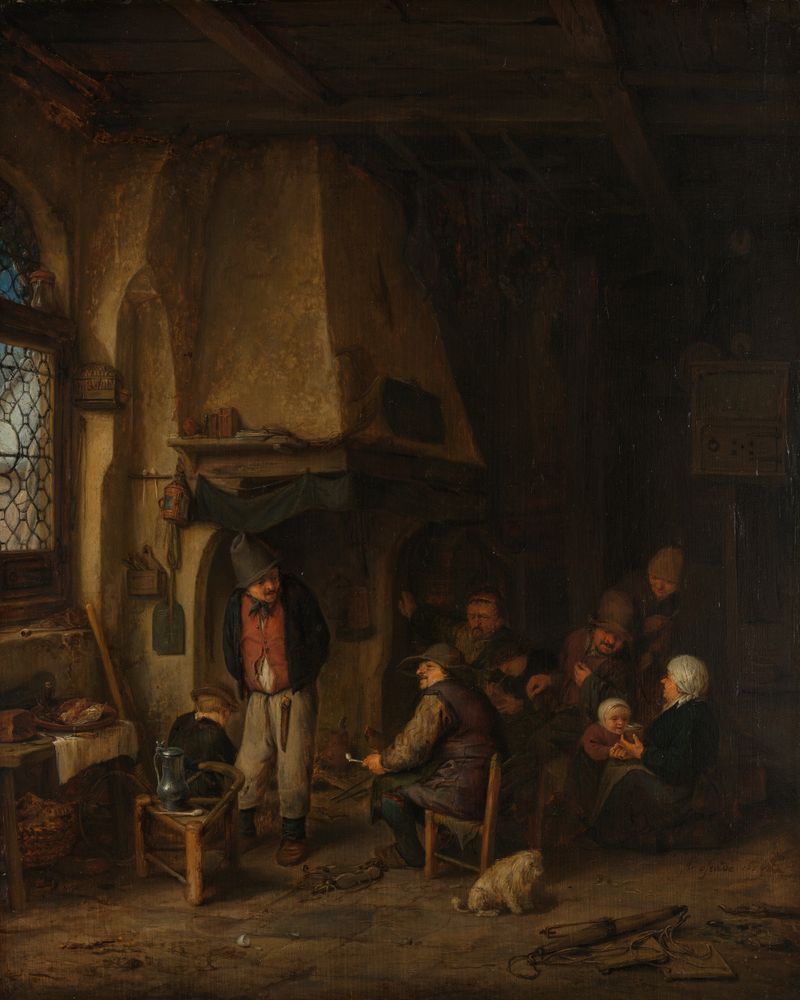
‘The Skaters’: Peasants in an Interior
Adriaen van Ostade

Merrymakers in an Inn
Adriaen van Ostade
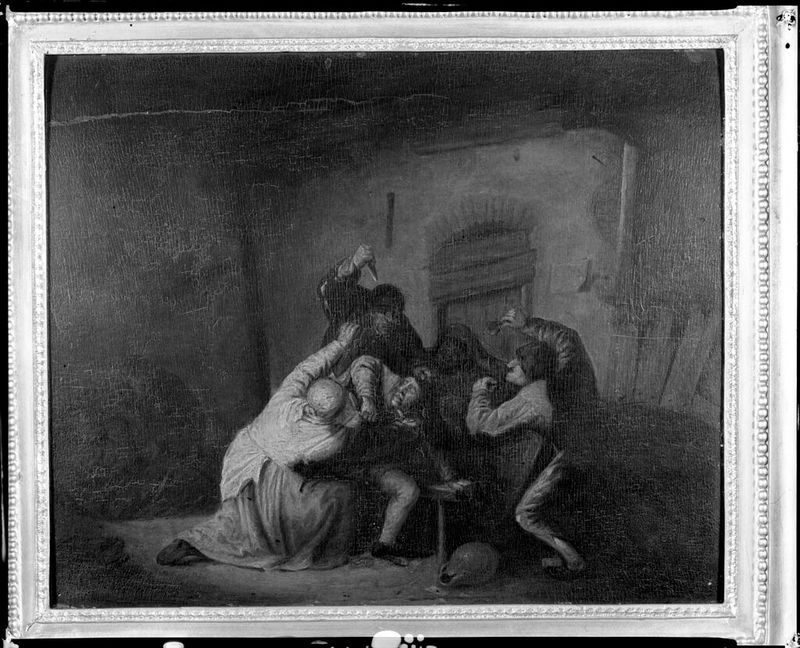
Peasants Brawling in a Tavern
Adriaen van Ostade
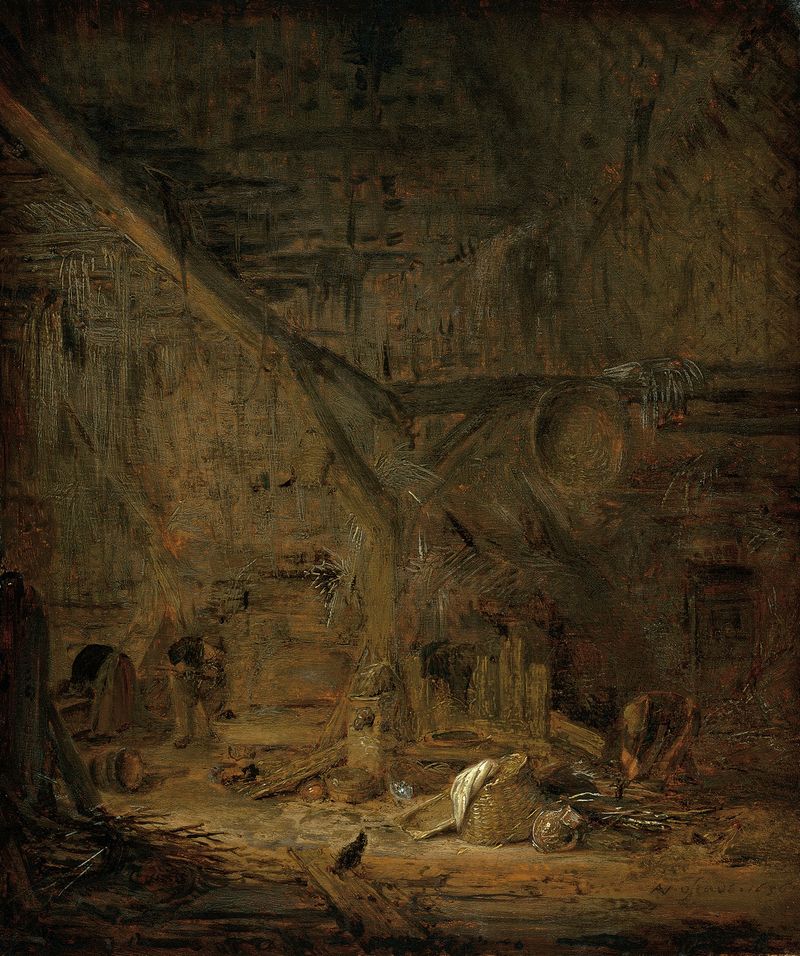
Interior of a Barn
Adriaen van Ostade

Man with a Tankard at a Window
Adriaen van Ostade
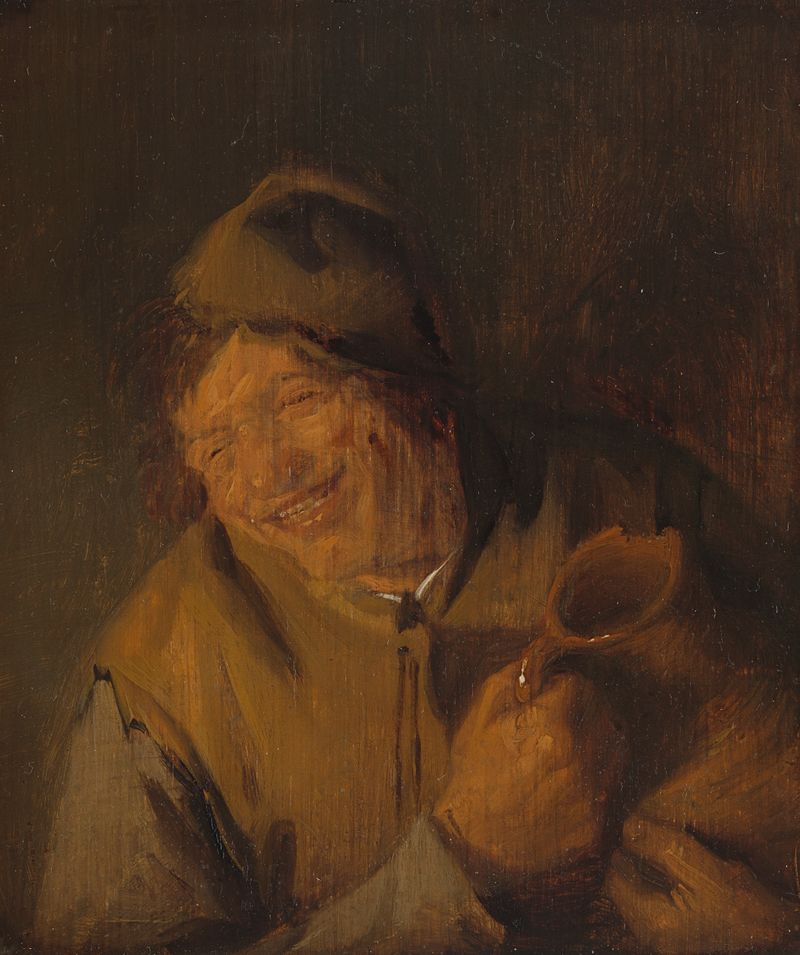
The Merry Peasant
Adriaen van Ostade

Boerengezin in interieur
Adriaen van Ostade





