
Dans in de herberg — History & Facts
Can paint confess what words never could? In Dans in de herberg, a simple gathering resonates with the innocence of human connection, revealing the unspoken stories that dance in shadows and light. Look to the left at the soft, flickering glow of candles illuminating the faces of the revelers. Notice how the warm ochres and earthy browns of their attire contrast with the coolness of the wooden beams overhead. The figures, caught in mid-gesture, draw the viewer's eye to their expressions of joy and spontaneity, each one a tapestry of emotion, leaping from the canvas.
The composition’s tight framing envelops the viewer, creating an intimate atmosphere as if invited to join the merriment. Within this lively scene, there lies a profound tension between the carefree dance and the passage of time. The fleeting nature of their joy hints at the innocence of youth, juxtaposed against the inevitable weight of life’s burdens beyond the tavern’s doors. Each smile is a moment captured, yet steeped in the awareness that such revelries are ephemeral.
The absence of any visible conflict underscores a serene simplicity, encouraging introspection on the themes of joy and temporality. Adriaen van Ostade painted Dans in de herberg in the years between 1650 and 1654, amidst a flourishing of genre painting in the Netherlands. During this period, he was deeply engaged in depicting everyday life, reflecting both the vibrancy of Dutch society and the intimate moments shared within its communal spaces. The artwork emerged from a time when the art world was evolving, with artists like him focusing on the mundane yet profound aspects of human existence, captured through warm and inviting compositions.
More Artworks by Adriaen van Ostade
Browse all →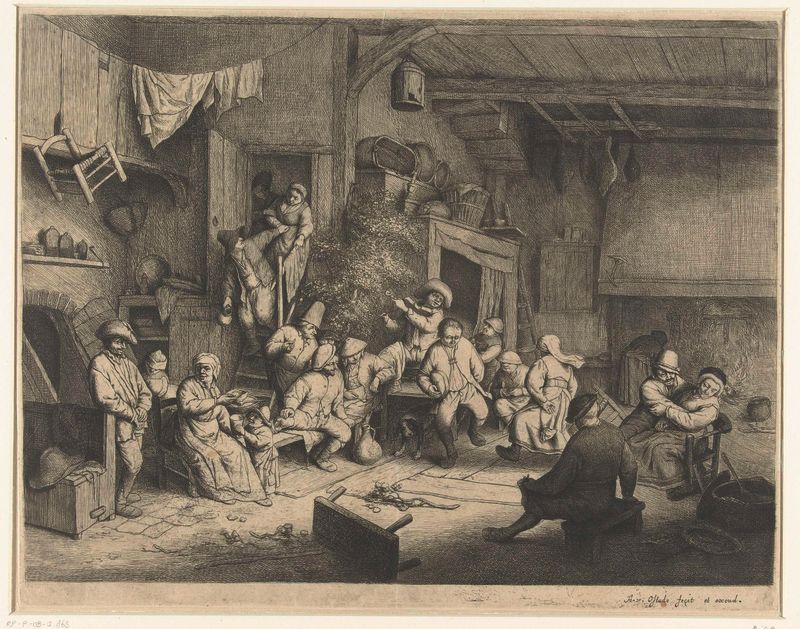
Dance at the Inn
Adriaen van Ostade

Travellers Halted At A Country Inn
Adriaen van Ostade
‘The Skaters’: Peasants in an Interior
Adriaen van Ostade

Dans in de herberg
Adriaen van Ostade

Merrymakers in an Inn
Adriaen van Ostade
Peasants Brawling in a Tavern
Adriaen van Ostade
Interior of a Barn
Adriaen van Ostade

Man with a Tankard at a Window
Adriaen van Ostade
The Merry Peasant
Adriaen van Ostade

Boerengezin in interieur
Adriaen van Ostade





