Dans la vieille ville. Nyons — History & Facts
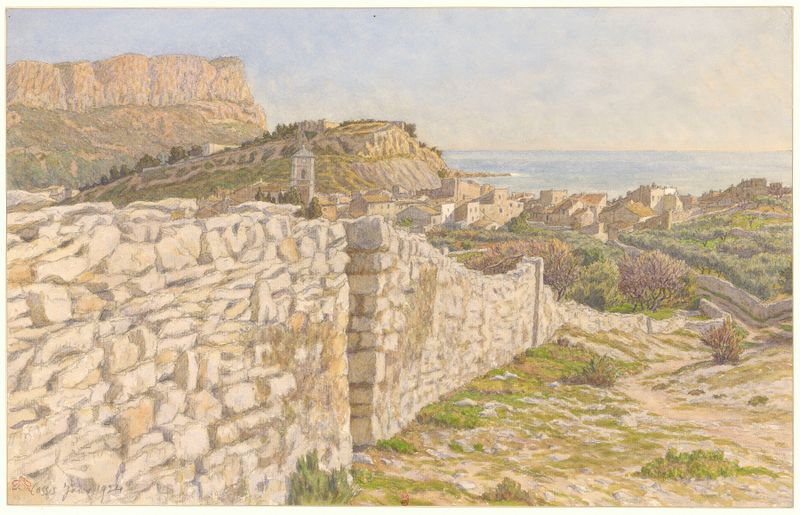
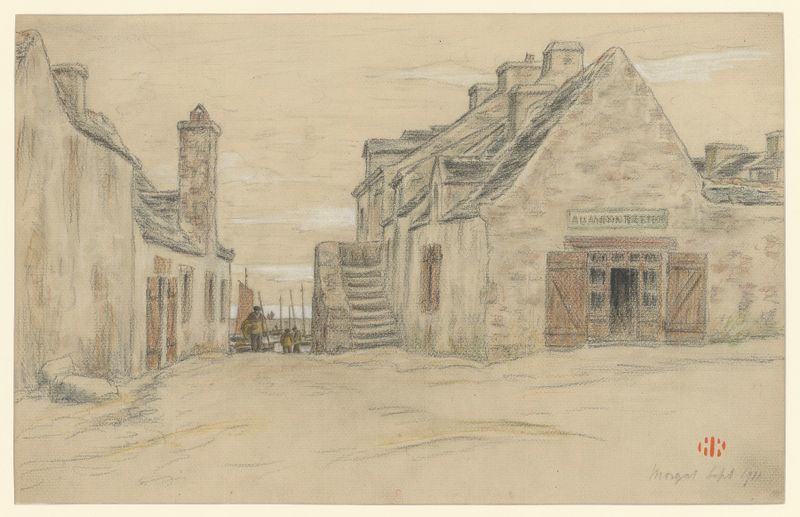
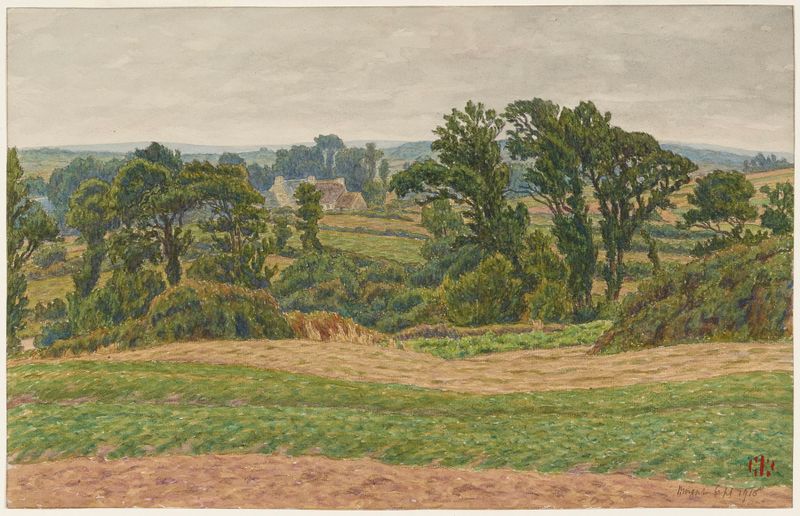
Could beauty survive in a century of chaos? This question resonates deeply within the intimate embrace of Dans la vieille ville. Nyons, a painting that seems to revel in revelation amidst turmoil. Look to the center of the canvas, where old stone structures rise like ancient sentinels against a backdrop of serene blue skies. Rivière uses delicate brushwork to capture the gentle play of light on the weathered facades, each stroke revealing the textures of time and history.
The muted palette, punctuated by warm ochres and cool blues, invites the viewer to explore the quiet charm of this village, its serenity standing in stark contrast to the chaos of the modern world. The juxtaposition of shadow and light mirrors the duality of existence—life’s fleeting moments met with the permanence of architecture. Notice the subtle hints of activity; a figure in the doorway, a flicker of movement on the cobblestones, reflecting the lives that intertwine with the historical narrative. Each element, from the overhanging branches to the distant hills, whispers stories of resilience, suggesting that beauty can persist even in uncertain times. In 1928, the artist, immersed in the search for simplicity and sincerity in a rapidly changing world, painted this work in a France still grappling with the aftershocks of World War I.
The era was characterized by a push towards modernism, yet Rivière remained rooted in traditional forms and subjects, capturing a village that stands as a testament to enduring beauty amid the chaos of contemporary life.