
De haven van Rotterdam — History & Facts
In a harbor where ships sway gently on the water, truth and betrayal intertwine in a dance as delicate as the brushstrokes employed. Here, the chaos of movement contrasts with the serene reflections on the surface, echoing the tumult beneath the calm. Look to the left where the boats are tethered, their hulls painted with inviting hues that speak of journeys both begun and abandoned. Notice how the light spills across the water, creating ripples that shimmer like whispers of secrets held too long.
The sky, with its soft blues and whites, beckons calmness, while the energetic brushwork conveys a sense of urgency and fleeting relationships, hinting at a narrative that lies beyond the immediate scene. Beneath the surface, a tension brews; the stillness of the water mirrors the betraying breezes of change. The contrast between the bustling harbor and the tranquil reflections serves as a reminder of how easily trust can drift away, like boats pulling from their moorings. Each stroke feels laden with unspoken farewells, suggesting that every journey may harbor an unanticipated end. In 1863, Jongkind painted De haven van Rotterdam in a period of great personal transition.
Living in the Netherlands, he was inspired by the rapidly changing maritime landscape around him, reflecting the broader shifts occurring in the world of art, where Impressionism began to unfurl its wings. This work captures both a moment and a feeling, marrying a love for the natural world with an awareness of the fragility of human connections.
More Artworks by Johan Barthold Jongkind
Browse all →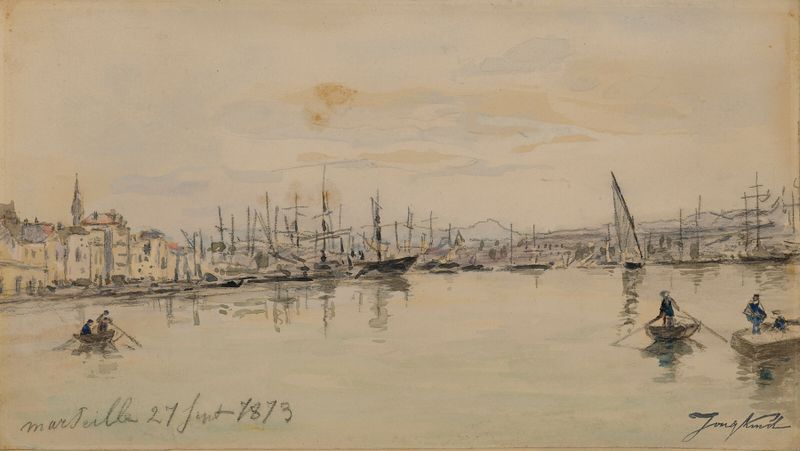
Le Port de Marseille
Johan Barthold Jongkind

Canal Saint-Martin
Johan Barthold Jongkind

Countryside near Brezins, between Grenoble and Vienne
Johan Barthold Jongkind

Notre-Dame vue du quai de la Tournelle
Johan Barthold Jongkind

Environs de Grenoble
Johan Barthold Jongkind

Clair de lune à Overschie (environs de Rotterdam)
Johan Barthold Jongkind

Port de Honfleur
Johan Barthold Jongkind
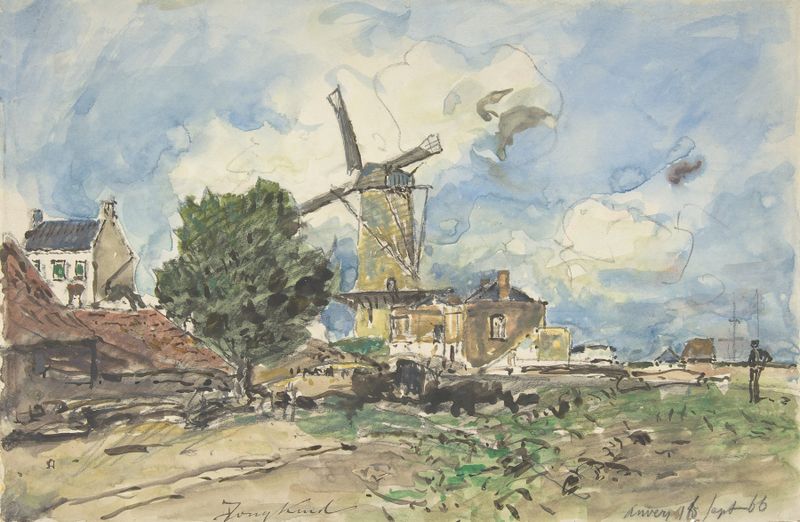
Wind Mill at Antwerp
Johan Barthold Jongkind

Le Havre
Johan Barthold Jongkind

The Church of Overschie
Johan Barthold Jongkind





