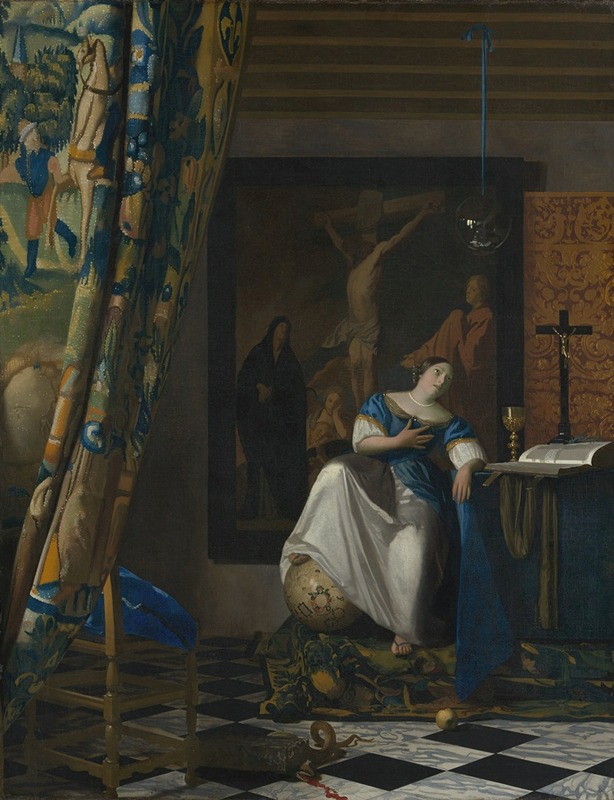
De kleine Fortuna — History & Facts
In a world where decay looms over us, the beauty of preservation becomes paramount. Albrecht Dürer’s De kleine Fortuna serves as a poignant reminder of the fragility of fortune and the inevitability of decline. Focus first on the small figure of Fortune, deftly balanced on a wisp of cloud, her expression elusive yet commanding. Her delicate, flowing robes are painted in a symphony of muted earth tones, suggesting warmth even as they hint at the inevitability of rot.
Notice how the light dances across the surface, illuminating her golden locks while casting shadows that underline the tension between stability and the uncertain fate of mankind. Each brushstroke reveals meticulous detail, inviting the viewer to explore the delicate interplay between life and decay. Dürer's work encapsulates the duality of fortune — the fleeting moments of joy intertwined with the certainty of loss. Observe the vibrant flora surrounding her, teetering on the edge of abundance and deterioration, a metaphor for life’s transient nature.
The contrast of her vibrant youth against the encroaching darkness of decay evokes a poignant sense of nostalgia, urging us to contemplate the price of happiness amidst inevitable decline. Created between 1493 and 1498, this piece emerged during a period of great transition for Dürer, as he traveled through Europe, absorbing influences from the Renaissance. His meticulous craftsmanship reflected the broader shifts in art, where the focus pivoted towards realism and the exploration of human emotion. In this time of innovation and introspection, De kleine Fortuna stands out as a testament to Dürer’s profound understanding of the human condition, encapsulating both beauty and decay.
More Artworks by Albrecht Dürer
Browse all →
Melancholia
Albrecht Dürer
Melancholie
Albrecht Dürer
Neushoorn
Albrecht Dürer
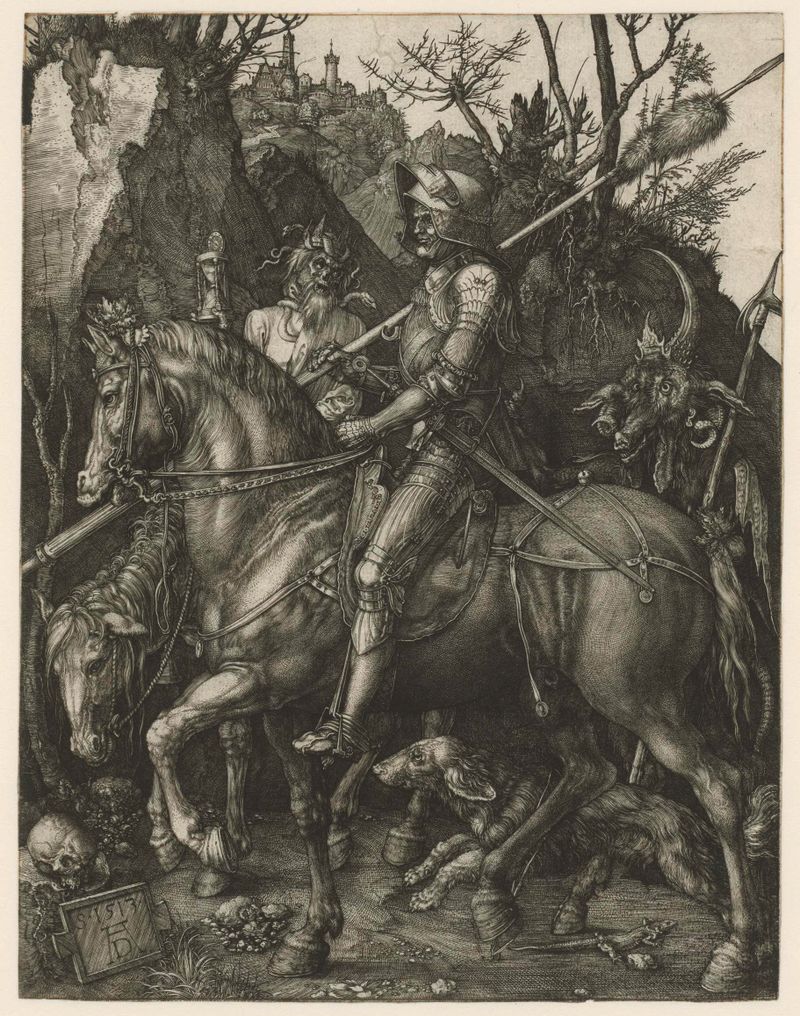
Knight, Death, and the Devil
Albrecht Dürer

De vier ruiters van de apocalyps
Albrecht Dürer

De vier ruiters van de apocalyps
Albrecht Dürer
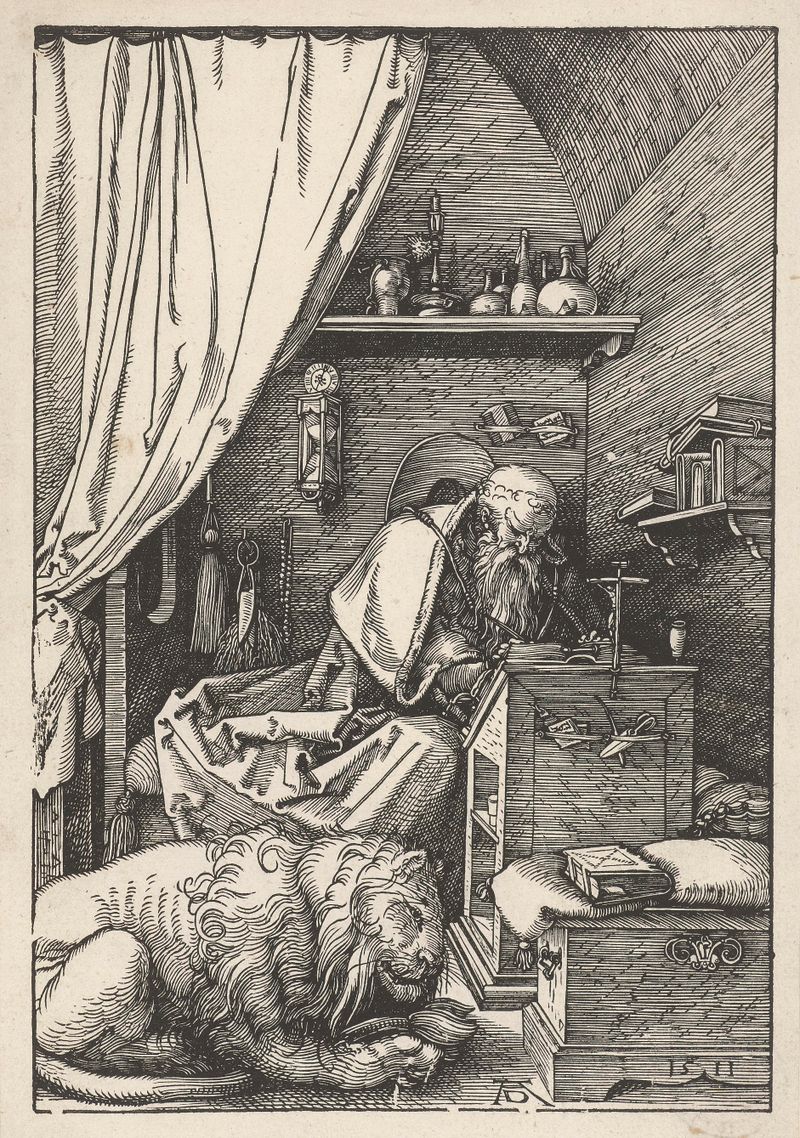
De Heilige Hiëronymus in zijn studeervertrek
Albrecht Dürer
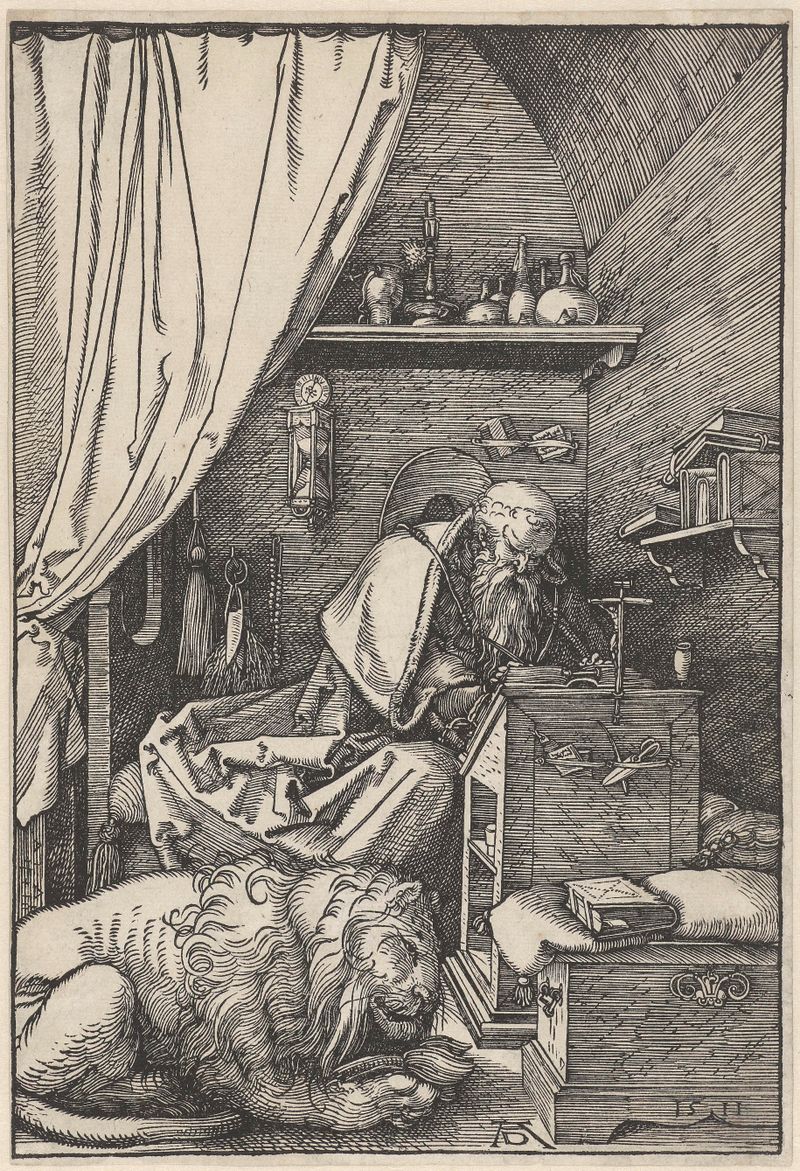
De Heilige Hiëronymus in zijn studeervertrek
Albrecht Dürer
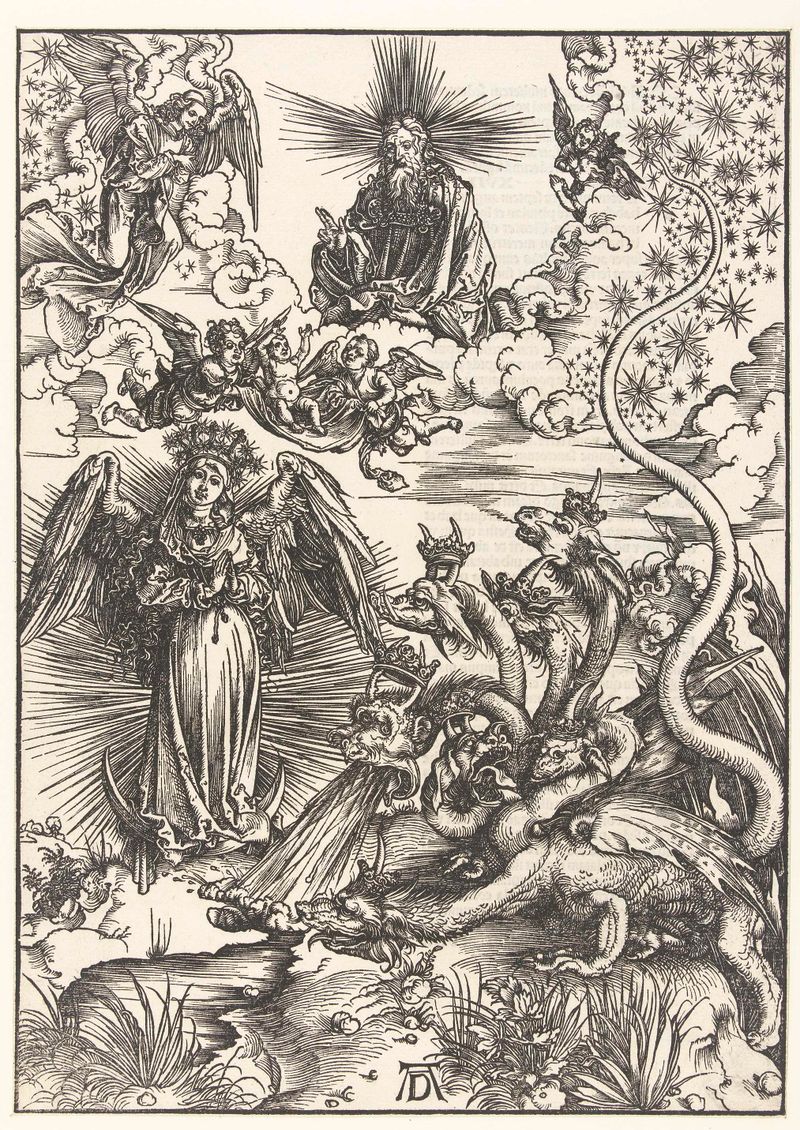
De apocalyptische vrouw en de zevenkoppige draak
Albrecht Dürer
Adam en Eva
Albrecht Dürer