
De wonderbare spijziging — History & Facts
Can paint confess what words never could? In De wonderbare spijziging, the intricacies of life and mortality are laid bare, revealing the delicate balance between the sacred and the mundane. Look to the center of the composition where a multitude of figures converge around a lavish table, their faces a tapestry of awe and reverence. Notice how the light falls upon the rich colors of the feast — deep reds, golden yellows, and earthy browns — inviting the viewer to engage with the bounty on display. The meticulous detailing in garments and food draws the eye, while the surrounding shadows create a contrast that heightens the sense of drama in this moment of communion. Beneath the surface, the painting grapples with deeper themes of abundance and the ephemeral nature of life.
The overflowing table, laden with bread and fish, symbolizes nourishment yet hints at human fragility, suggesting that even in abundance, mortality looms. The expressions of the figures reveal a spectrum of emotions, from joy to hesitation, inviting contemplation on the existential weight of sharing one's bounty. This interplay of light and shadow not only emphasizes their physical presence but also evokes a sense of fleeting time, reminding us that moments of communion are both sacred and transient. In 1534-1535, Georg Pencz created this profound work during a period marked by religious upheaval in Europe.
The Reformation was reshaping societal values, impacting consumption and faith. Working in Nuremberg, he navigated these tensions through his art, exploring themes of spiritual sustenance and human connection at a time when the very fabric of belief was being redefined.
More Artworks by Georg Pencz
Browse all →
Parabel van de zaaier
Georg Pencz

Parabel van de arbeiders in de wijngaard
Georg Pencz
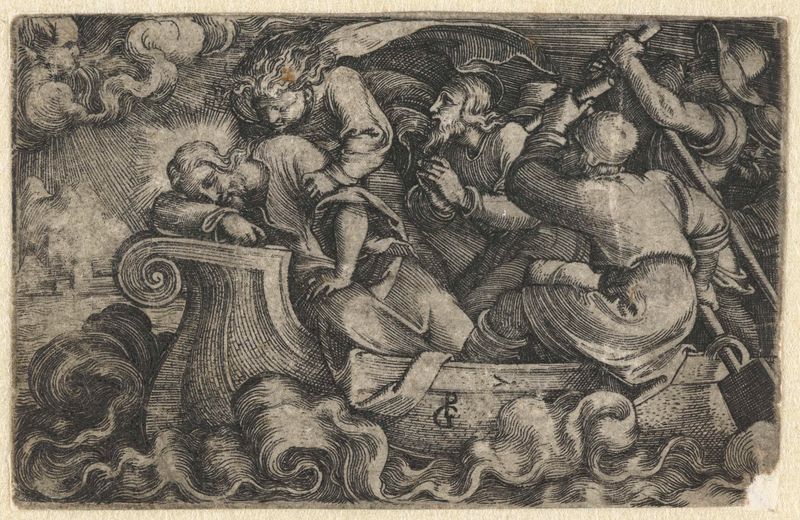
Discipelen wekken slapende Christus tijdens storm op Meer van Galilea
Georg Pencz

Afgunst (Invidia)
Georg Pencz
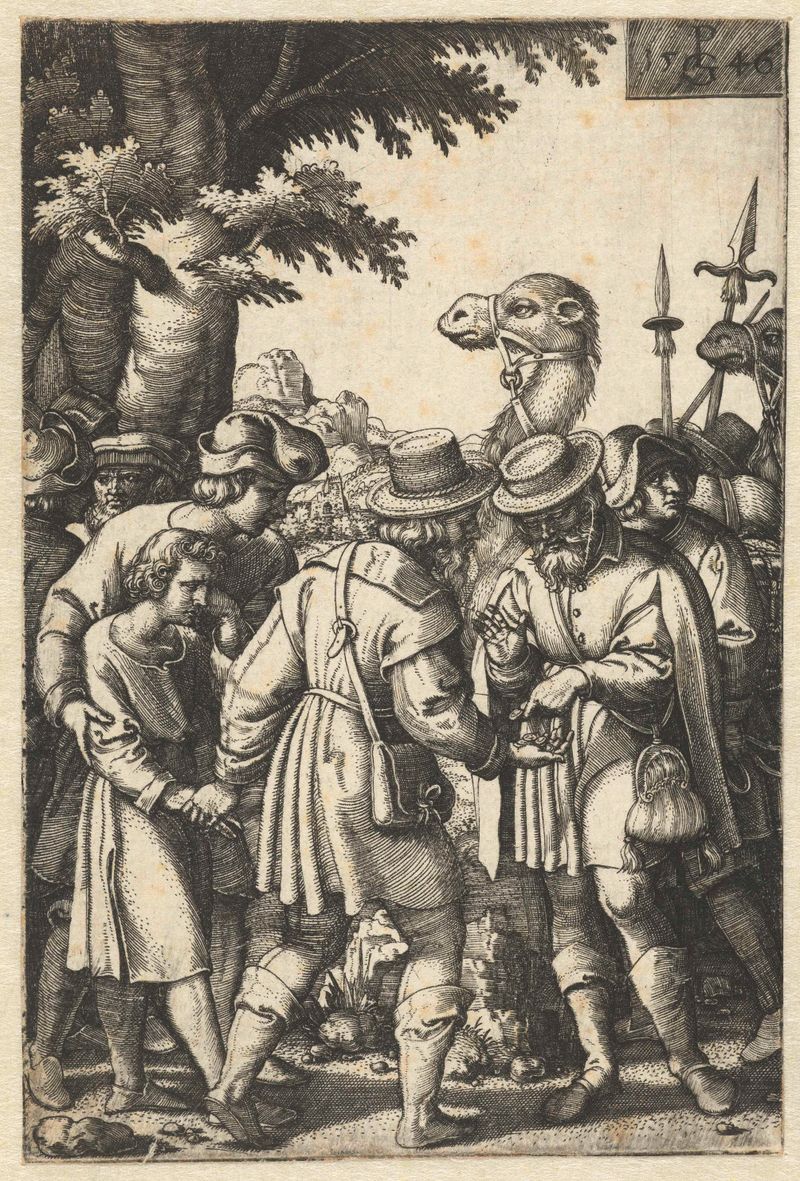
Jozef wordt verkocht aan kooplieden op weg naar Egypte
Georg Pencz

Aanbidding der koningen
Georg Pencz
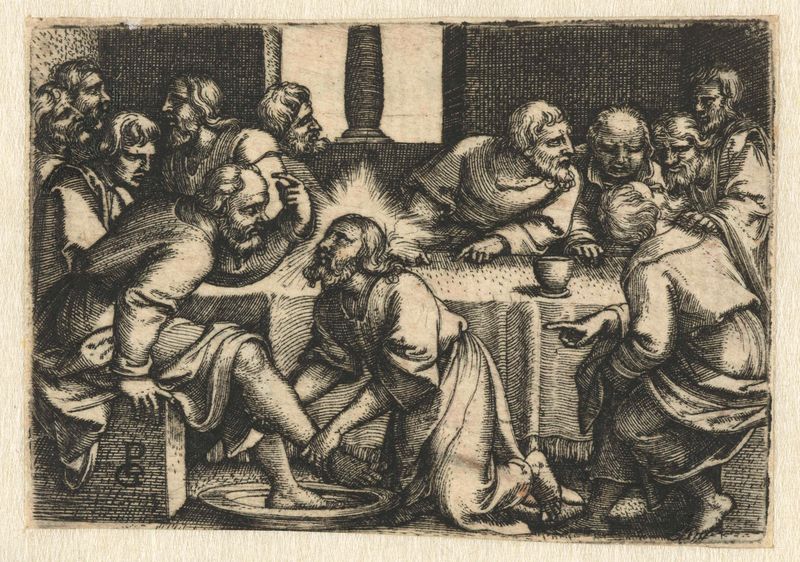
Petrus protesteert als Christus zijn voeten wast
Georg Pencz
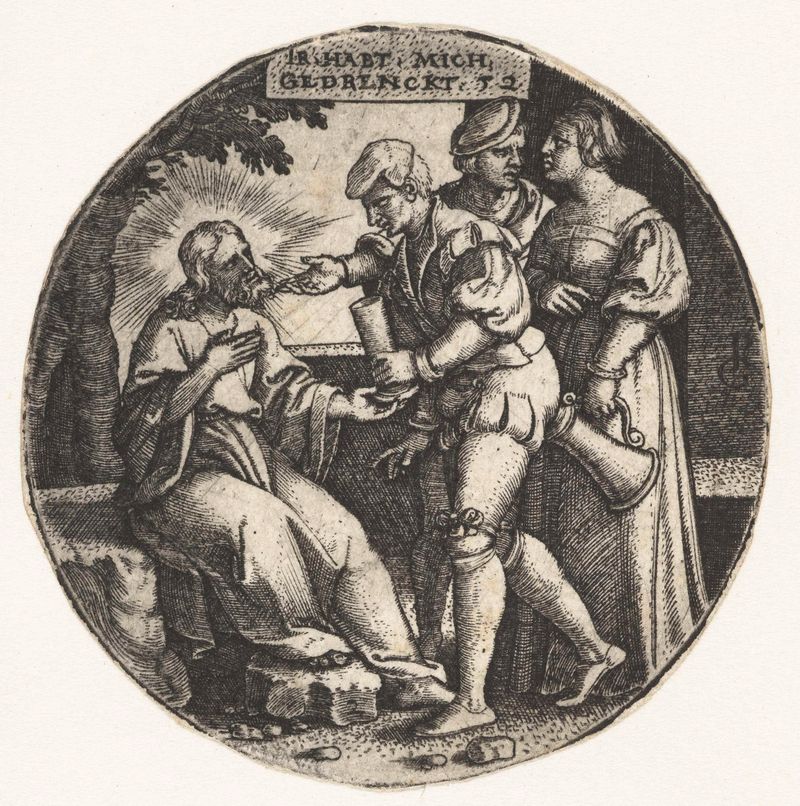
Christus heeft dorst en krijgt drinken aangeboden
Georg Pencz
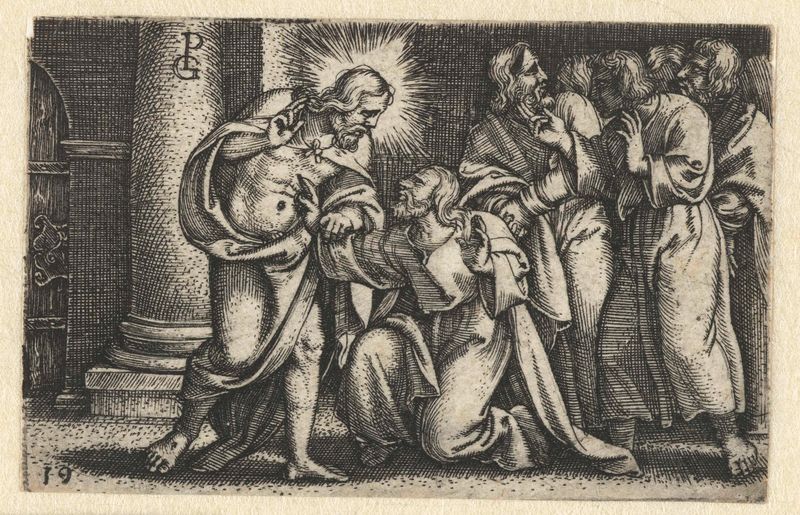
Ongelovige Thomas raakt wonden Christus aan
Georg Pencz

Offer van Abraham van Isaak
Georg Pencz
More Religious Art
Browse all →
The Return of the Prodigal Son
Rembrandt van Rijn

The Garden of Earthly Delights
El Bosco

Count Orgaz’ funeral
El Greco

The Hundred Guilder Print: the central piece with Christ preaching, the plate arched
Rembrandt van Rijn

The Descent from the Cross
Rogier van der Weyden

The return of the prodigal son
Rembrandt van Rijn