
Der Hüter-Einzug in Perchtoldsdorf am 12. November 1939 — History & Facts
What if silence could speak through light? Oskar Laske's Der Hüter-Einzug in Perchtoldsdorf am 12. November 1939 encapsulates a moment where the quietude of the world meets the promise of rebirth, delicately woven into a tapestry of colors and shadows. Look to the left at the soft glow radiating from the distant horizon, where hues of gold and blue merge, creating a serene ambiance. The figures stand at the forefront, their postures conveying a blend of reverence and anticipation.
Notice how Laske employs a muted palette, allowing the subtle interplay between light and shadow to evoke the complex emotions of a solemn occasion. The composition guides your gaze through the diagonal lines formed by the gathering crowd, drawing you into the heart of the scene where stillness resonates. As you delve deeper, contemplate the contrasting elements of hope and despair present in the artwork. The tranquility of the landscape juxtaposes the heavy historical context of 1939, a year tainted by turmoil and uncertainty in Europe.
Each figure, while unified, embodies individual stories of longing and resilience, encapsulated in their quiet demeanor. The soft illumination hints at the idea of rebirth amidst darkness, suggesting an enduring spirit despite the impending shadows of conflict. Laske created this piece during a turbulent period in Europe, just as the world was inching toward the conflict of World War II. Working in Vienna, he drew inspiration from the cultural richness surrounding him while confronting the somber realities of his time.
This painting stands as a testament not only to his artistic prowess but also to the poignant moment in history that shaped the landscape of both art and humanity.
More Artworks by Oskar Laske
Browse all →
Faschingsumzug am Stock im Eisen Platz
Oskar Laske

Schönbrunn (Winter)
Oskar Laske
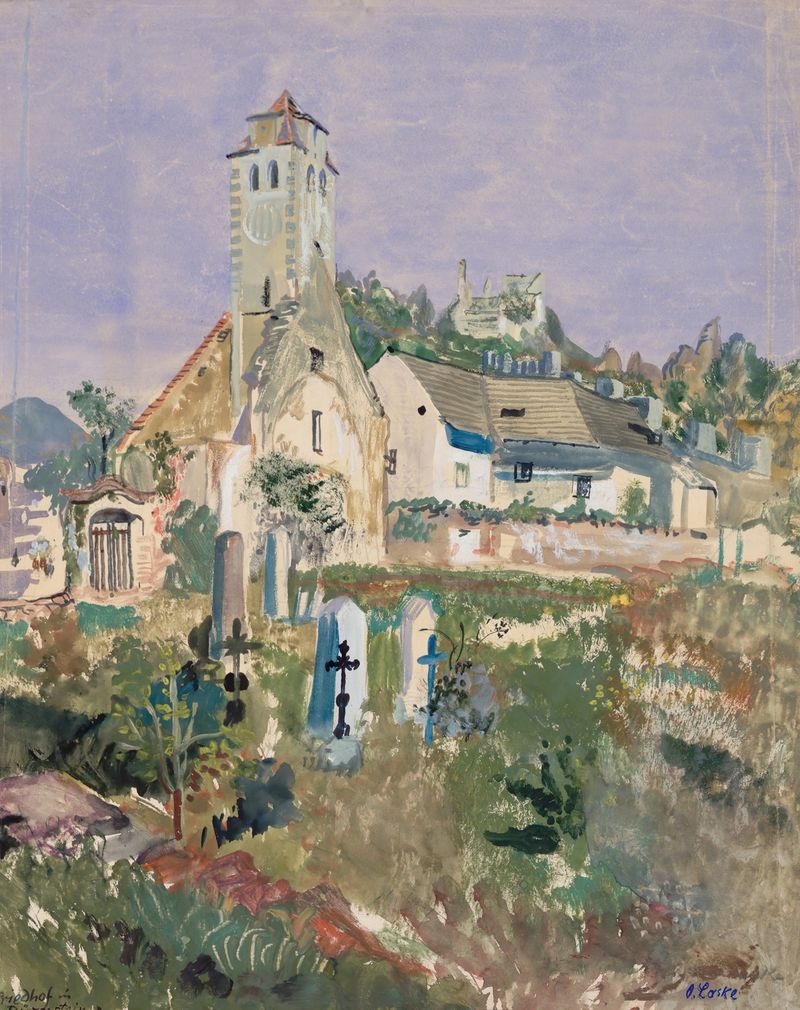
Friedhof in Dürnstein
Oskar Laske

Pratermotiv an der alten Donau
Oskar Laske

Frühjahrsnebel in Niederösterreich
Oskar Laske

Begräbnis des Wiener Bürgermeisters Dr. Karl Lueger
Oskar Laske

Maria Theresien-Denkmal mit Blick gegen das Burgtor
Oskar Laske
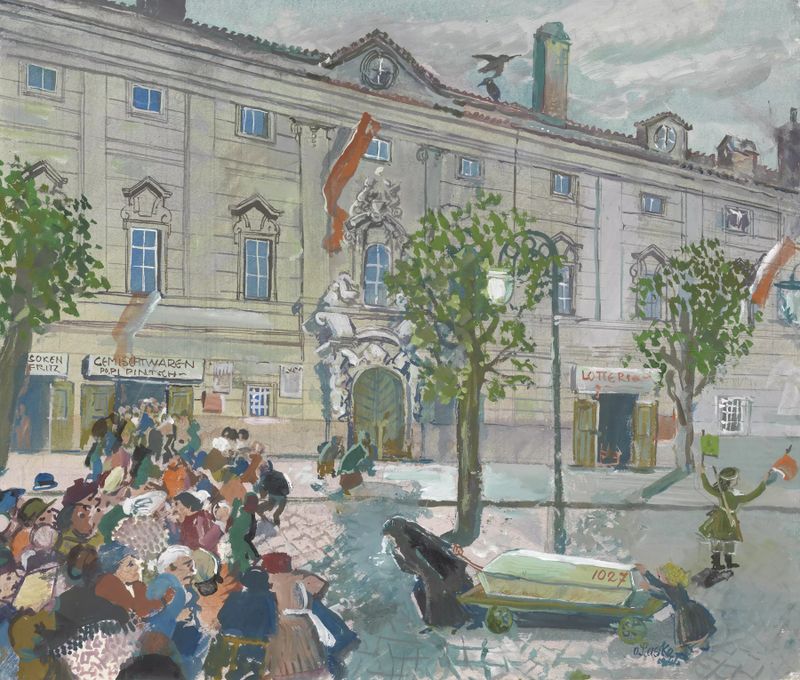
Wiener Straßenbild vom Mai 1945
Oskar Laske

Winterlandschaft in Pressbaum
Oskar Laske

Ansicht von Positano
Oskar Laske





