
Desembarco de los puritanos en América ( ) — History & Facts
A hush of anticipation hangs in the air as the prow of a ship touches new land, and a cluster of figures, tightly knit, prepares to step onto unfamiliar soil. The artist, Antonio Gisbert, chooses not to focus on the chaos or hardship of the journey, but rather on the solemnity and gravity of arrival. The light falls with purpose, illuminating the faces and hands of the central group, their eyes fixed on the horizon or bowed in contemplation.
Each gesture is deliberate: a woman steadies a child, a man holds a book—perhaps a Bible—close to his chest, while another raises his hat in what could be prayer or gratitude. The composition draws the viewer in, guiding the gaze from the sturdy figures in the foreground to the distant ship, its sails furled, waiting in the mist. Painted in 1883, this work belongs to a moment when historical painting was the favored genre for grand public statements in Europe. Artists like Gisbert were often called upon to commemorate foundational myths and moments of national identity, whether their own or, as here, those of distant lands.
The subject—the landing of the Puritans in America in 1620, after their voyage aboard the Mayflower—was a symbol of faith, endurance, and the search for liberty, themes that resonated in the late nineteenth century as nations reconsidered their origins and futures. History has kept few traces of this particular canvas's journey, but its careful staging and solemn palette invite us to linger, to imagine the weight of that first step, and to see in these faces both the hopes and uncertainties of any new beginning.
More Artworks by Antonio Gisbert

Fusilamiento de Torrijos y sus compañeros en las playas de Málaga
Antonio Gisbert

Ejecución de los comuneros de Castilla
Antonio Gisbert
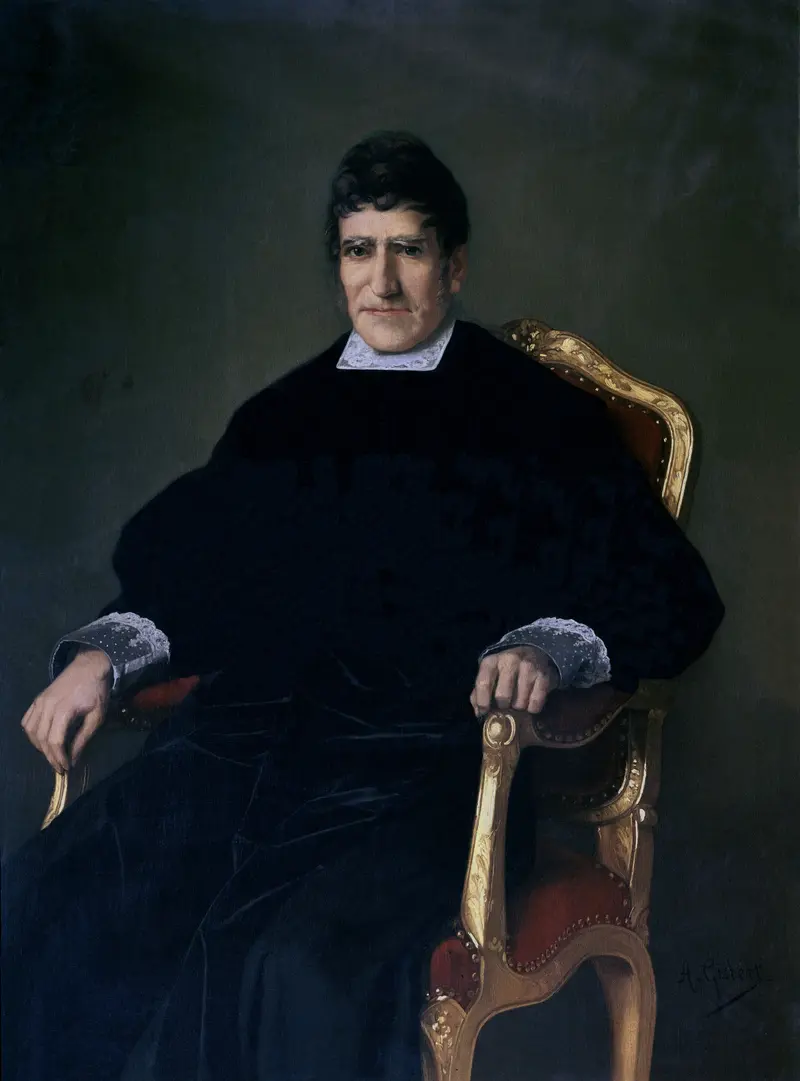
Porträt des José María Calatrava y Martínez (1781-1846)
Antonio Gisbert
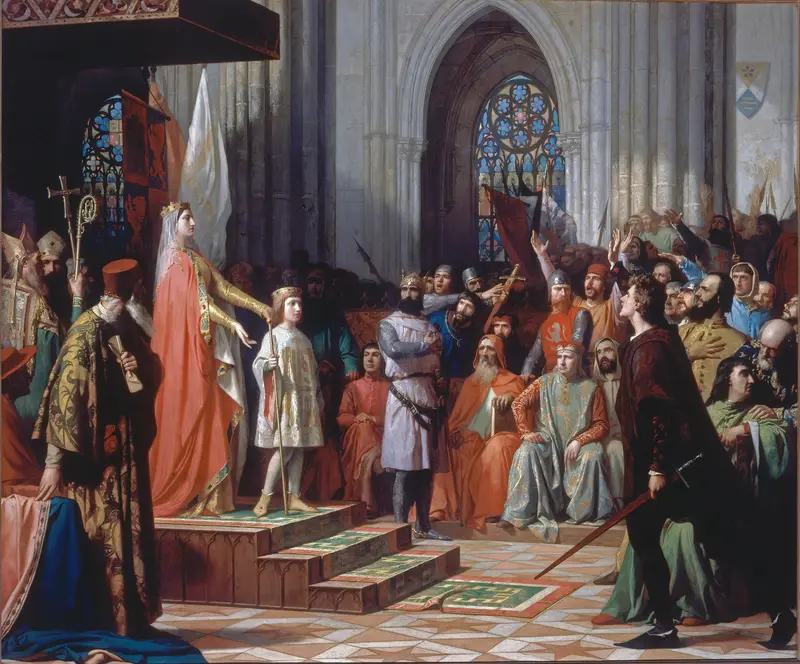
María de Molina presenta a su hijo Fernando IV en las Cortes de Valladolid de
Antonio Gisbert
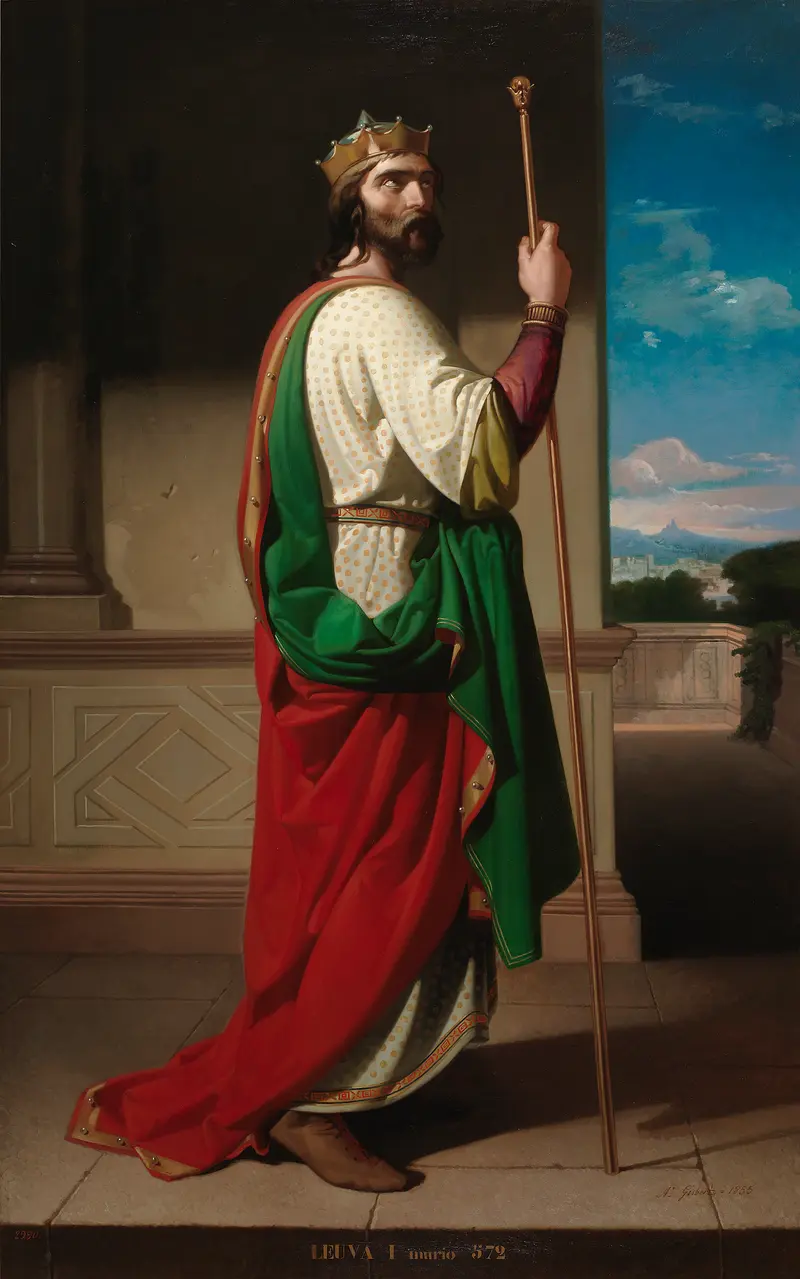
Liuva I, rey de los Visigodos
Antonio Gisbert
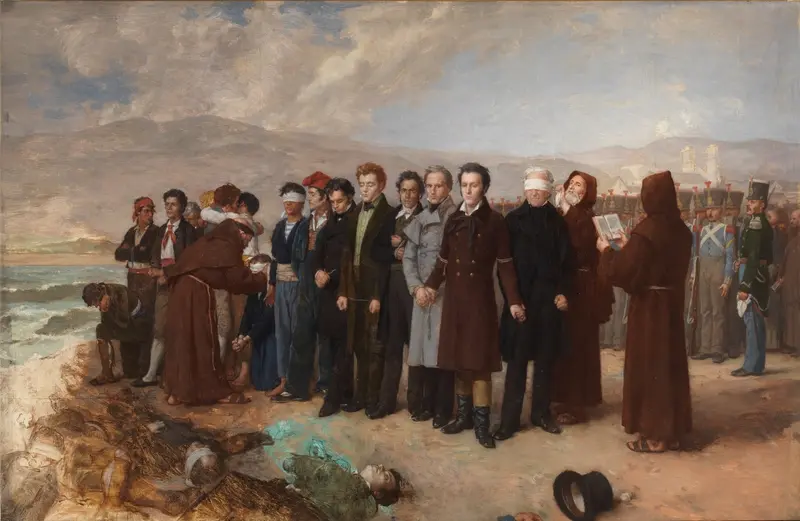
The Execution by Firing Squad of Torrijos and his Companions on the beach at Málaga
Antonio Gisbert





