
Liuva I, rey de los Visigodos — History & Facts
What first draws the eye in Liuva I, rey de los Visigodos by Antonio Gisbert is the king’s unwavering gaze, turned toward the viewer with a quiet authority that seems to bridge centuries. The composition is a study in contrasts: the solemn shadow of the architectural interior frames Liuva’s figure, while the sunlit terrace and distant blue sky open behind him, hinting at a world beyond the throne room. His white tunic, patterned with gold, and the rich crimson mantle draped over his shoulders, signal both purity and power, while the long scepter he grasps is less a weapon than a symbol of governance.
Every fold of fabric is carefully modeled, the light catching on the gold trim and the green lining, guiding the viewer’s attention from the crown down to the king’s steady hand. The result is a portrait that feels poised between ceremony and introspection, as if Liuva is caught in a moment of decision. Painted in 1855, this work belongs to a period when Spanish artists, inspired by Romantic historicism, sought to recover and reimagine the nation’s distant past. Kings like Liuva I, who ruled the Visigoths in the late sixth century, became vehicles for exploring questions of leadership, legitimacy, and national identity—central themes in a Spain still reckoning with its own modern transformations.
Such paintings were often commissioned for public institutions or official collections, meant to instruct as much as to impress, and to populate the halls of power with the faces of legendary rulers. While little is recorded about the specific journey of this canvas, its presence in a major collection today speaks to the enduring fascination with the Visigothic legacy. The king’s profile, at once distant and direct, invites us to consider the burdens of rule and the stories that survive in paint and memory.
More Artworks by Antonio Gisbert

Fusilamiento de Torrijos y sus compañeros en las playas de Málaga
Antonio Gisbert

Ejecución de los comuneros de Castilla
Antonio Gisbert
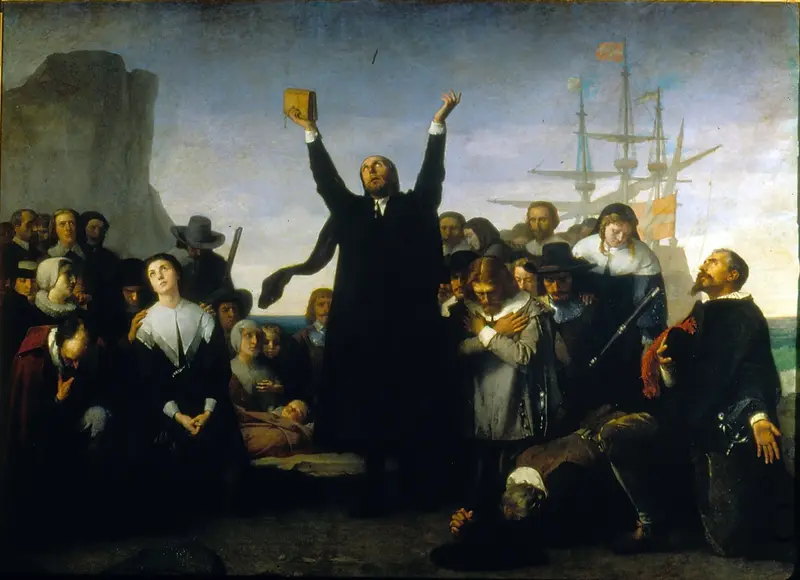
Desembarco de los puritanos en América ( )
Antonio Gisbert
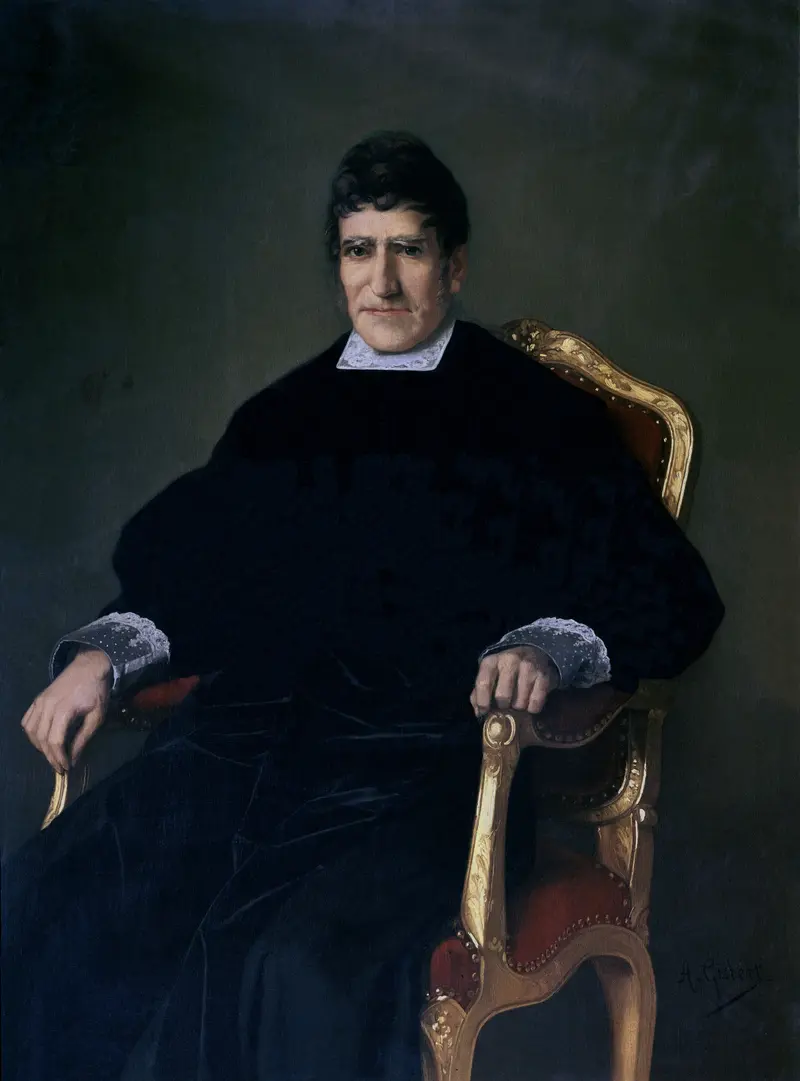
Porträt des José María Calatrava y Martínez (1781-1846)
Antonio Gisbert
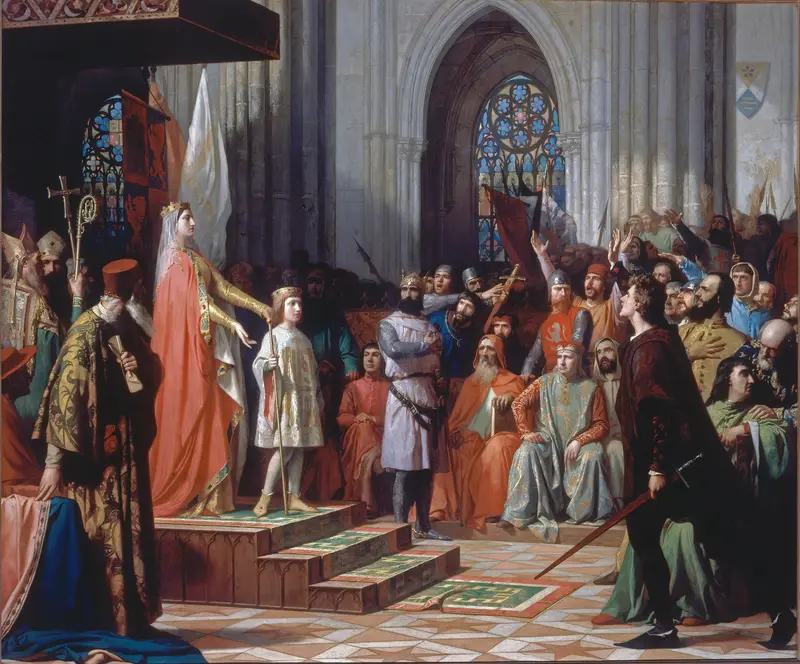
María de Molina presenta a su hijo Fernando IV en las Cortes de Valladolid de
Antonio Gisbert
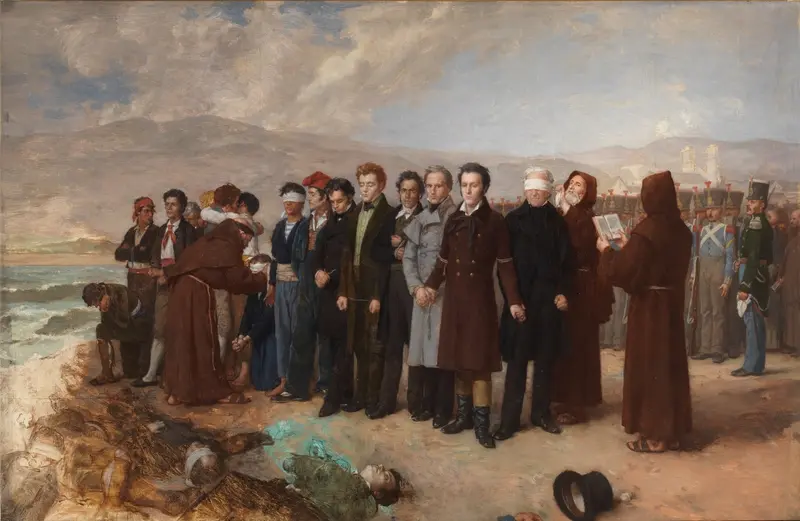
The Execution by Firing Squad of Torrijos and his Companions on the beach at Málaga
Antonio Gisbert





