
Dessous du pont de Grèves, Paris — History & Facts
Where does light end, and longing begin? In the delicate interplay of color and shadow, an ethereal question resonates, inviting us to ponder the spaces where beauty meets desire. Look to the center of the canvas, where soft reflections ripple along the water’s surface, inviting your gaze to linger. The bridges loom overhead, their arches cradling the scene with an intimate embrace. Notice how muted blues and greens bleed into warmer earth tones, creating a harmonious dialogue that speaks of fleeting moments and nostalgia.
The subtle gradations of light suggest an overcast sky, allowing the essence of Paris to emanate through the palette, while the brushstrokes convey a sense of movement, almost as if the water itself is breathing. The contrast between the solid forms of the bridge and the fluidity of the water embodies the tension between permanence and transience. Look closer, and you may catch the faint outline of figures beneath the arch, mere silhouettes that whisper of lives intertwined with the city’s pulse. This evokes an emotional resonance—an invitation to reflect on the stories left untold within the shadows, as the very essence of the scene seems to straddle the line between reality and memory. In 1848, the artist created this piece during a turbulent period in France, marked by revolution and social change.
Living in Paris, Péquégnot was influenced by the Romantic movement, which celebrated emotional expression and the beauty of nature. As the city buzzed with new ideas and upheavals, he sought to capture the fleeting qualities of light and color, finding solace in the quiet moments of urban life that often go unnoticed amid the chaos.
More Artworks by Auguste Péquégnot
Browse all →
Les Buttes-Chaumont
Auguste Péquégnot

Moulin des corbeaux à Charenton-le-Pont
Auguste Péquégnot

Bords de la Bièvre ou Poterne des peupliers à la Glacière
Auguste Péquégnot

Vue des Buttes-Chaumont
Auguste Péquégnot

Buttes Chaumont, Paris, 1849
Auguste Péquégnot
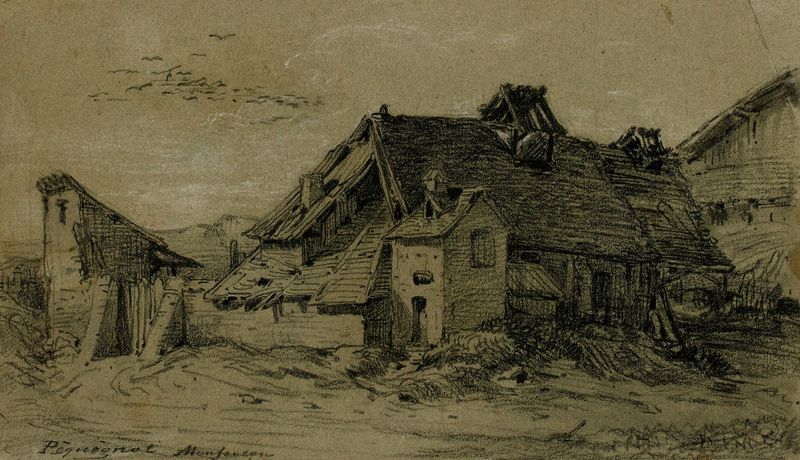
Les Buttes-Chaumont
Auguste Péquégnot
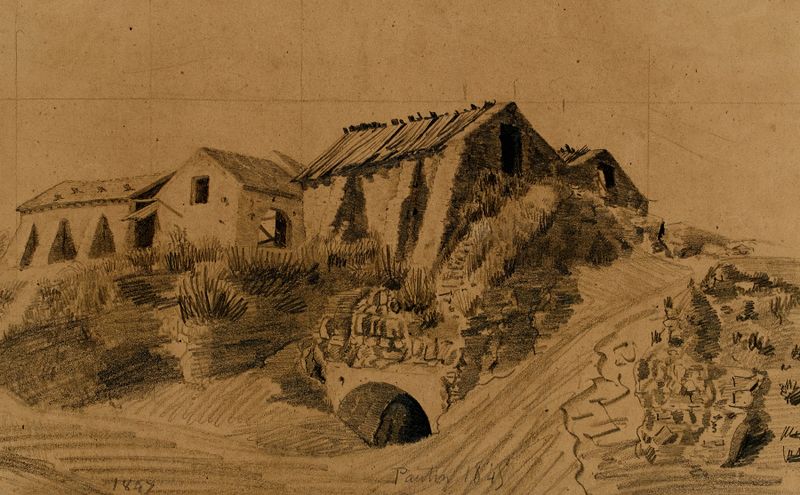
Vue de Pantin
Auguste Péquégnot

Cour de ferme, rue Vaugirard
Auguste Péquégnot

La Bièvre près de Saint-Médard, entre les rues Mouffetard et Pascal
Auguste Péquégnot

Vue d’une carrière aux Buttes-Chaumont
Auguste Péquégnot





