
Les Buttes-Chaumont — History & Facts
Who listens when art speaks of silence? In a world clamoring for noise, serenity finds its voice through tranquil landscapes that invite contemplation and peace. Look to the horizon, where gentle hills cradle the sky, framed by whispering trees and delicate brushstrokes that suggest movement in the stillness. The muted palette of greens and blues envelops the viewer, while the soft, diffused light bathes the scene in a warm glow, creating an ethereal atmosphere. Notice how the light plays upon the foliage, where dapples create a soft lacework of shadow and illumination, compelling your gaze to explore every corner of this serene retreat. These elements of nature, coupled with the delicate handling of form, invite a calming introspection.
The sparse figures, almost lost within this vast expanse, embody a profound connection to their surroundings, suggesting a mutual respect between humanity and nature. Here lies the tension between solitude and solace—each brushstroke inviting you to feel the weight of silence while celebrating the vibrant life around it. The artist captures not merely a scene but an essence, where the heart finds respite and the mind can wander freely. In 1855, amidst a France that was experiencing rapid industrial change, the artist turned to the tranquil beauty of Les Buttes-Chaumont, a park that evoked a sense of refuge.
During this period, he was deeply immersed in capturing the nuanced interactions between landscape and culture, reflecting a broader Romantic fascination with nature. The artwork resonates as a counterpoint to the era’s growing frenetic energy, holding onto a peaceful moment that speaks volumes in its quietude.
More Artworks by Auguste Péquégnot
Browse all →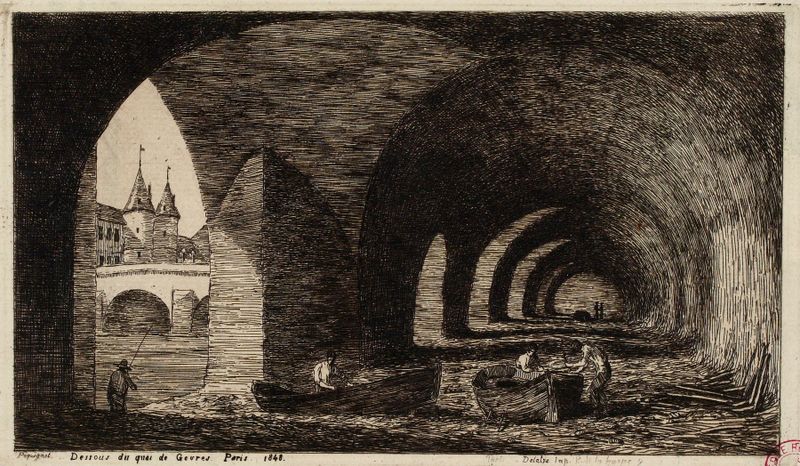
Dessous du pont de Grèves, Paris
Auguste Péquégnot

Moulin des corbeaux à Charenton-le-Pont
Auguste Péquégnot

Bords de la Bièvre ou Poterne des peupliers à la Glacière
Auguste Péquégnot

Vue des Buttes-Chaumont
Auguste Péquégnot

Buttes Chaumont, Paris, 1849
Auguste Péquégnot
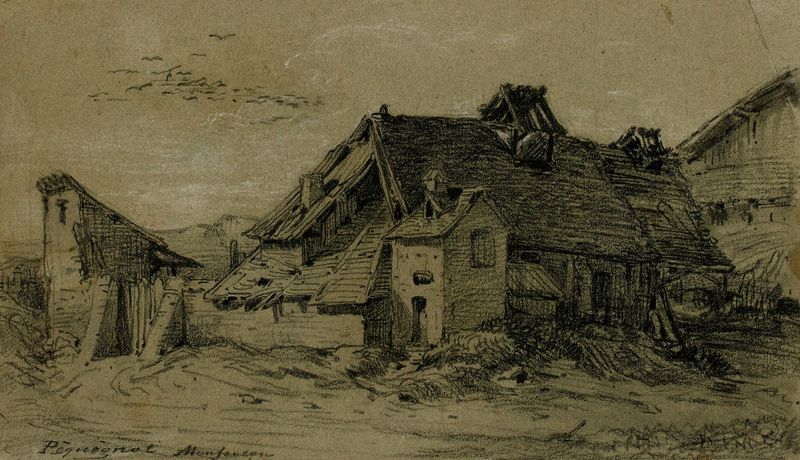
Les Buttes-Chaumont
Auguste Péquégnot
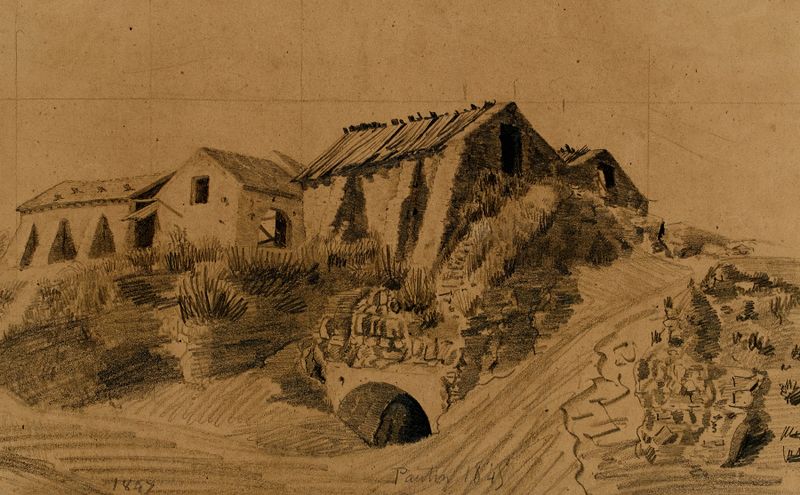
Vue de Pantin
Auguste Péquégnot

Cour de ferme, rue Vaugirard
Auguste Péquégnot

La Bièvre près de Saint-Médard, entre les rues Mouffetard et Pascal
Auguste Péquégnot

Vue d’une carrière aux Buttes-Chaumont
Auguste Péquégnot





