
Destroyed House near Kehl — History & Facts
Could beauty survive in a century of chaos? In the aftermath of destruction, longing lingers amidst the ruins, whispering tales of what once was. Look to the left at the crumbling walls, their surfaces ravaged by time and nature's fury. The subdued palette of earthy browns and deep greens creates a haunting atmosphere, while light filters through gaps, illuminating fragments of the past. Notice how the twisted branches of nearby trees reach out, encroaching upon the remnants of human habitation, symbolizing nature's relentless reclaiming of space.
The careful brushwork highlights both decay and resilience, inviting the viewer to contemplate the tenuous balance between destruction and rebirth. Within this artwork lies a poignant tension. The house, seemingly abandoned yet teeming with stories, represents lost dreams and the desire for a home—an emotional resonance that strikes deeply. In contrast, the vibrant greenery surrounding the ruins suggests a pulse of life that refuses to be extinguished, hinting at the possibility of renewal even amid despair.
Every crack and fragment speaks of longing, a silent testament to what was cherished and the desire to remember. In 1870, Arnold Böcklin painted this work during a period marked by both personal tragedy and the tumult of Europe, navigating the aftershocks of revolution and conflict. Living in Switzerland at the time, he was exploring themes of mythology, nature, and the human experience, reflecting on the fragility of existence. This piece captures not only his artistic evolution but also the spirit of an era grappling with the remnants of chaos and the ever-present flicker of hope.
More Artworks by Arnold Böcklin
Browse all →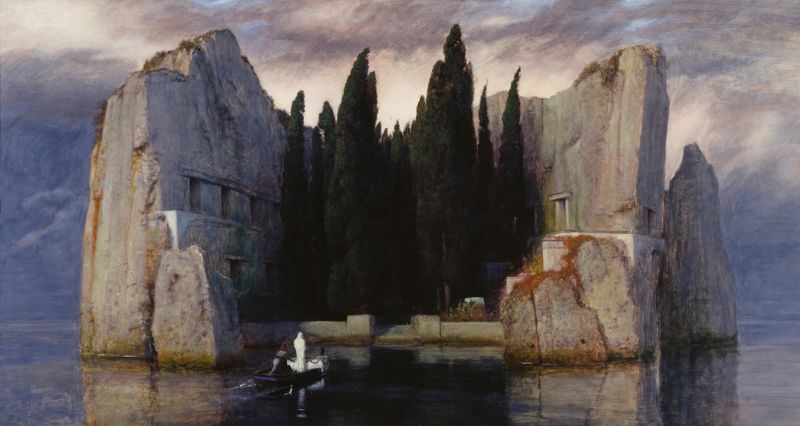
Die Toteninsel III
Arnold Böcklin
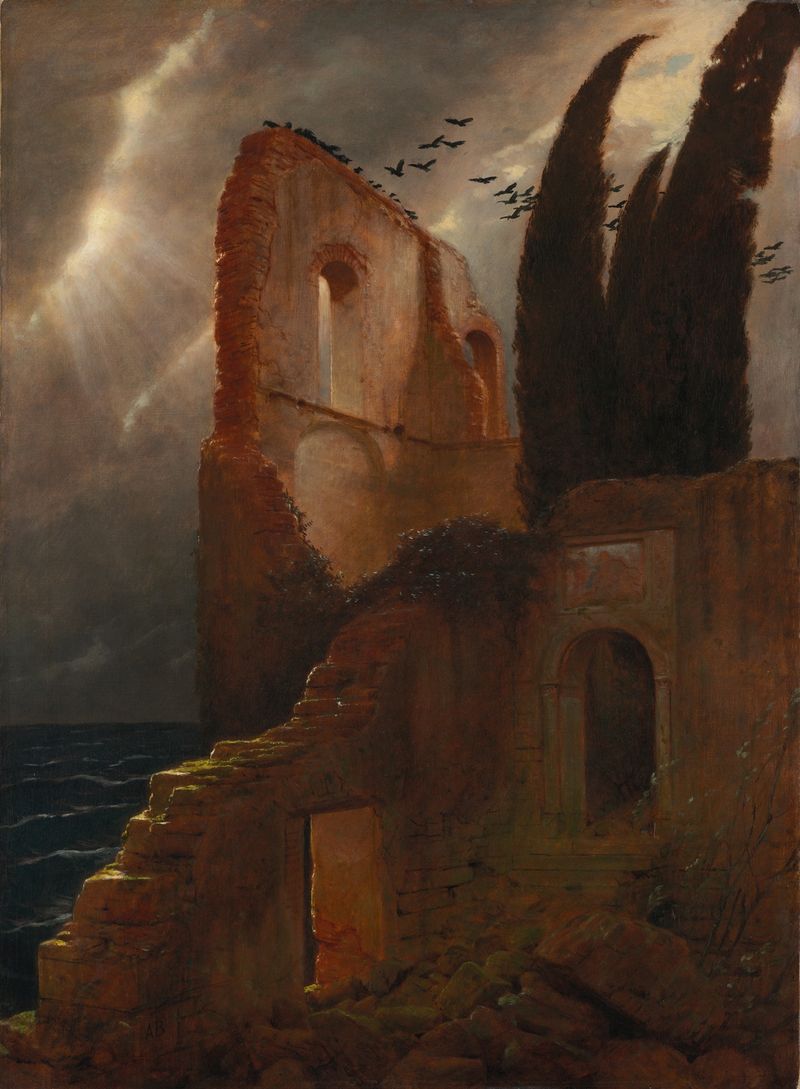
Ruin by the Sea
Arnold Böcklin
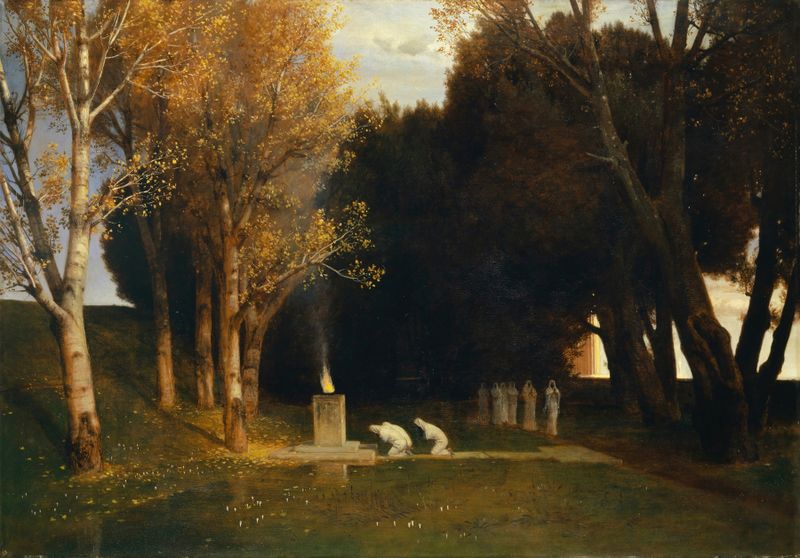
The Sacred Grove
Arnold Böcklin
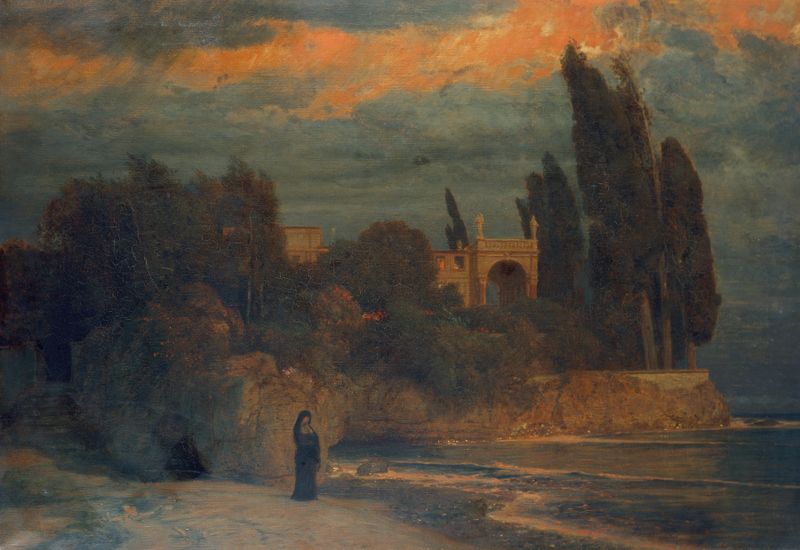
Villa by the Sea
Arnold Böcklin
Summer Day
Arnold Böcklin
Spring Day (The Three Life Ages)
Arnold Böcklin
Spring in a Narrow Gorge (Quell in einer Felsschluct)
Arnold Böcklin
Landscape in the Roman Campagna
Arnold Böcklin
Landscape near Palestrina
Arnold Böcklin
High Mountain Landscape With Chamois
Arnold Böcklin





