
Landscape near Palestrina — History & Facts
Could beauty survive in a century of chaos? As the world wrestled with upheaval and transformation, Landscape near Palestrina emerges as a testament to perseverance through art. In this exquisite piece, nature stands resilient, beckoning the viewer to contemplate the delicate balance between serenity and disorder, a reflection of an artist's obsession with capturing the sublime. Look to the foreground, where lush green hills seamlessly rise, cradling the soft curve of a distant horizon. The colors are vibrant yet muted, conjuring an atmosphere that feels both idyllic and melancholic.
Notice how light dances upon the leaves, revealing intricate details of foliage that seem to whisper stories of tranquility. The palette shifts softly from verdant greens to warm earth tones, creating a harmony that draws the eye deeper into the landscape, inviting exploration of the world beyond. The contrasts inherent in this work are striking. While the foreground teems with life, the sky looms overhead, heavy with ominous clouds, suggesting an impending storm.
This duality speaks to the tension between beauty and turmoil, reflecting the artist's internal struggle. The winding path through the hills suggests a journey, perhaps one of self-discovery, while the distant ruins hint at the passage of time and history, inviting viewers to ponder their own place within this eternal cycle. In 1853, Böcklin painted this piece during a period marked by personal challenges and a broader artistic transition in Europe. Living in Switzerland at the time, he was influenced by the Romantic movement, which emphasized the emotional connection to nature.
This work represents a pivotal moment in his career, embodying his evolving style and thematic preoccupations with the sublime, the mysterious, and the interplay between humanity and nature.
More Artworks by Arnold Böcklin
Browse all →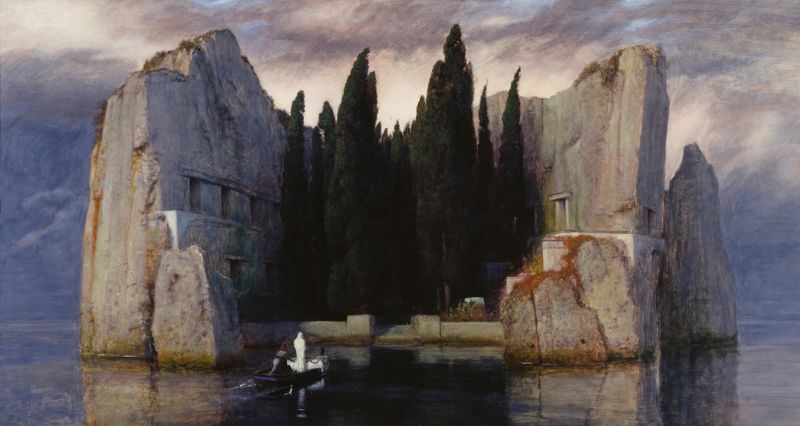
Die Toteninsel III
Arnold Böcklin
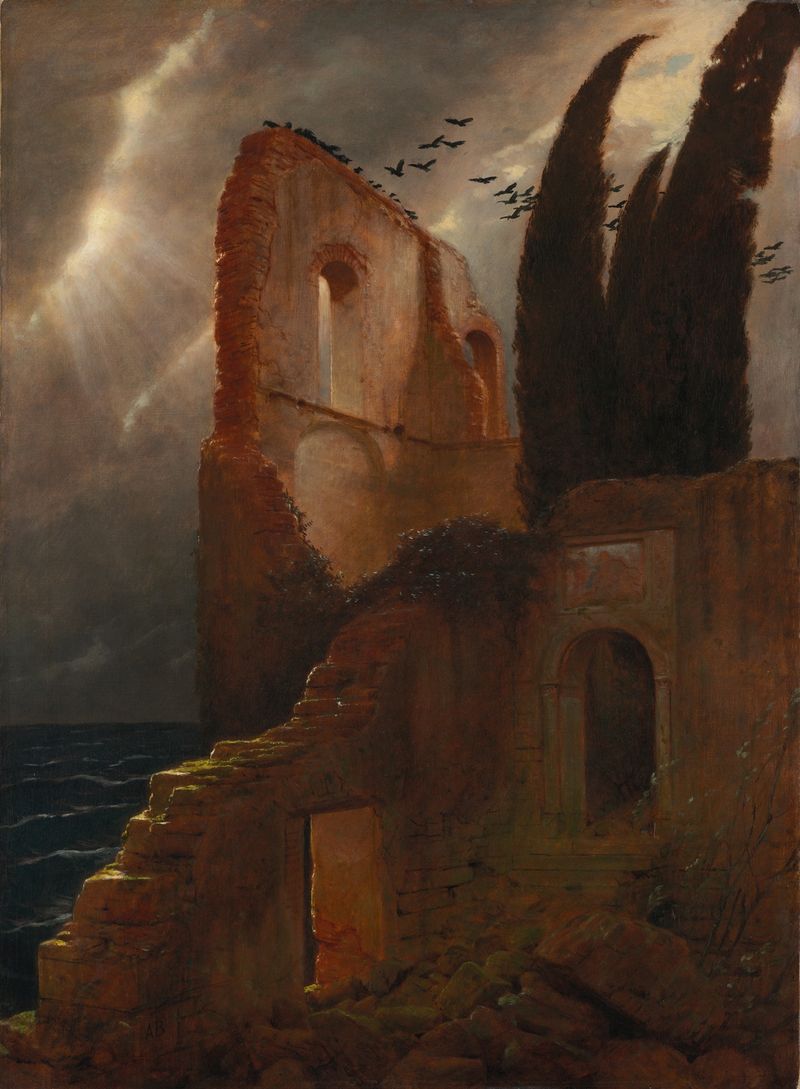
Ruin by the Sea
Arnold Böcklin
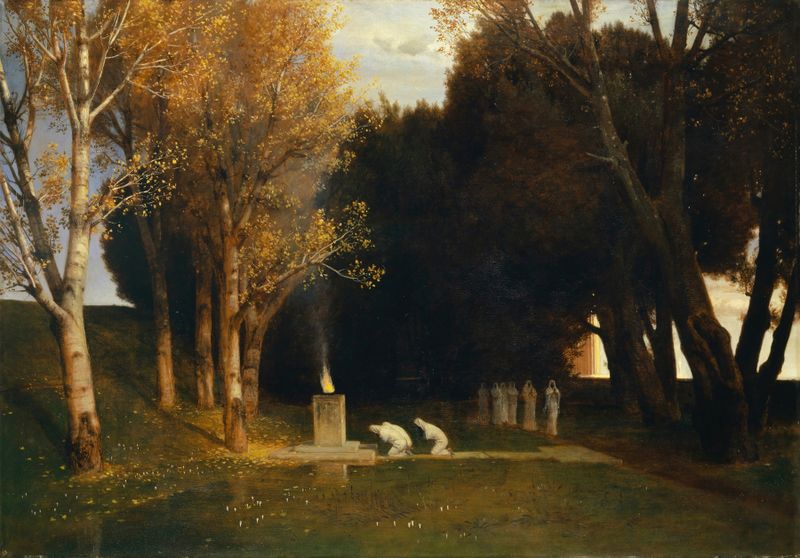
The Sacred Grove
Arnold Böcklin
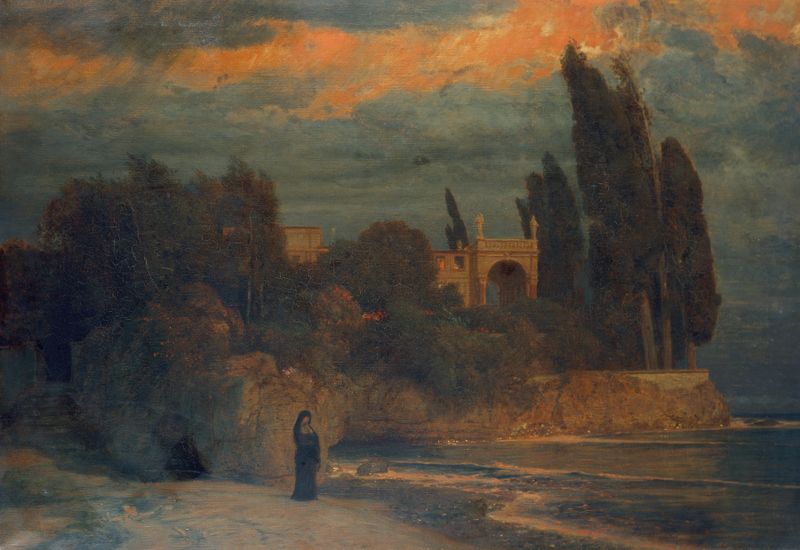
Villa by the Sea
Arnold Böcklin
Summer Day
Arnold Böcklin
Spring Day (The Three Life Ages)
Arnold Böcklin
Spring in a Narrow Gorge (Quell in einer Felsschluct)
Arnold Böcklin
Landscape in the Roman Campagna
Arnold Böcklin
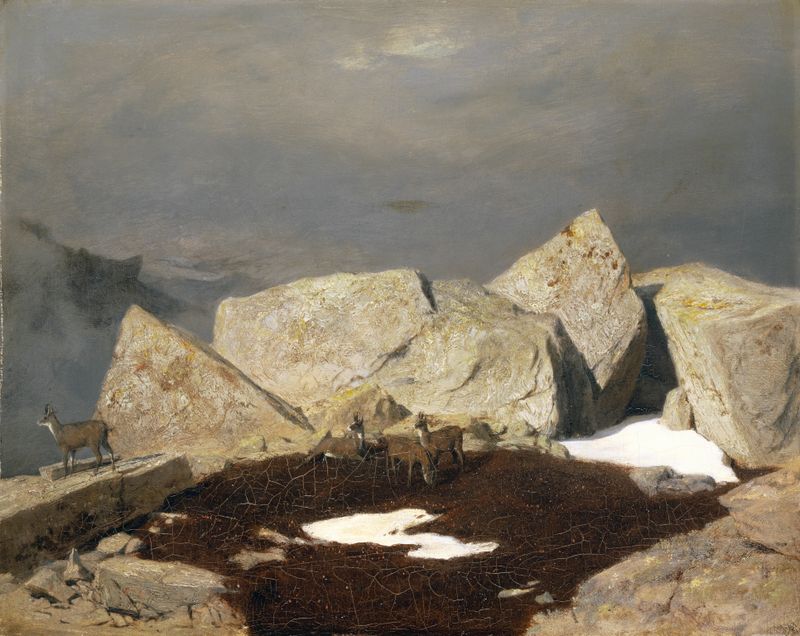
High Mountain Landscape With Chamois
Arnold Böcklin
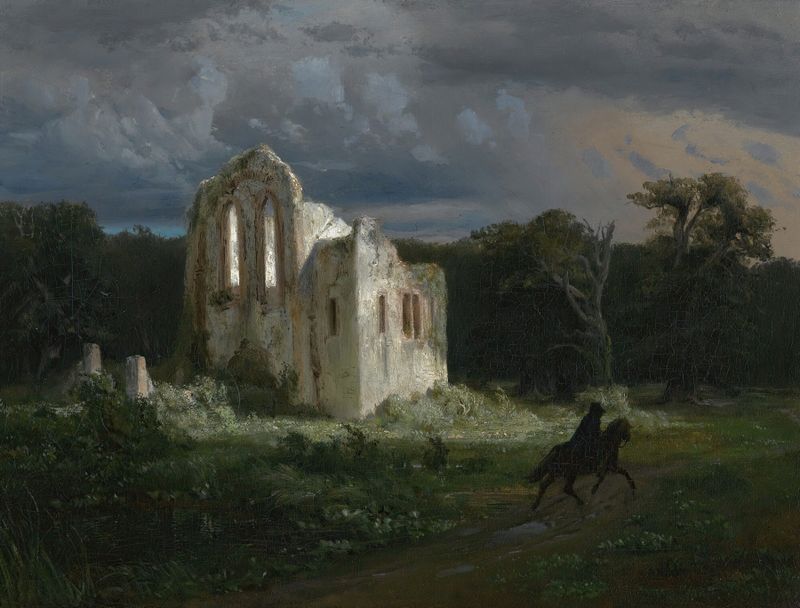
Mondscheinlandschaft Mit Ruine (Moonlit Landscape)
Arnold Böcklin





