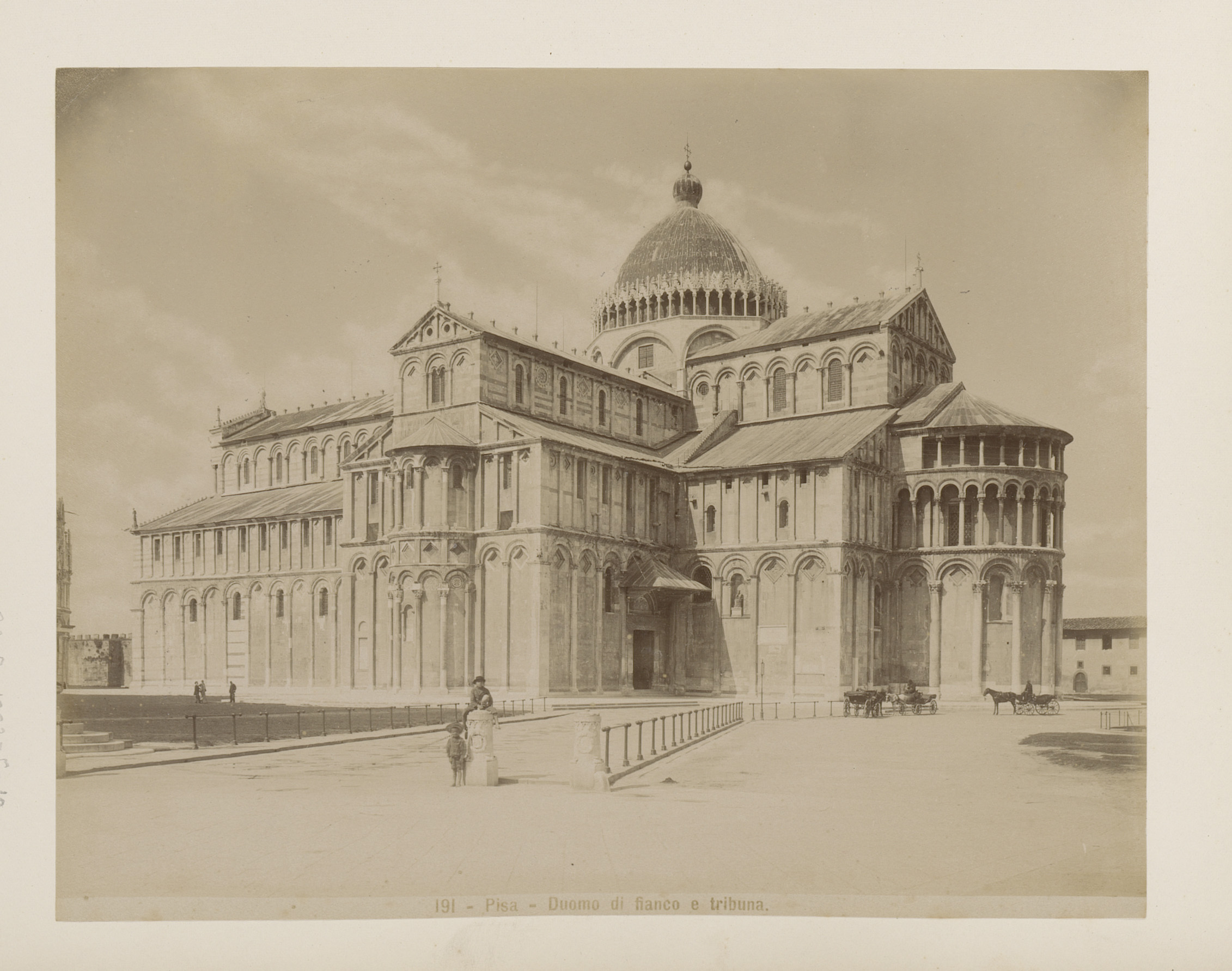
Deur van de Dom te Pisa, Italië — History & Analysis
Could a single brushstroke hold eternity? In Deur van de Dom te Pisa, Italië, longing reverberates through the rich textures and gentle palette, inviting viewers to explore the depths of time and place. Look closely at the intricate details of the doorframe. Notice how the warm ochres and cool grays blend seamlessly, creating a sense of age and reverence. The soft light captures the weathered stone, revealing shadows that dance across its surface, suggesting stories whispered through centuries.
The composition beckons your gaze to the ornate carvings, each telling a tale of devotion and artistry that transcends the moment. As you delve deeper, consider the interplay between stillness and the echoes of history. The door stands as a barrier while simultaneously inviting exploration, symbolizing both the physical and emotional thresholds we encounter in life. The contrast of light and shadow reflects the duality of existence—hope intertwined with nostalgia, a yearning for what lies beyond.
Every element is laden with significance, encouraging introspection on our own journeys. Created between 1860 and 1881, this work emerged during a transformative period for Giacomo Brogi, who was establishing his reputation as a photographer and painter. Working in Italy, he captured the essence of architectural beauty, a response to the Romantic movement's fascination with the past. In this time, the world was grappling with rapid changes, yet Brogi found solace in the enduring legacy of historic sites, immortalizing them in his art.