
Die Augustinerbastei in Wien — History & Facts
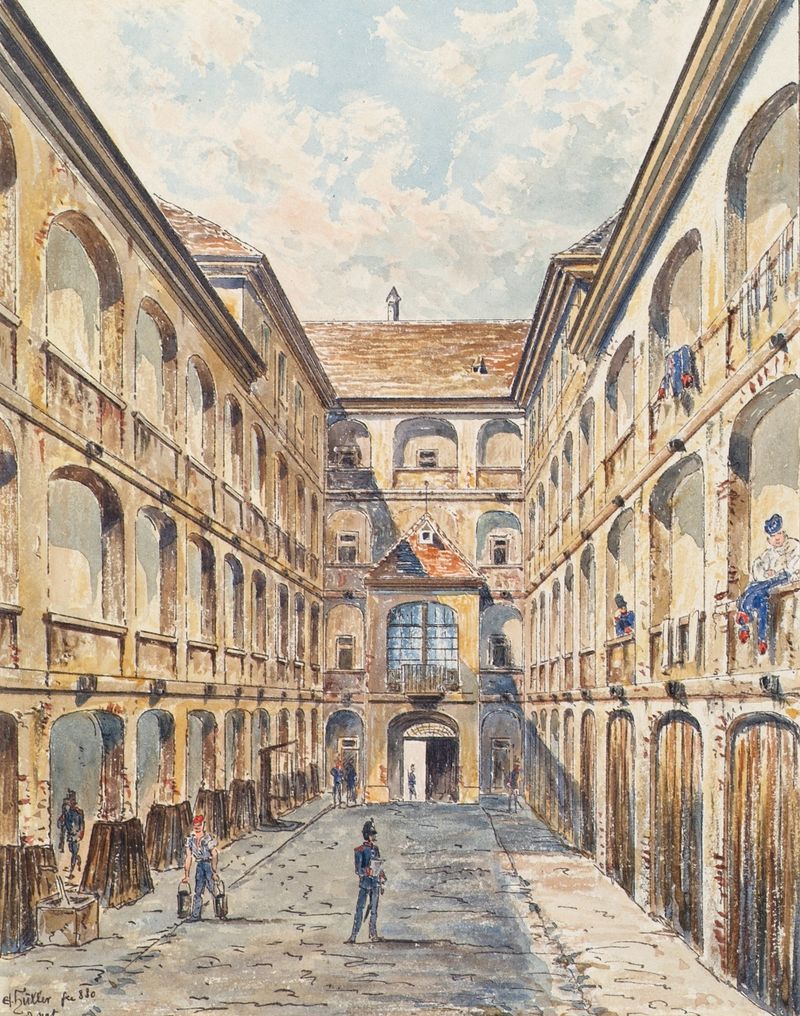
The canvas doesn’t lie — it simply waits. What echoes through the depths of a landscape, invoking a profound sense of longing and nostalgia? Sometimes, art builds bridges to the past, allowing us to traverse emotions that illuminate the human experience. Look to the left at the crumbling stone walls of the Augustinerbastei, weathered yet resolute against the soft pastel sky. The artist deftly captures the interplay of light and shadow, with golden rays filtering through the trees, caressing the ancient structures.
Notice the muted greens and browns, harmonizing with the architecture, evoking a sense of both decay and endurance. Each brushstroke invites the viewer to explore the forgotten stories etched into the stones, whispering of a time long gone. The juxtaposition between the natural elements and human-made structures speaks to the tension of existence: the inevitability of time affecting both nature and civilization. The lush greenery surrounding the bastion is vibrant yet melancholic, suggesting a yearning for connection with a world that has altered irreversibly.
While the old architecture symbolizes permanence, the encroaching foliage hints at nature's quiet reclaiming, embodying a bittersweet relationship between man and the environment. In 1858, Emil Hütter painted this remarkable work while residing in Vienna, a city rich in history and artistic fervor. At this juncture, Europe was undergoing immense transformation, with the Romantic movement and evolving urban landscapes influencing many artists. Hütter, keenly aware of these shifts, captured the essence of this moment, intertwining personal and collective memories within his depiction of the Augustinerbastei, bridging nostalgia with a lingering sense of loss.
More Artworks by Emil Hütter
Browse all →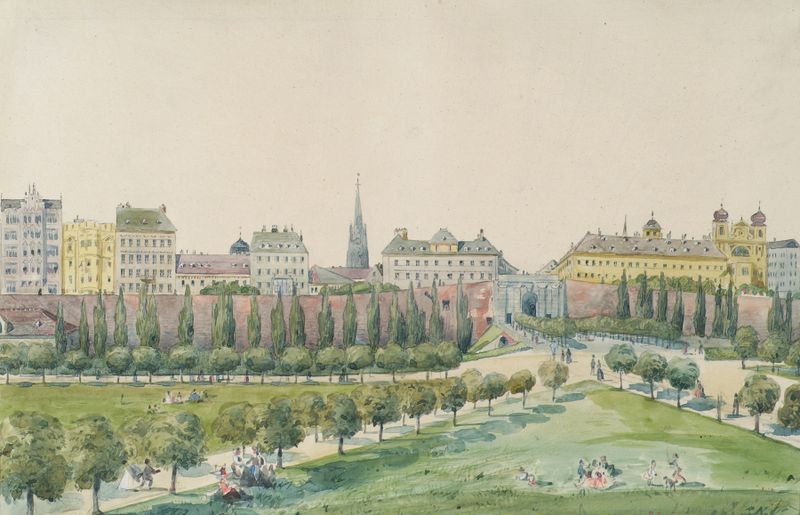
Die Stubenbastei und das Stubentor in Wien
Emil Hütter
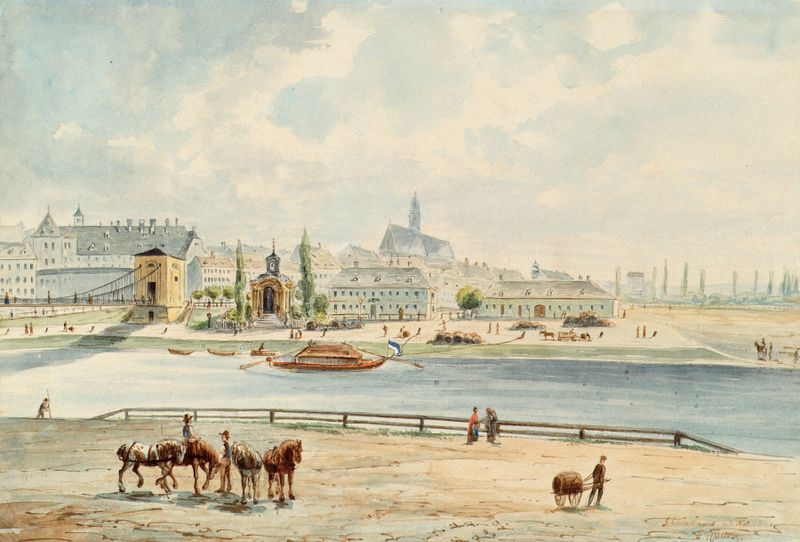
Die Schanzelmaut in Wien
Emil Hütter
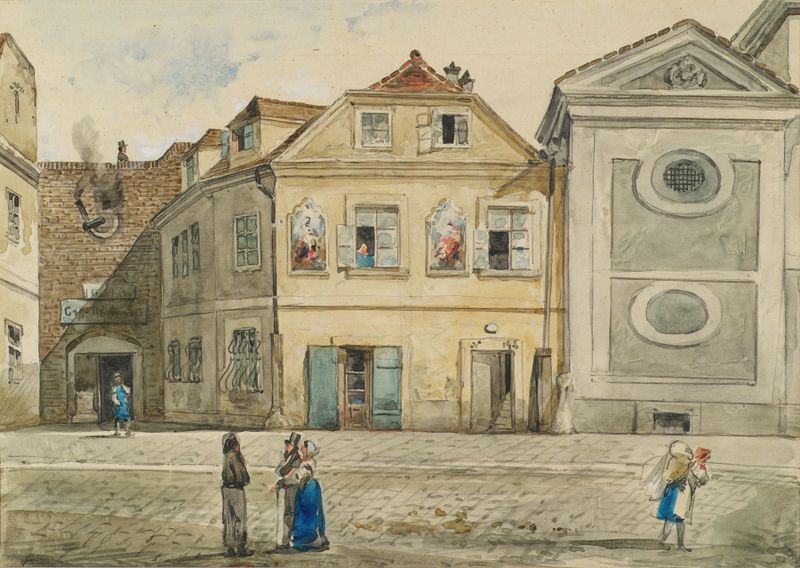
Das Scharfrichterhaus in Wien
Emil Hütter

Die Salzgries-Kaserne
Emil Hütter

Das ehemalige Carmeliter-Nonnenkloster und spätere Polizei-Gefangenenhaus in der Sterngasse in Wien
Emil Hütter
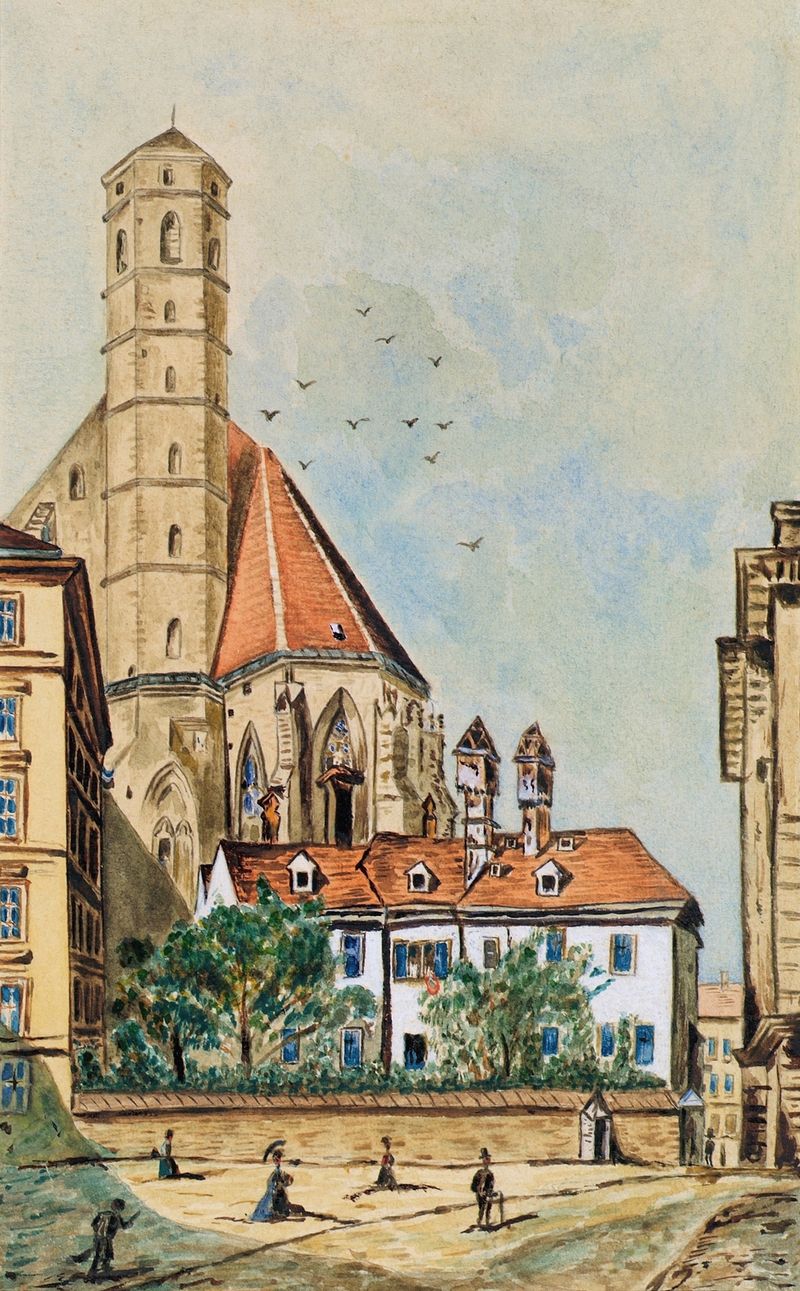
Die Minoritenkirche in Wien
Emil Hütter

Die Kirche zu St. Marx in Wien
Emil Hütter
Der erste Hof der Salzgries-Kaserne in Wien
Emil Hütter
More Architecture Art
Browse all →
The statue of Liberty
Frédéric Auguste Bartholdi

View of Houses in Delft, Known as ‘The Little Street’
Johannes Vermeer

View of Houses in Delft, Known as ‘The Little Street’
Johannes Vermeer

The Cathedral in Rouen. The portal, Grey Weather
Claude Monet

The yellow house
Vincent van Gogh

The Church in Auvers-sur-Oise, View from the Chevet
Vincent van Gogh