
Die Schanzelmaut in Wien — History & Facts
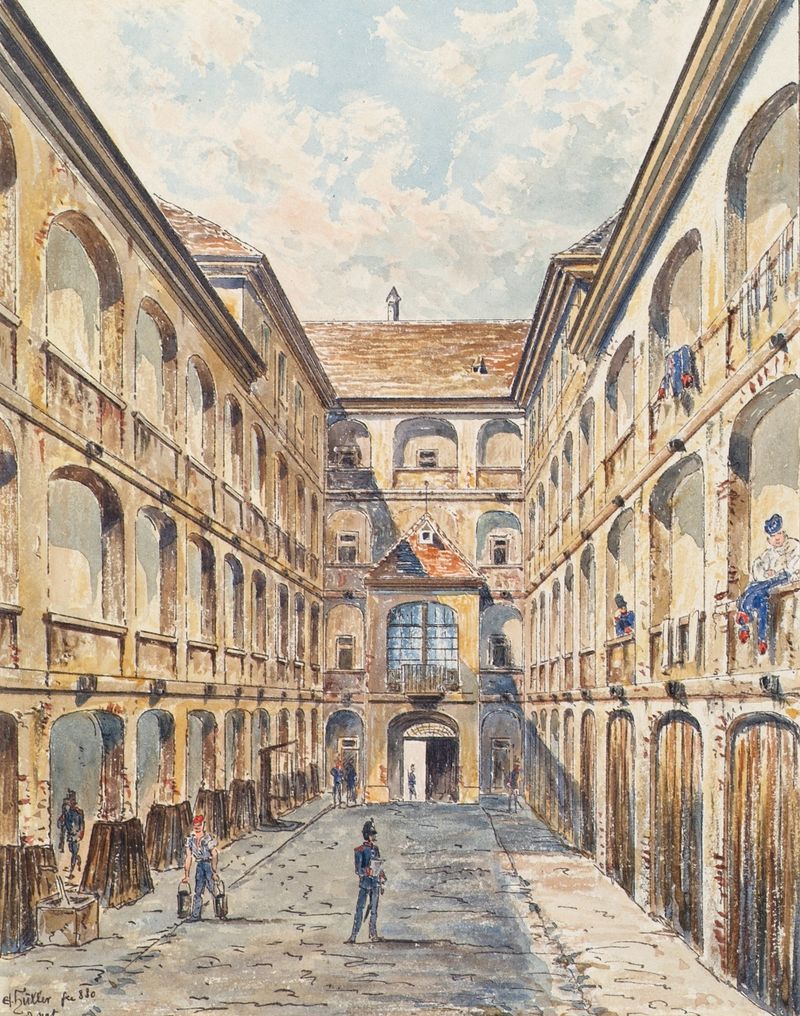
What if silence could speak through light? In a world where dreams intertwine with reality, the nuances of a tranquil moment can echo louder than any sound. Begin by directing your gaze to the delicate interplay of color and shadow within Die Schanzelmaut in Wien. Notice how the soft hues of twilight envelop the landscape, with gentle pastels giving way to deeper blues and purples. The horizon, where the sky meets the river, captures your attention first, drawing you into a serene expanse that invites reflection and contemplation.
The artist’s meticulous brushwork creates an ethereal quality, where light seems to dance across the water's surface, imbuing the scene with an almost otherworldly sense of calm. As you delve deeper, consider the emotional layers woven throughout this composition. The juxtaposition of the serene river against the imposing architecture hints at the tension between nature and human creation. The delicate trees lining the bank stand in stark contrast to the rigid, man-made structures, suggesting a dialogue between permanence and transience.
This tension resonates with the viewer, evoking a sense of nostalgia for a fleeting beauty while simultaneously celebrating the enduring spirit of the city. In 1860, Emil Hütter created this work during a period marked by artistic exploration and innovation in Vienna. The city was experiencing cultural shifts, with budding movements that questioned traditional art forms. Hütter, who was influenced by Romantic ideals, sought to capture not just the physical beauty of the landscape but also its emotional essence, reflecting the dreams and aspirations of a society in transition.
More Artworks by Emil Hütter
Browse all →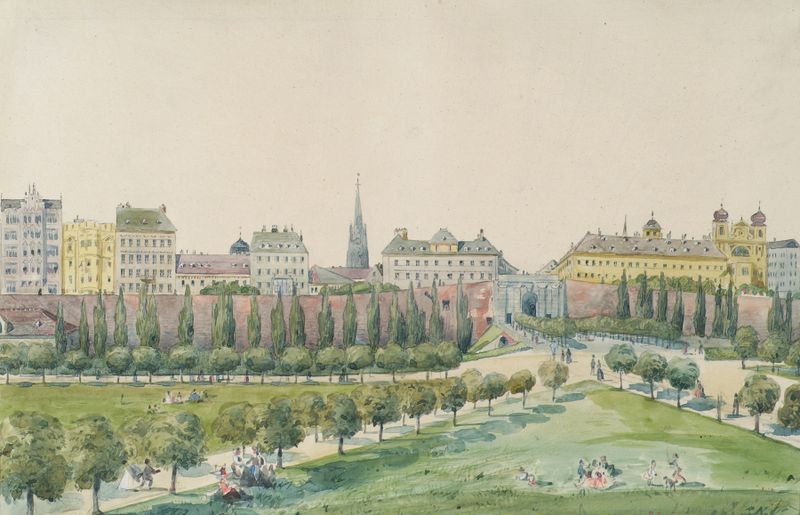
Die Stubenbastei und das Stubentor in Wien
Emil Hütter
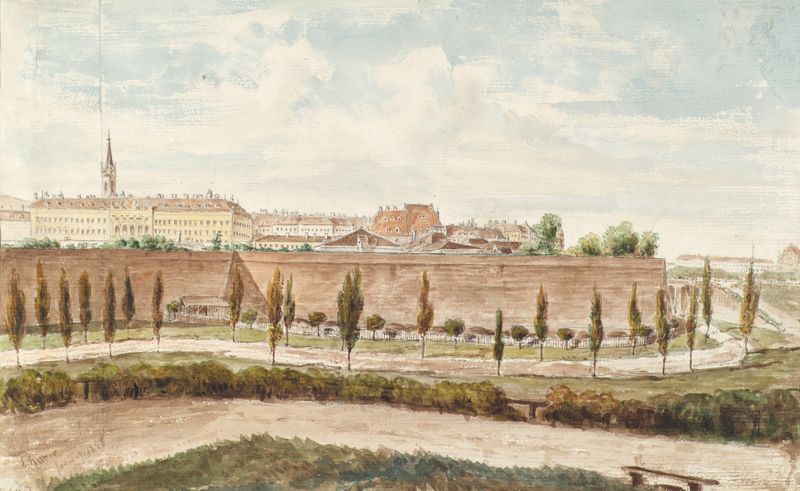
Die Augustinerbastei in Wien
Emil Hütter
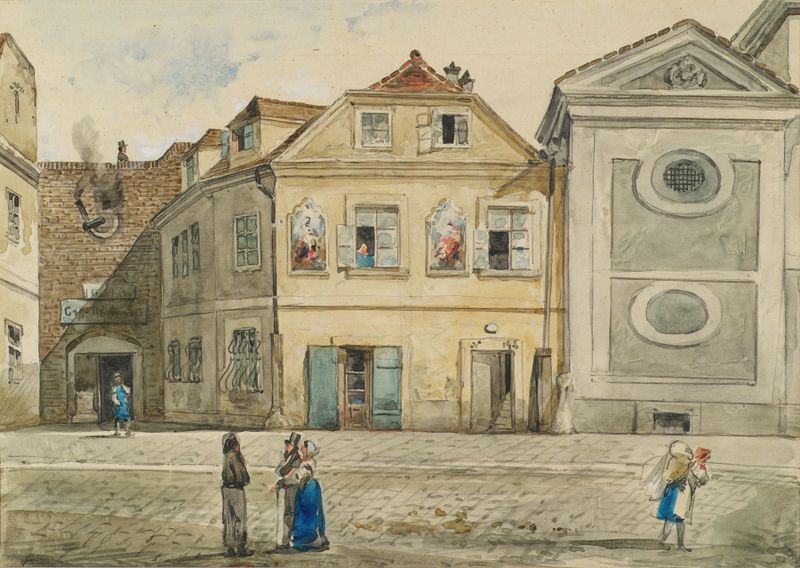
Das Scharfrichterhaus in Wien
Emil Hütter

Die Salzgries-Kaserne
Emil Hütter

Das ehemalige Carmeliter-Nonnenkloster und spätere Polizei-Gefangenenhaus in der Sterngasse in Wien
Emil Hütter
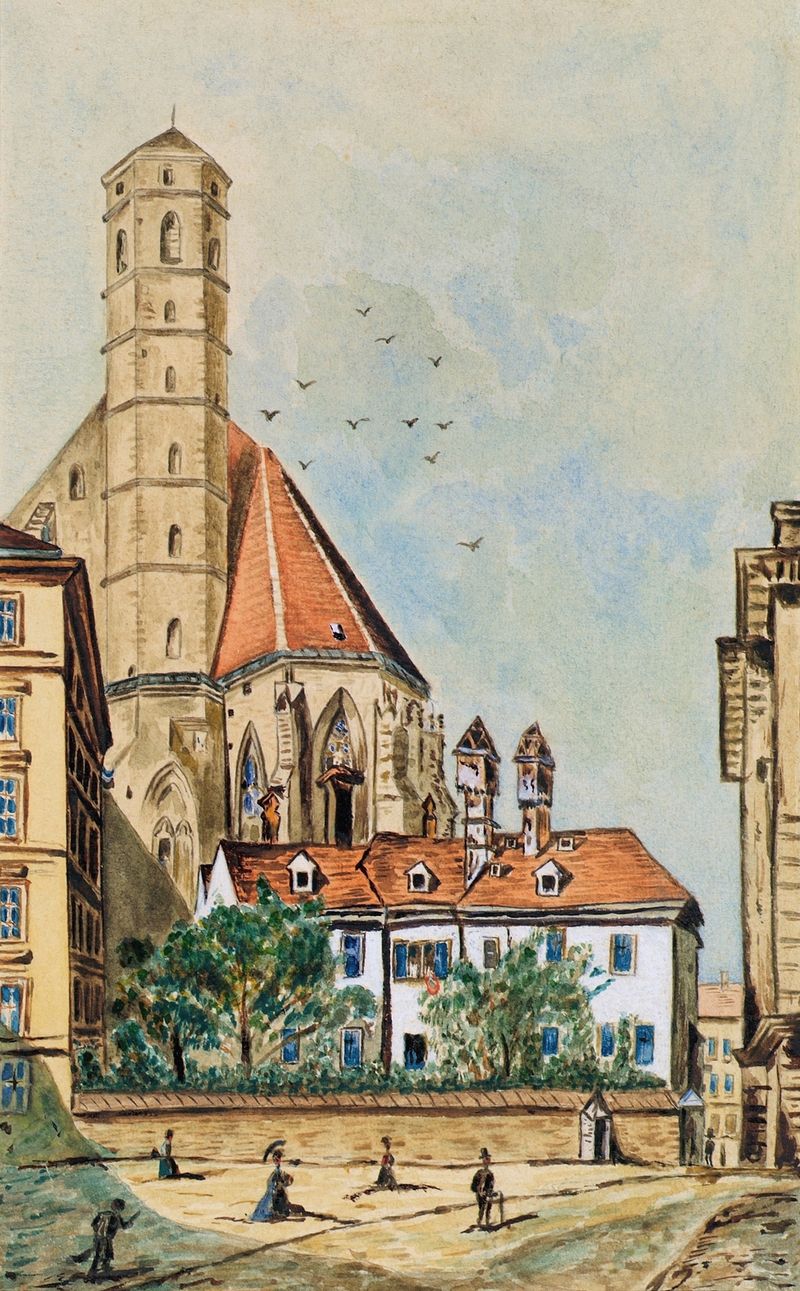
Die Minoritenkirche in Wien
Emil Hütter

Die Kirche zu St. Marx in Wien
Emil Hütter
Der erste Hof der Salzgries-Kaserne in Wien
Emil Hütter





