
Die Minoritenkirche in Wien — History & Facts
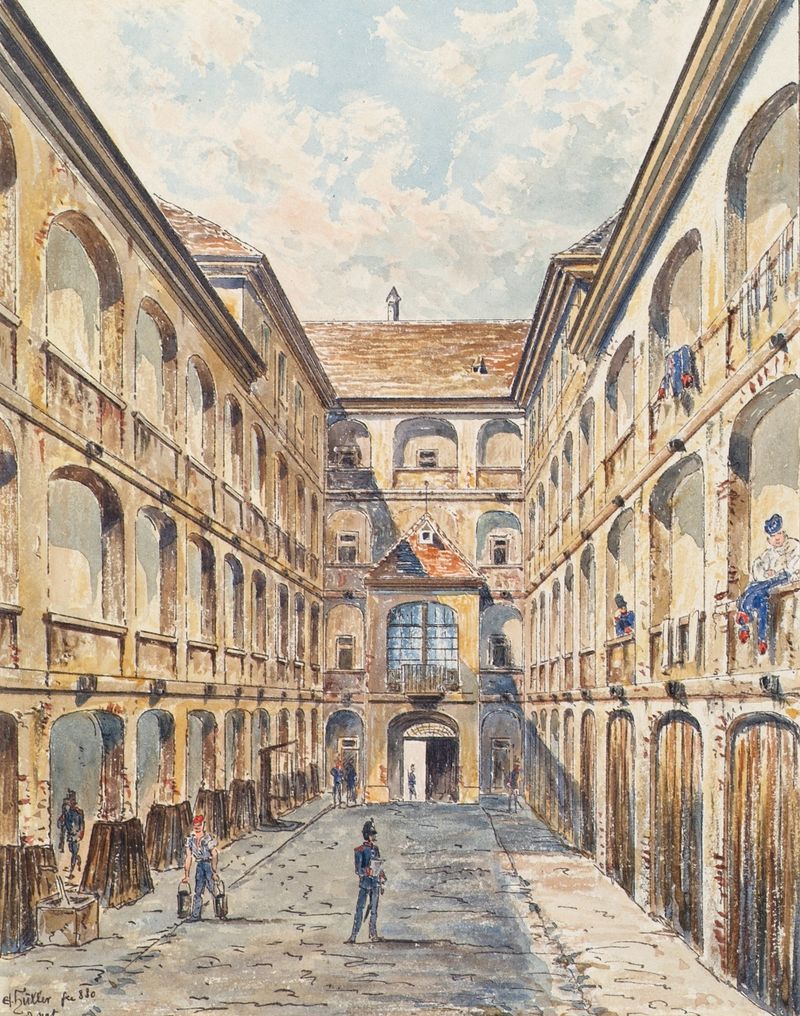
Can paint confess what words never could? Within the quiet confines of Die Minoritenkirche in Wien, the walls breathe a serene stillness, beckoning the viewer to delve into a world of awakening. Look to the center where the vaulted ceiling soars, its intricate patterns drawing the eye upward. Notice how the soft, muted light cascades through the stained glass, casting ethereal hues on the stone floor. The painter’s meticulous brushwork captures not just the architecture but the very essence of spirituality, with each color chosen to evoke a sense of peace and reverence.
The gentle interplay of shadows creates a dynamic depth, inviting contemplation and reflection. Yet, within this tranquil scene lies a profound contrast. The cool blues and greens of the light play against the warm, earthy tones of the stone, representing the duality of the sacred and the earthly. The silence that pervades the space is palpable, suggesting not just a physical stillness but a deeper emotional resonance—perhaps the yearning for connection amidst isolation.
Each detail, from the delicate carvings to the sweeping arches, tells a story of faith and introspection, awakening an inner dialogue in the observer. Emil Hütter painted this work during a time when the art world was exploring new interpretations of traditional themes, likely in the late 19th to early 20th century. The socio-political landscape in Vienna was marked by cultural shifts, and Hütter sought to reflect the complexities of modern spirituality through his art. This piece stands as a testament to that era, merging the sacred with the personal in a way that remains impactful today.
More Artworks by Emil Hütter
Browse all →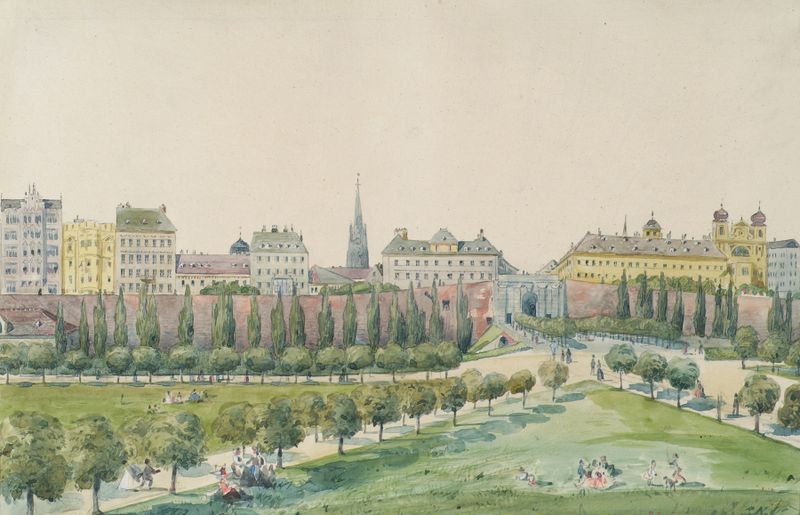
Die Stubenbastei und das Stubentor in Wien
Emil Hütter
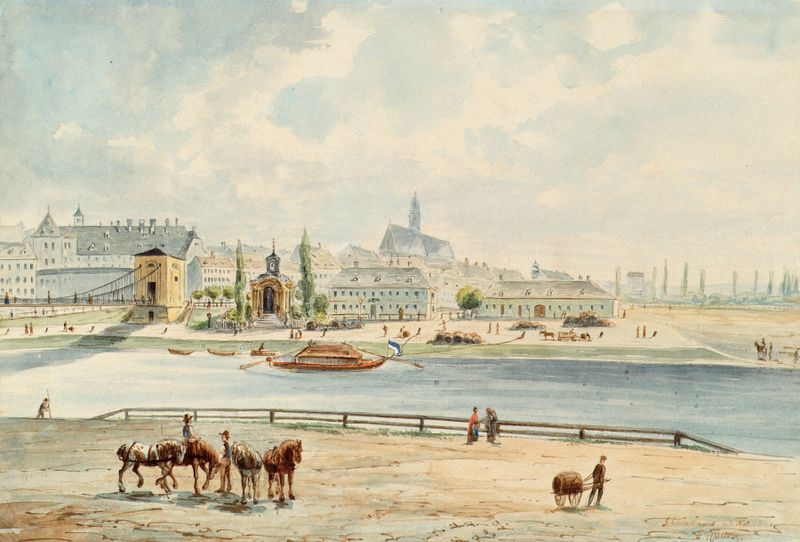
Die Schanzelmaut in Wien
Emil Hütter
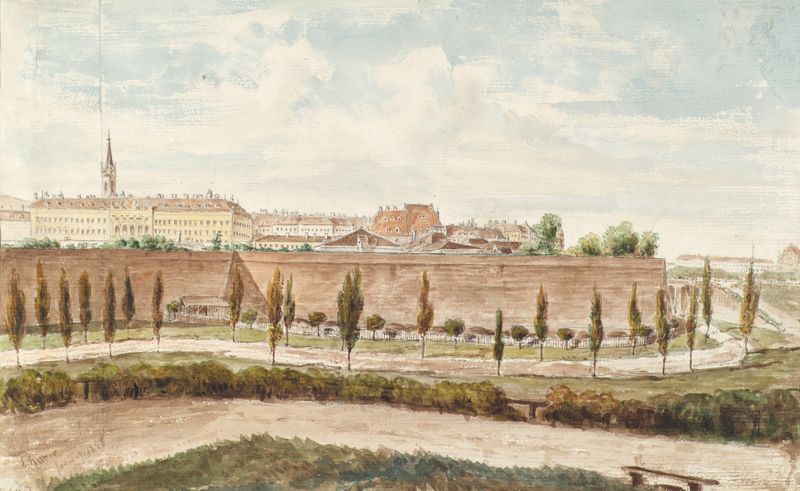
Die Augustinerbastei in Wien
Emil Hütter
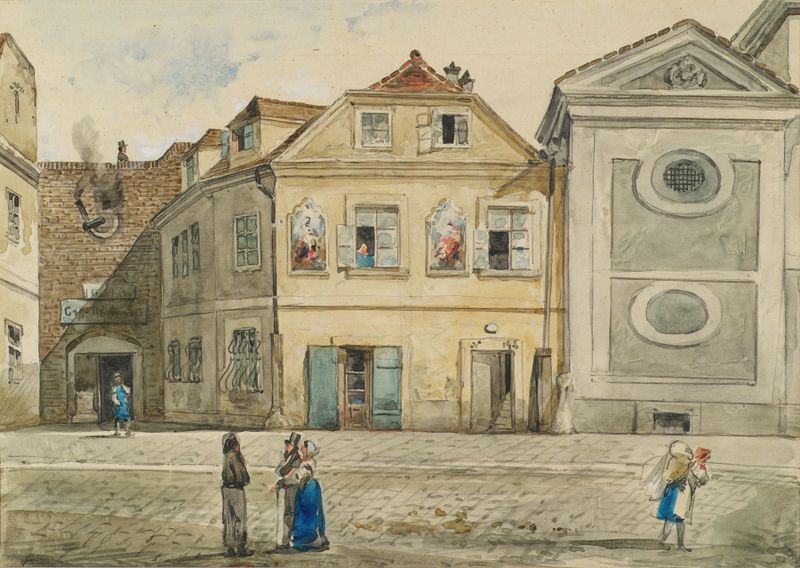
Das Scharfrichterhaus in Wien
Emil Hütter

Die Salzgries-Kaserne
Emil Hütter

Das ehemalige Carmeliter-Nonnenkloster und spätere Polizei-Gefangenenhaus in der Sterngasse in Wien
Emil Hütter

Die Kirche zu St. Marx in Wien
Emil Hütter
Der erste Hof der Salzgries-Kaserne in Wien
Emil Hütter
More Architecture Art
Browse all →
The statue of Liberty
Frédéric Auguste Bartholdi

View of Houses in Delft, Known as ‘The Little Street’
Johannes Vermeer

View of Houses in Delft, Known as ‘The Little Street’
Johannes Vermeer

The Cathedral in Rouen. The portal, Grey Weather
Claude Monet

The yellow house
Vincent van Gogh

The Church in Auvers-sur-Oise, View from the Chevet
Vincent van Gogh