
Die Stubenbastei und das Stubentor in Wien — History & Facts
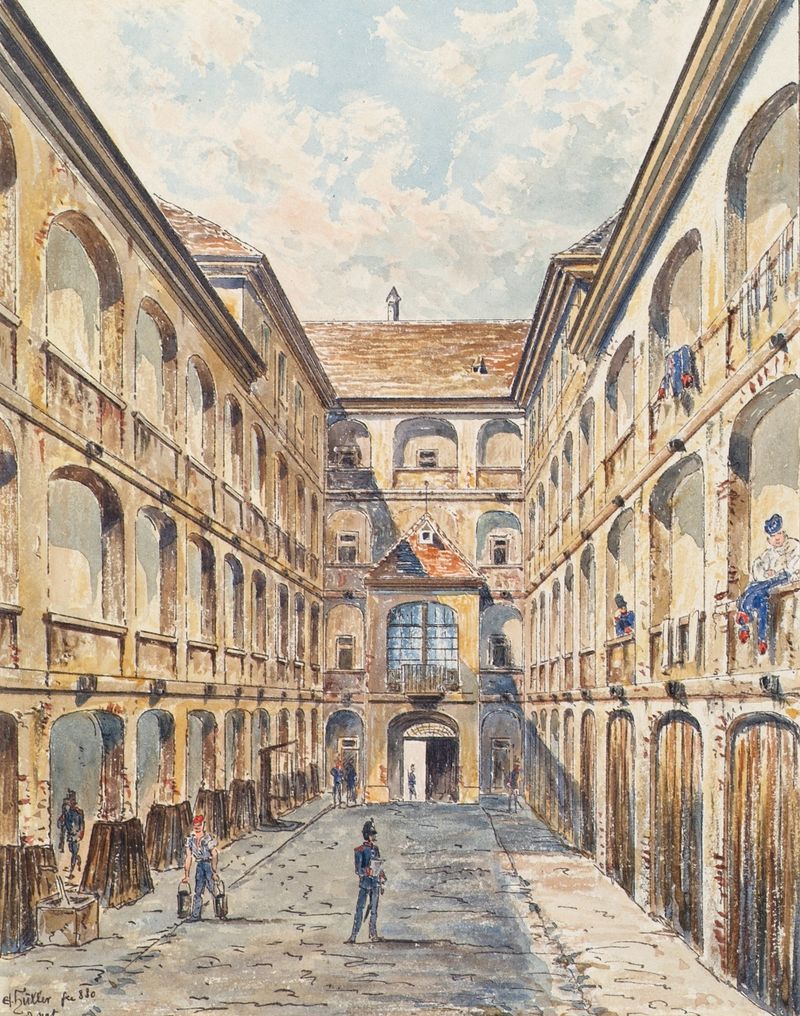
In the quiet corners of Vienna, a profound emptiness lingers, echoing the stories of the past yet untold. A landscape can encapsulate both presence and absence, revealing layers of human experience through the interplay of light and shadow. Look to the center of the composition, where the delicate yet sturdy outlines of the architecture emerge from a muted background. Notice how the soft brushstrokes create a gentle gradient of color, allowing the viewer's eye to wander from the robust textures of the buildings to the subtle layers of the sky.
The use of chiaroscuro reveals depth, drawing attention to the meticulous detailing of the stonework, while the subdued palette evokes an atmosphere of nostalgia and longing. Hidden within the serene image are contrasts that speak volumes. The stillness of the scene may suggest tranquility, yet there is an undercurrent of isolation in the narrow streets framed by imposing structures. Each window appears to guard its secrets, hinting at lives lived behind closed doors.
The void of human presence amplifies this emotional tension, suggesting that beauty, in its stillness, can often mask a deeper sorrow. Emil Hütter painted this evocative piece during a time when Vienna was undergoing significant changes. The exact date remains unknown, but it is evident that his work reflects the city’s evolving identity, caught between the grandeur of its historical architecture and the impending shifts of the modern world. As an artist, Hütter sought to bridge these elements, capturing both the physical beauty and the intangible emotions that accompanied a city steeped in history.
More Artworks by Emil Hütter
Browse all →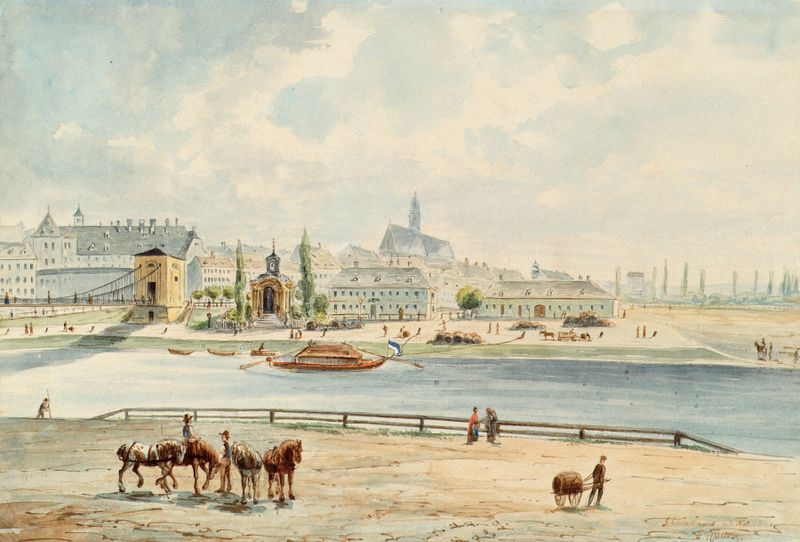
Die Schanzelmaut in Wien
Emil Hütter
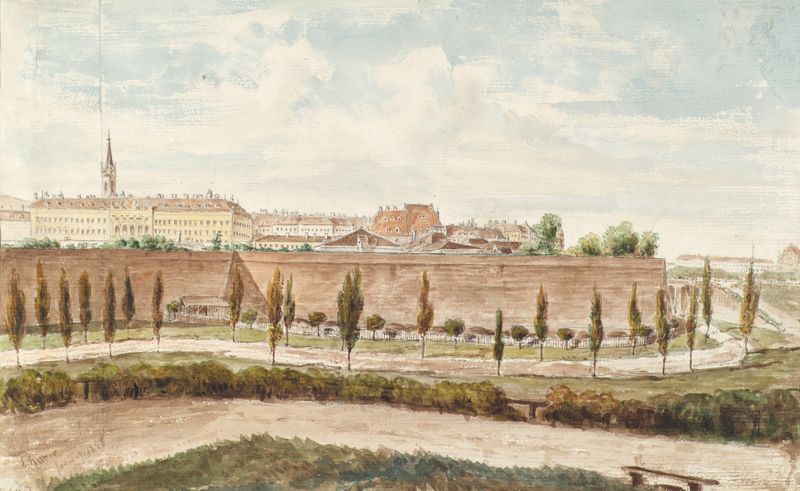
Die Augustinerbastei in Wien
Emil Hütter
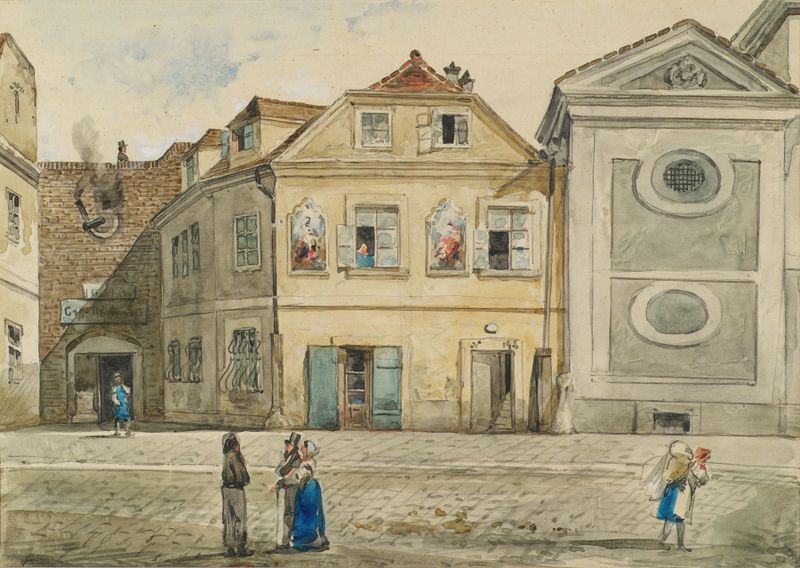
Das Scharfrichterhaus in Wien
Emil Hütter

Die Salzgries-Kaserne
Emil Hütter

Das ehemalige Carmeliter-Nonnenkloster und spätere Polizei-Gefangenenhaus in der Sterngasse in Wien
Emil Hütter
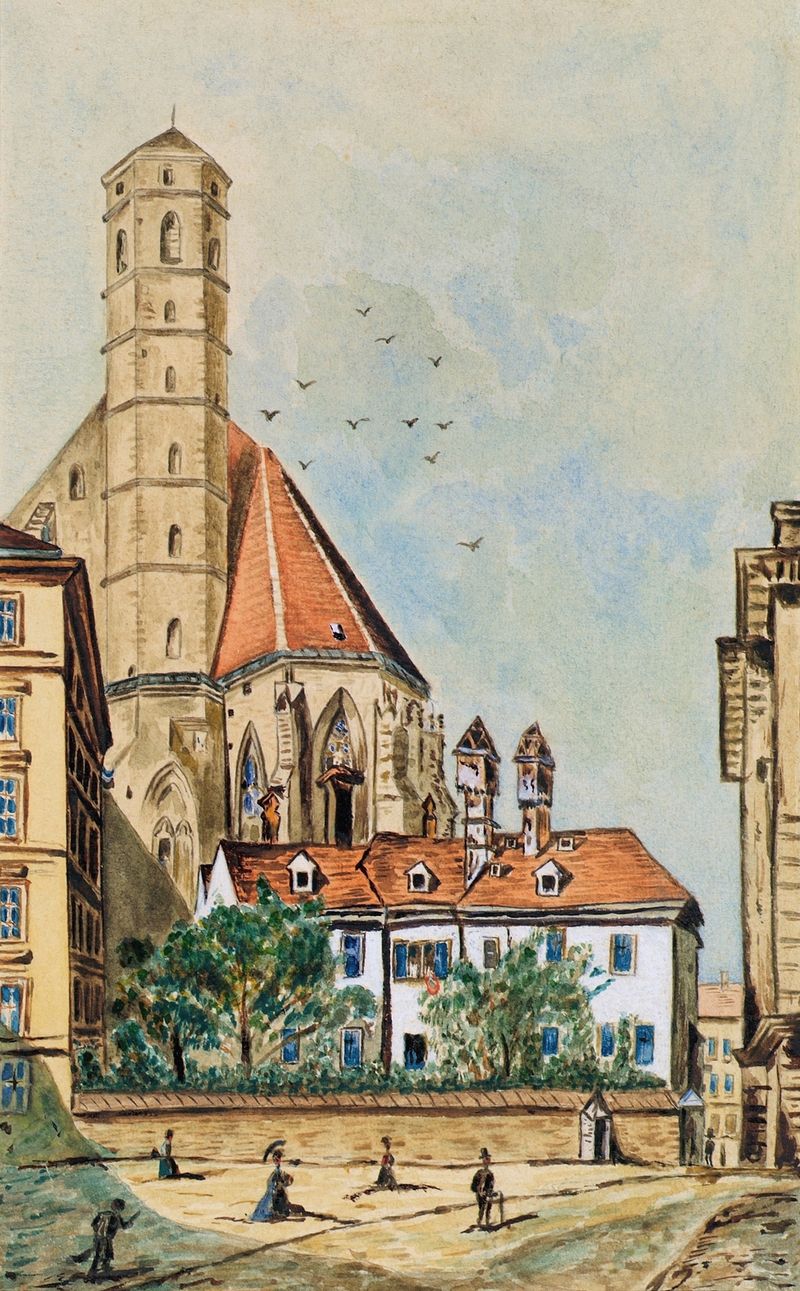
Die Minoritenkirche in Wien
Emil Hütter

Die Kirche zu St. Marx in Wien
Emil Hütter
Der erste Hof der Salzgries-Kaserne in Wien
Emil Hütter
More Architecture Art
Browse all →
The statue of Liberty
Frédéric Auguste Bartholdi

View of Houses in Delft, Known as ‘The Little Street’
Johannes Vermeer

View of Houses in Delft, Known as ‘The Little Street’
Johannes Vermeer

The Cathedral in Rouen. The portal, Grey Weather
Claude Monet

The yellow house
Vincent van Gogh

The Church in Auvers-sur-Oise, View from the Chevet
Vincent van Gogh