
Die Kirche zu St. Marx in Wien — History & Facts
Could beauty survive in a century of chaos? Look closely at the delicate spires of the church that seem to pierce the sky, rising above the surrounding landscape like hopes suspended in time. Focus on the intricate details of the façade, where the soft outlines render a sense of fragility, contrasting the sturdiness of the brickwork. The muted palette whispers of serenity, as gentle shades of cream and gray harmonize with the penetrating light that bathes the structure, casting elongated shadows that dance across the ground. Within this composition lies a tension between the monumental and the ephemeral.
The church stands as a bastion of faith, yet its delicate features suggest a vulnerability to the passage of time. The slight blurring of details around its base hints at the encroaching chaos of the world outside, as if the very fabric of the landscape threatens to envelop it. The viewer cannot help but feel the weight of history, where each stroke carries the memory of those who sought solace beneath its arches. Emil Hütter created this piece in 1858 during a period marked by political unrest and artistic transformation in Austria.
This was a time when the echoes of revolution still reverberated through society, and artists were beginning to shift toward capturing modern life and its complexities. Hütter's work, however, reflects a nostalgia for the stability that architecture can provide, serving as a reminder of human resilience even amidst turmoil.
More Artworks by Emil Hütter
Browse all →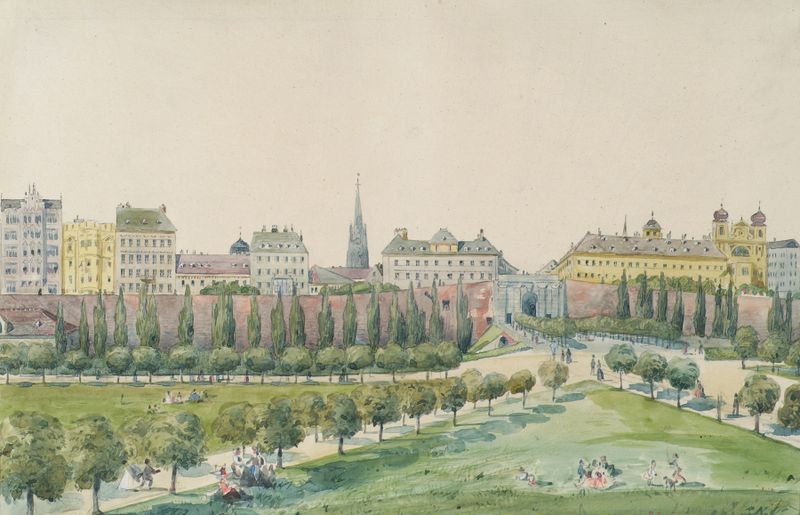
Die Stubenbastei und das Stubentor in Wien
Emil Hütter
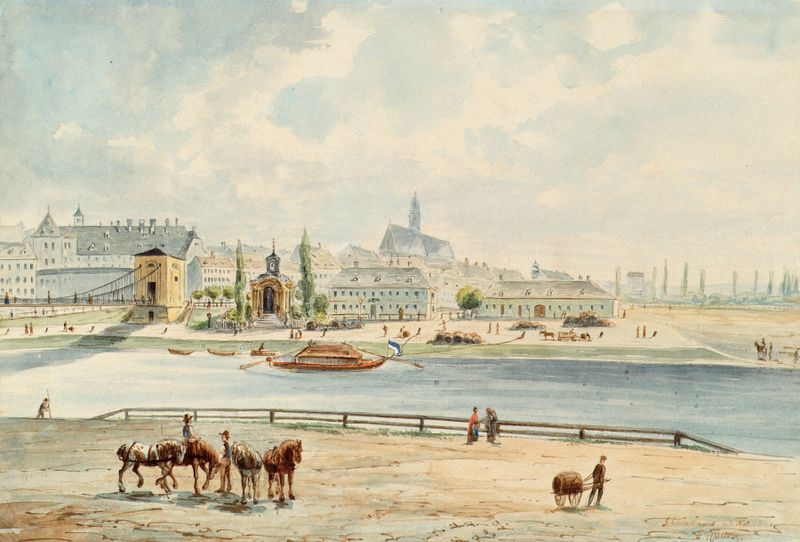
Die Schanzelmaut in Wien
Emil Hütter
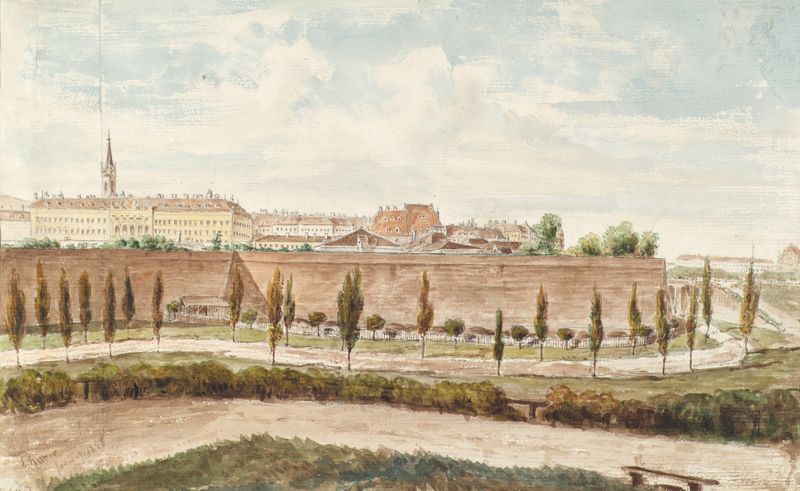
Die Augustinerbastei in Wien
Emil Hütter
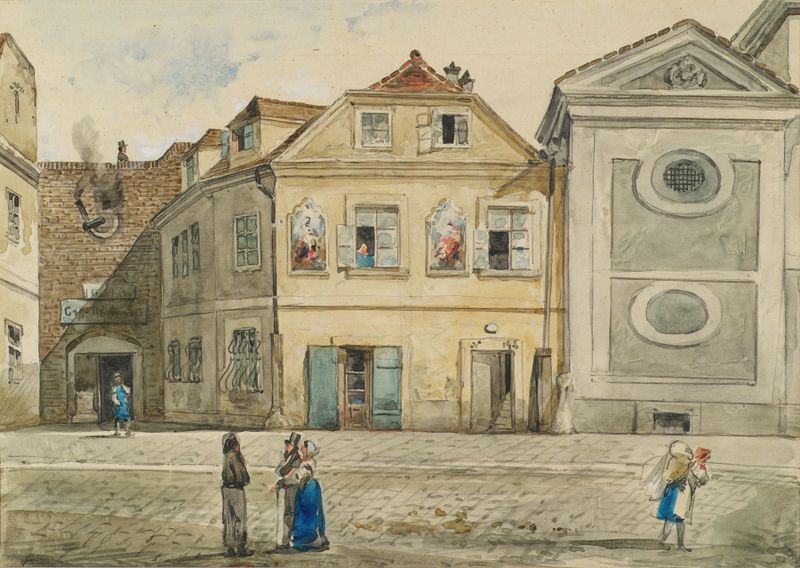
Das Scharfrichterhaus in Wien
Emil Hütter

Die Salzgries-Kaserne
Emil Hütter

Das ehemalige Carmeliter-Nonnenkloster und spätere Polizei-Gefangenenhaus in der Sterngasse in Wien
Emil Hütter
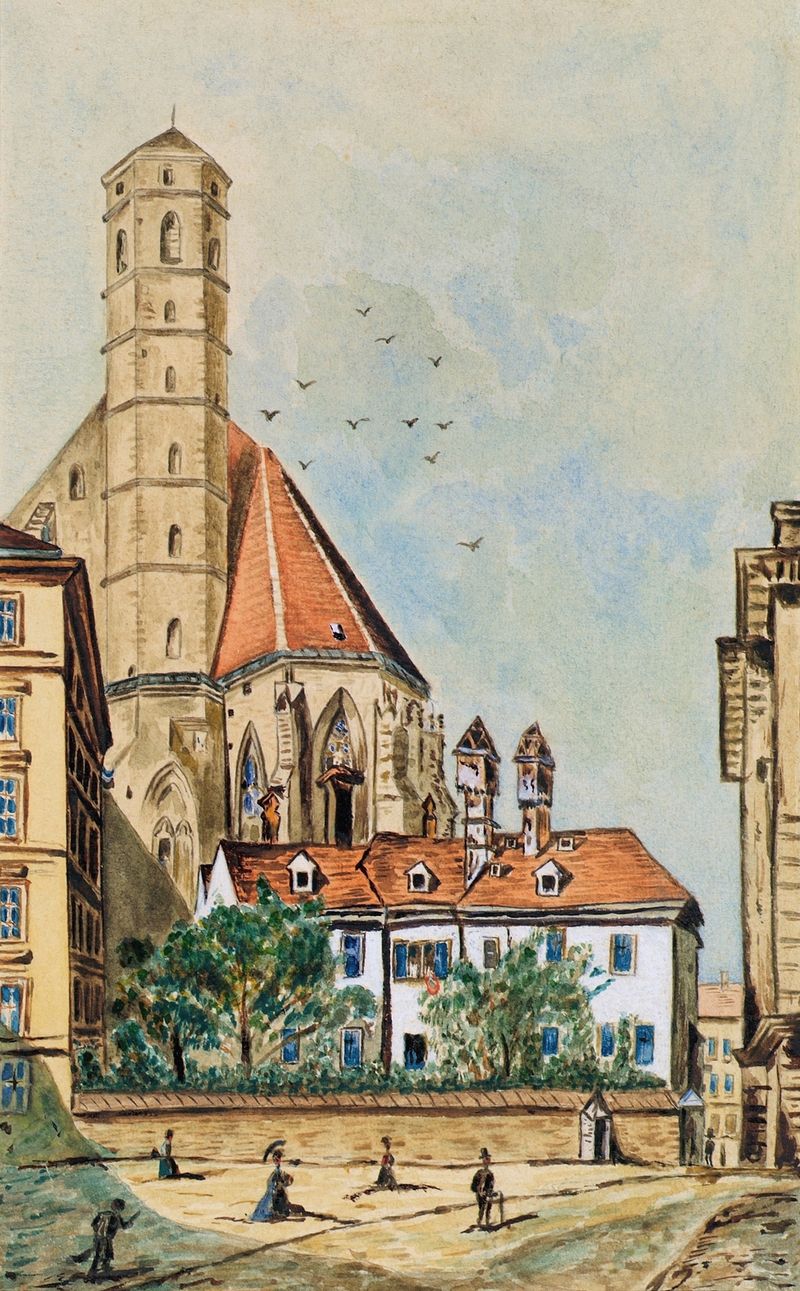
Die Minoritenkirche in Wien
Emil Hütter
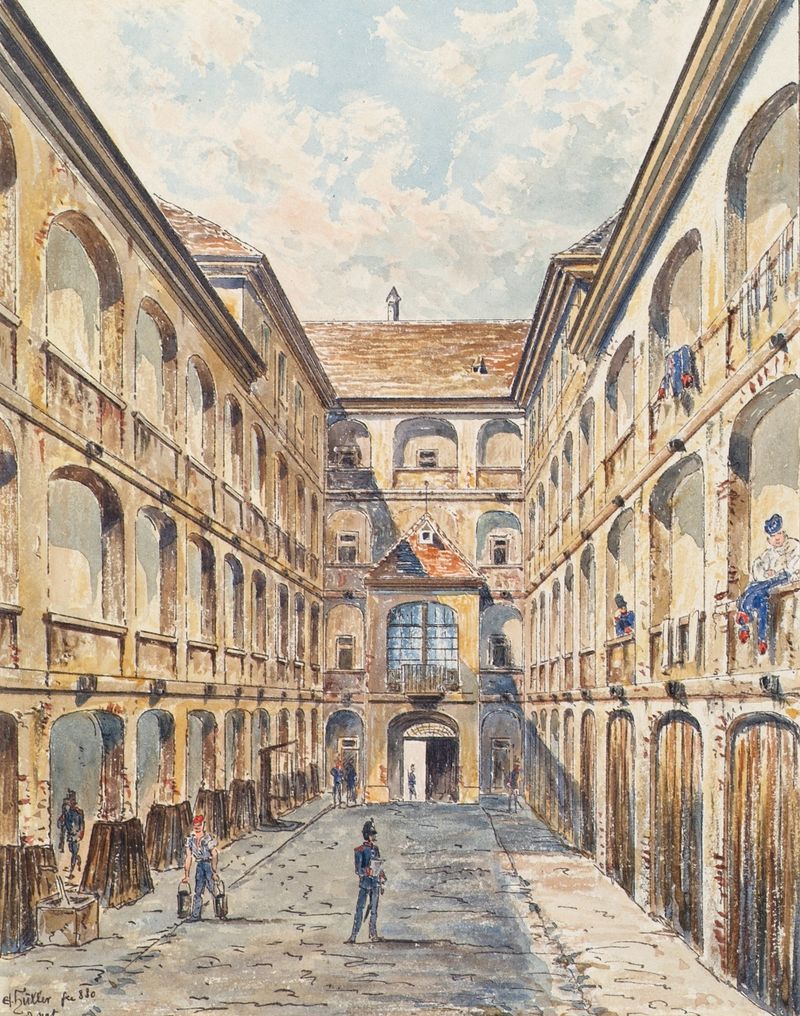
Der erste Hof der Salzgries-Kaserne in Wien
Emil Hütter
More Architecture Art
Browse all →
The statue of Liberty
Frédéric Auguste Bartholdi

View of Houses in Delft, Known as ‘The Little Street’
Johannes Vermeer

View of Houses in Delft, Known as ‘The Little Street’
Johannes Vermeer

The Cathedral in Rouen. The portal, Grey Weather
Claude Monet

The yellow house
Vincent van Gogh

The Church in Auvers-sur-Oise, View from the Chevet
Vincent van Gogh