
Die Brücke (Sommerabend) — History & Facts
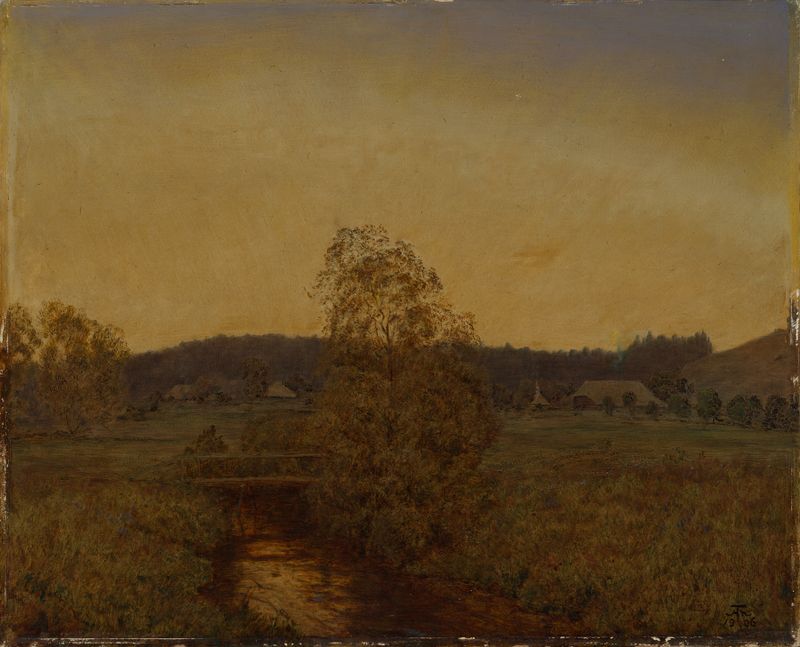
In the gentle embrace of twilight, shadows stretch and blend, as if light itself bends to whisper secrets of the evening. The world holds its breath, caught between the vibrancy of day and the solemnity of night, a moment where every hue tells a story. Look to the left where a unique bridge arches gracefully, inviting the viewer’s gaze across the canvas. The delicate interplay of greens and blues captures the tranquility of dusk, while soft strokes evoke a sense of movement in the swaying trees nearby.
The light casts golden accents upon the water, illuminating the surface like scattered stars, providing a stark contrast to the cool, shadowed areas that dwell beneath the structure. As you explore further, notice the juxtaposition of the lively colors against the calming stillness of the scene. The bridge serves not only as a physical connection but as a metaphorical passage between the day’s chaos and the night’s peace. Each figure on the bridge, though distant, embodies a sense of contemplation, hinting at the emotional weight of transitions—of day turning to night, of thoughts shifting to silence. Hans Thoma painted Die Brücke (Sommerabend) in 1892, during a time when Germany was experiencing both cultural and artistic shifts.
Living in Karlsruhe, he sought to blend impressionism with elements of folklore, reflecting a growing movement towards individual expression in art. This piece stands as a testament to his ability to capture the ephemeral beauty of nature and the human experience within it.
More Artworks by Hans Thoma
Browse all →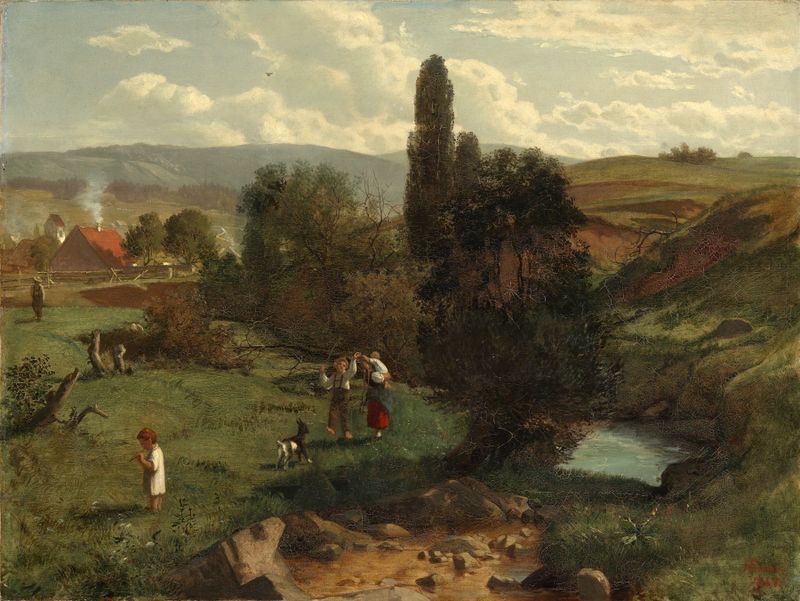
Schwarzwaldlandschaft
Hans Thoma
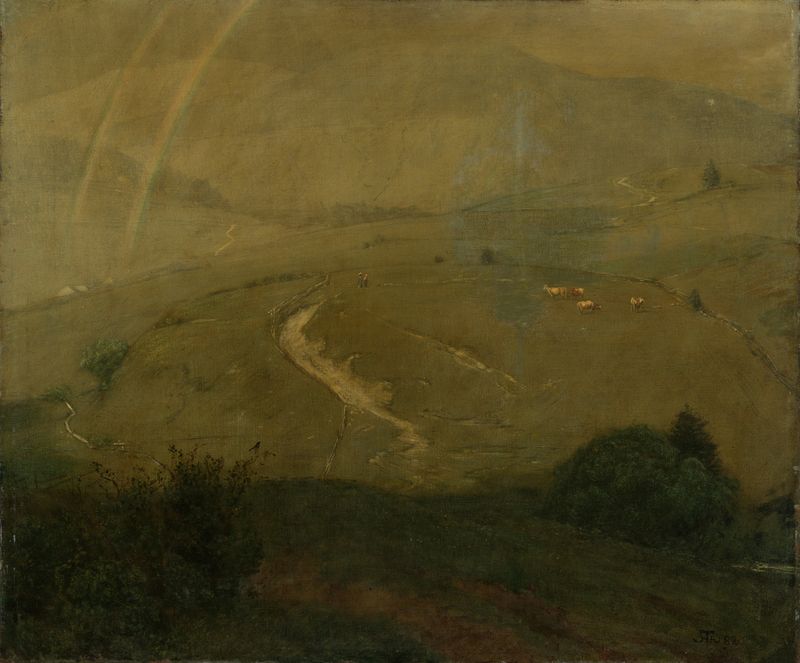
Regen im Schwarzwald
Hans Thoma
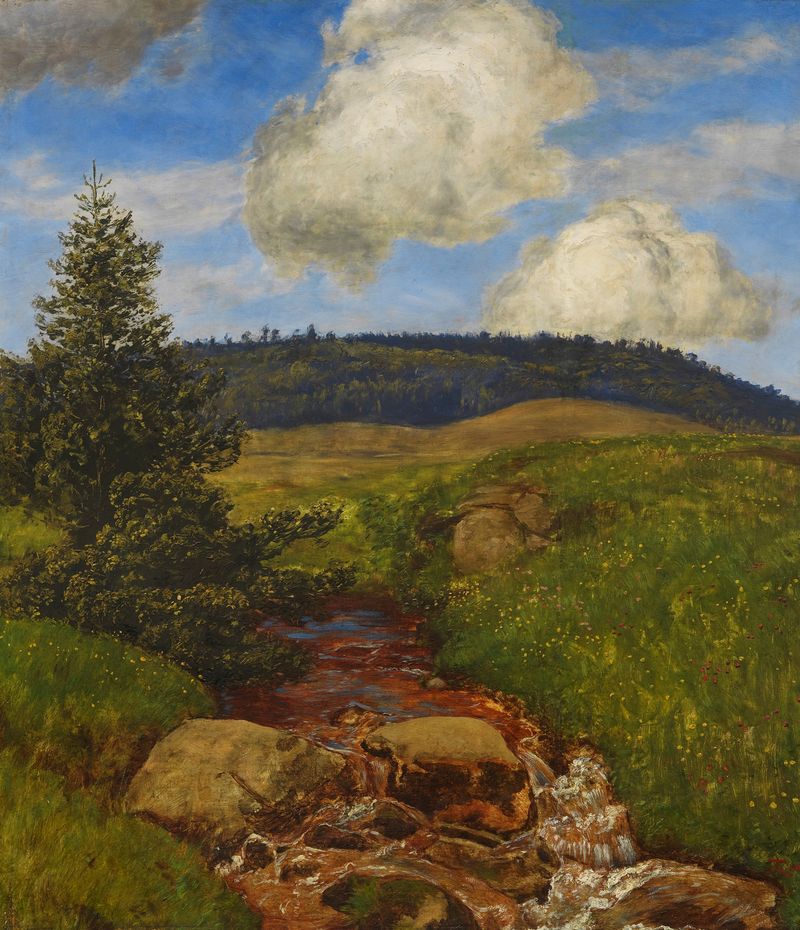
Schwarzwaldbach
Hans Thoma
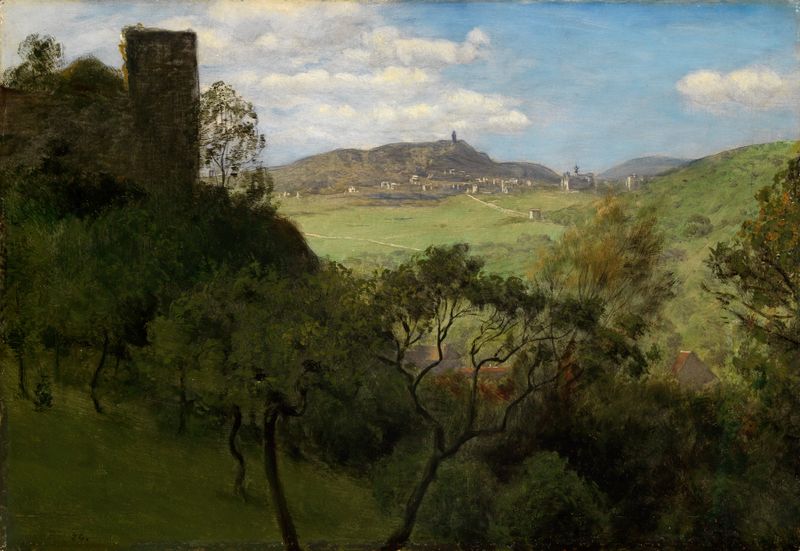
Blick auf Falkenstein im Taunus
Hans Thoma
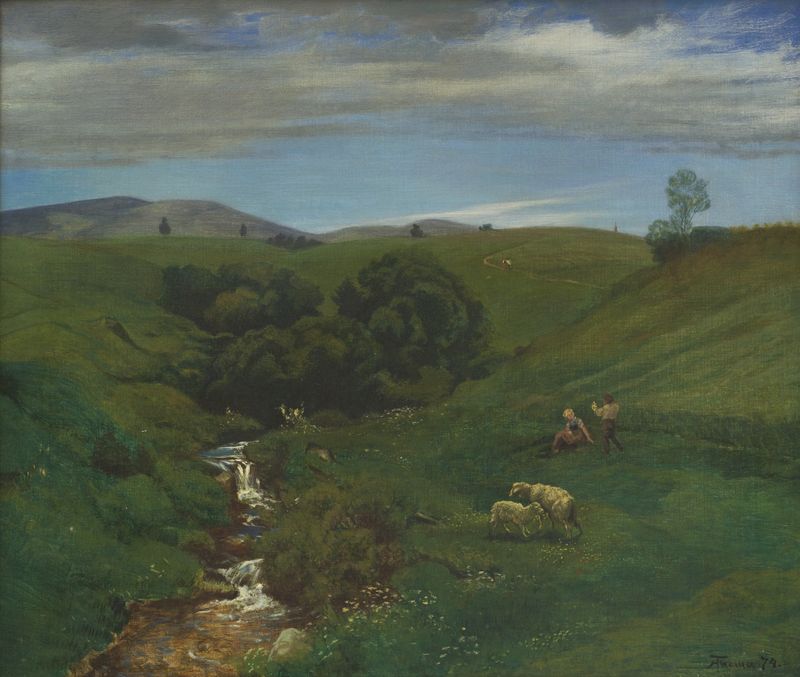
Black Forest Meadow near Bernau
Hans Thoma
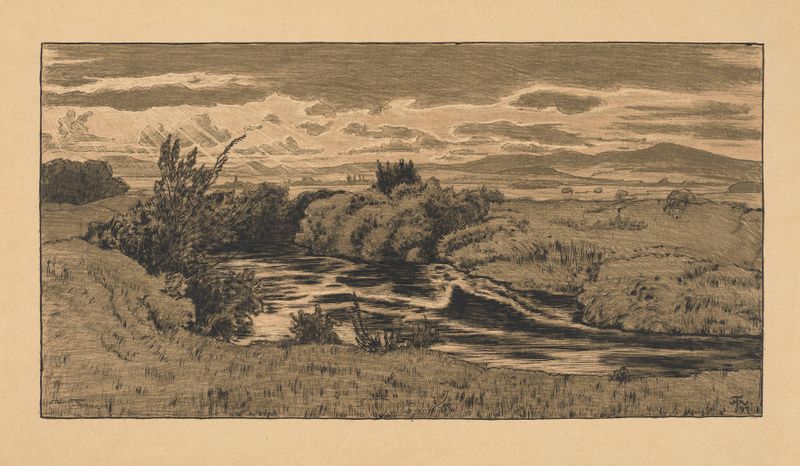
Evening by the Nidda River
Hans Thoma
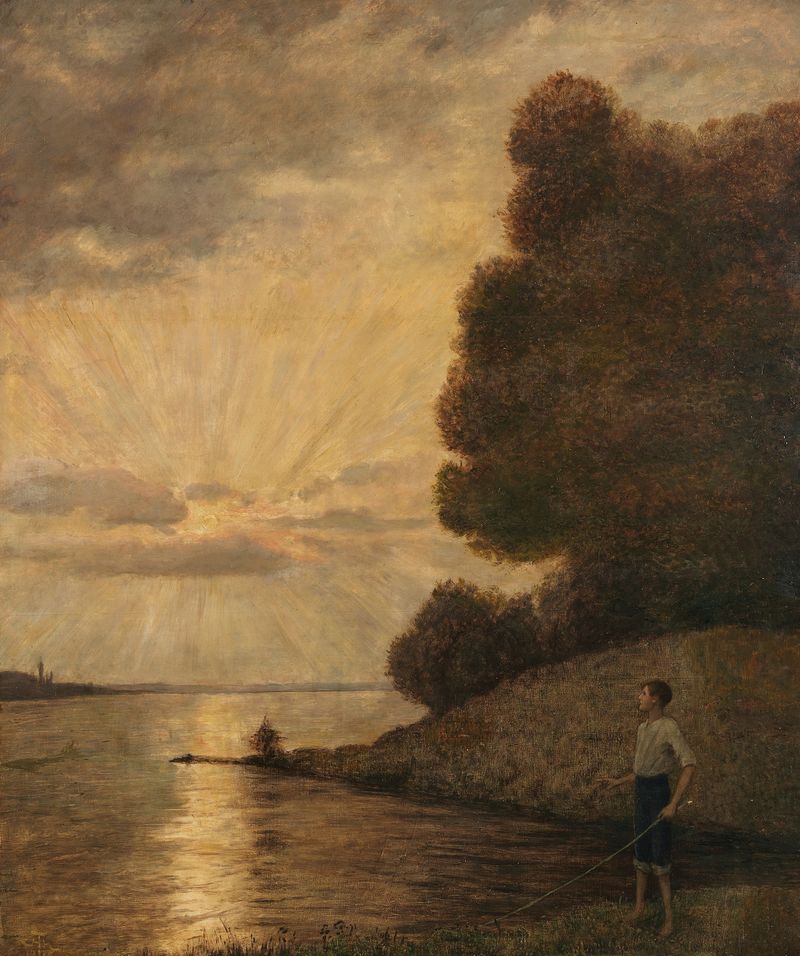
Sonnenuntergang am Oberrhein
Hans Thoma
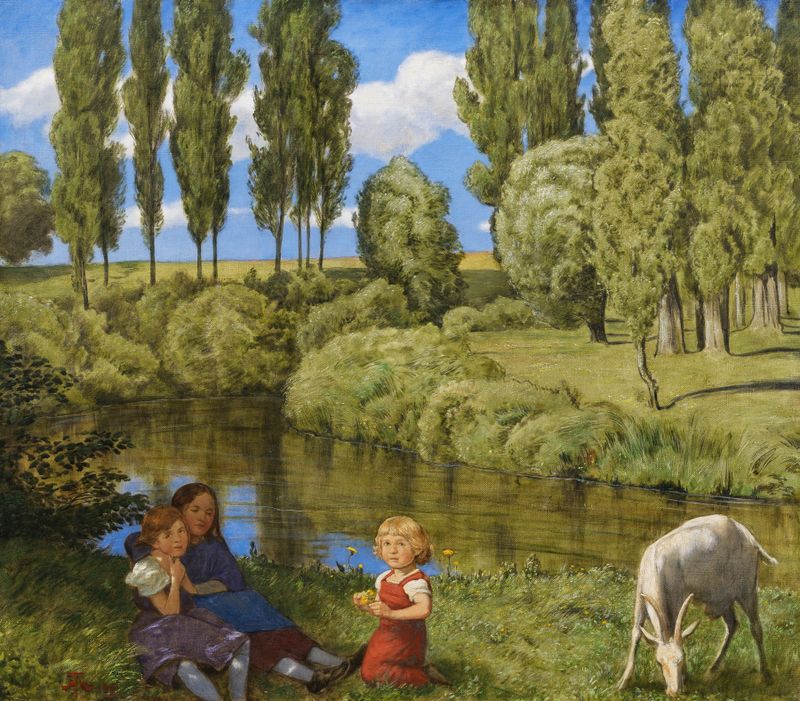
Am Stillen Bach
Hans Thoma
Der Abendstern
Hans Thoma
Das Rheintal bei Säckingen
Hans Thoma





