
Die Opernkreuzung an der Sirkecke — History & Facts
Who listens when art speaks of silence? In a world where noise often drowns out the soul's whispers, the true essence of ecstasy lies in the stillness captured within the frame. Begin by noticing the bold, sweeping lines that guide your gaze across the canvas. Look to the center, where vibrant colors intermingle, creating a dynamic interplay between light and shadow. The fluid brushstrokes echo a sense of movement, as if the very air around the figures vibrates with unsaid emotions.
The contrast between warm and cool hues invites contemplation, each color a voice in a silent symphony that plays out before the viewer. Delve deeper to find the layered meanings within the work. The figures, subtly rendered, embody a tension between joy and solitude, caught in an intimate moment that feels both shared and isolated. Their expressions hint at a profound understanding, as if they are engaged in an unspoken dialogue that transcends words.
The background, devoid of detail, amplifies this emotional weight, creating a canvas for personal interpretation—reminding us that ecstasy often exists in the spaces of silence. In 1940, Oskar Laske painted this work during a turbulent time in Europe, facing the encroaching shadows of conflict. Living in Austria amidst shifting political landscapes, Laske sought refuge in his art, exploring themes of connection and disconnection. As the world around him quaked, he turned to color and form, striving to capture the fleeting essence of human emotion amid the chaos of the external world.
More Artworks by Oskar Laske
Browse all →
Faschingsumzug am Stock im Eisen Platz
Oskar Laske

Schönbrunn (Winter)
Oskar Laske
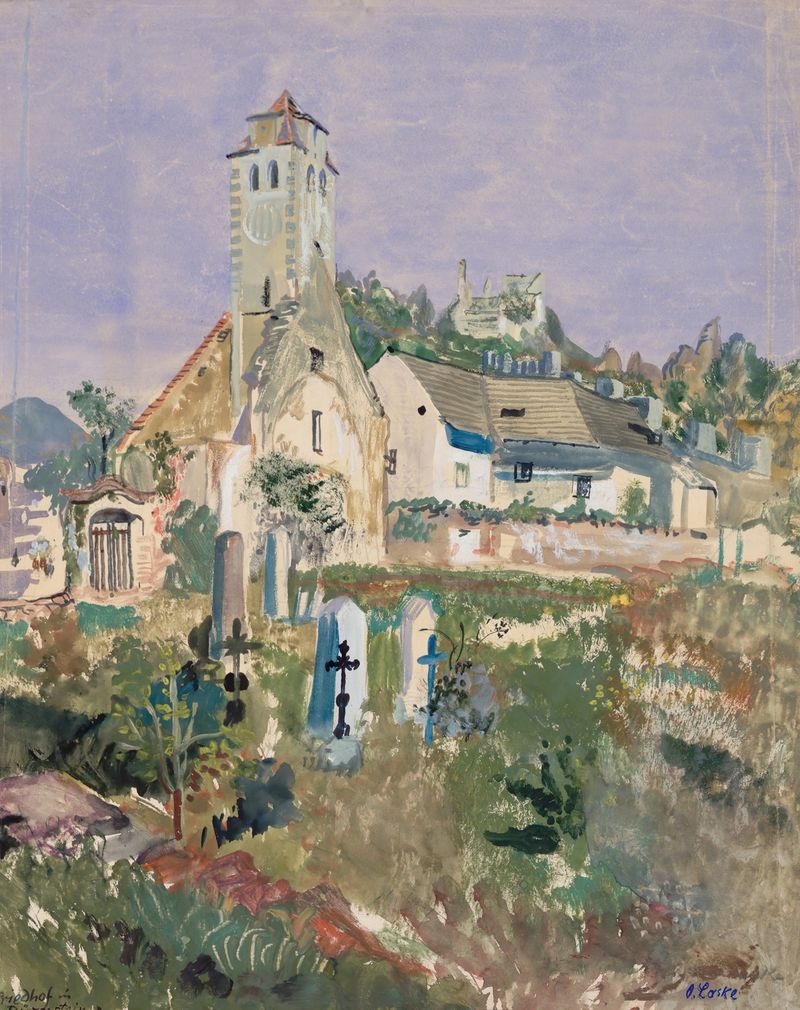
Friedhof in Dürnstein
Oskar Laske

Pratermotiv an der alten Donau
Oskar Laske

Frühjahrsnebel in Niederösterreich
Oskar Laske

Begräbnis des Wiener Bürgermeisters Dr. Karl Lueger
Oskar Laske

Maria Theresien-Denkmal mit Blick gegen das Burgtor
Oskar Laske
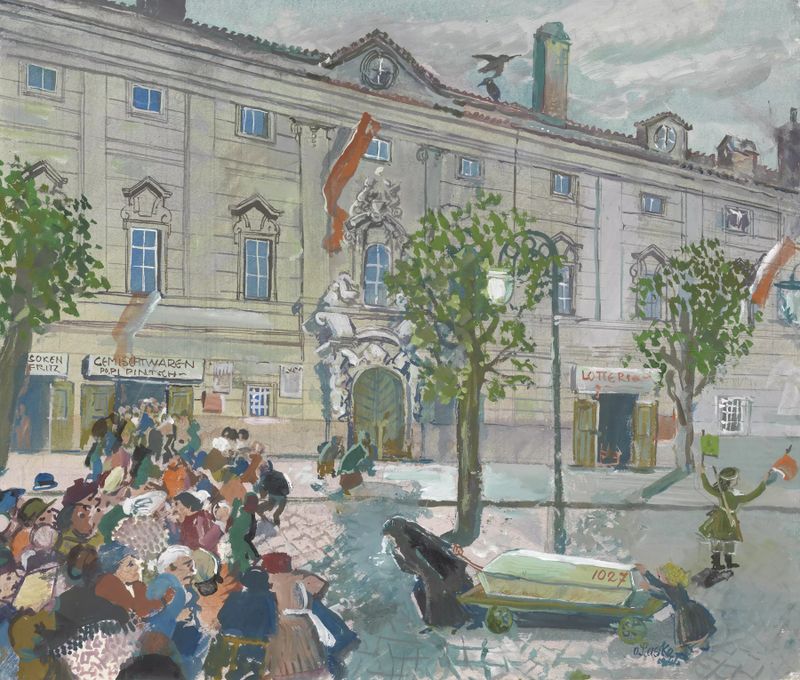
Wiener Straßenbild vom Mai 1945
Oskar Laske

Winterlandschaft in Pressbaum
Oskar Laske

Ansicht von Positano
Oskar Laske





