Dog and Cat — History & Facts
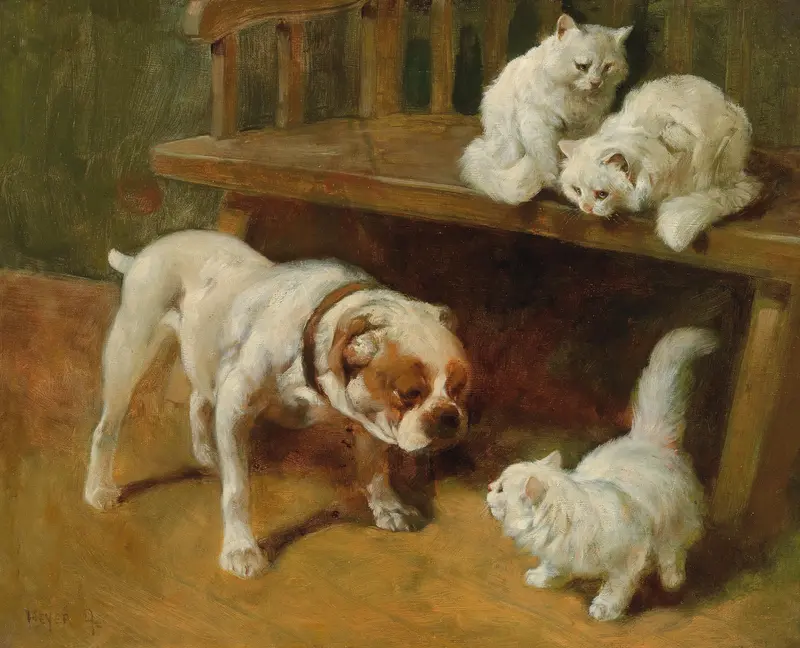
A flash of tension crackles in the tall grass: one animal poised to pounce, the other calmly holding its ground. The dog’s body is a study in taut energy, muscles coiled and muzzle parted in a bark that seems to vibrate through the painting. Yet the cat, half-concealed behind the sturdy trunk, meets this commotion with a look of unflappable composure—a white, fluffy mask of patience and calculation.
The light, filtered through summer foliage, picks out the glint in each eye and the fine detail of fur, heightening the sense of a standoff frozen in time. The painter’s choice to place the tree so squarely between them is no accident: it is both barrier and stage, the axis around which this silent drama turns. Painted by Arthur Heyer by 1931, this work belongs to a world where animal portraiture was cherished for its charm and wit, often gracing the homes of the bourgeoisie or animal lovers seeking a touch of personality for their walls. In the early twentieth century, such scenes were not mere decoration but gentle commentaries on domestic life and the quirks of its inhabitants.
While little is recorded about the specific commission or journey of this painting, its presence in the Dorotheum’s collection today speaks to the enduring appeal of Heyer’s keen observation and light touch. Look again at the dog’s tense leg, the cat’s steady gaze, and the dappled shadows—each detail invites you to imagine what happens next.