White Cat and Butterflies — History & Facts
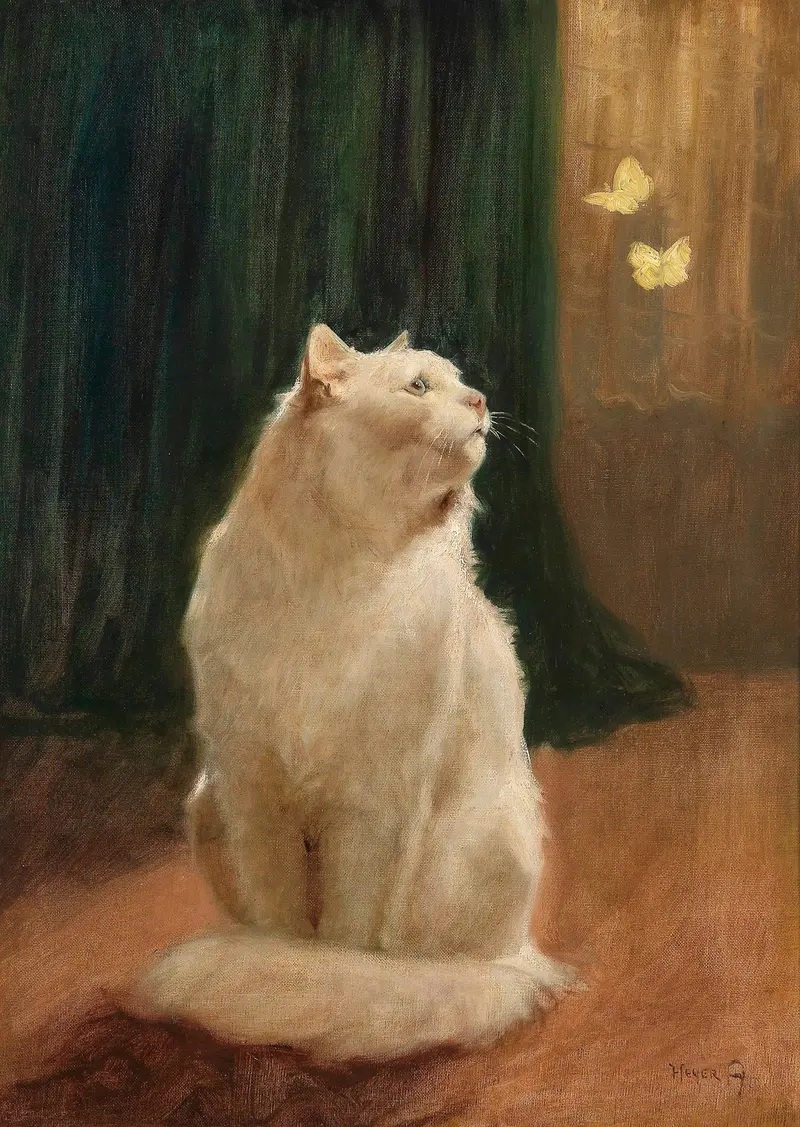
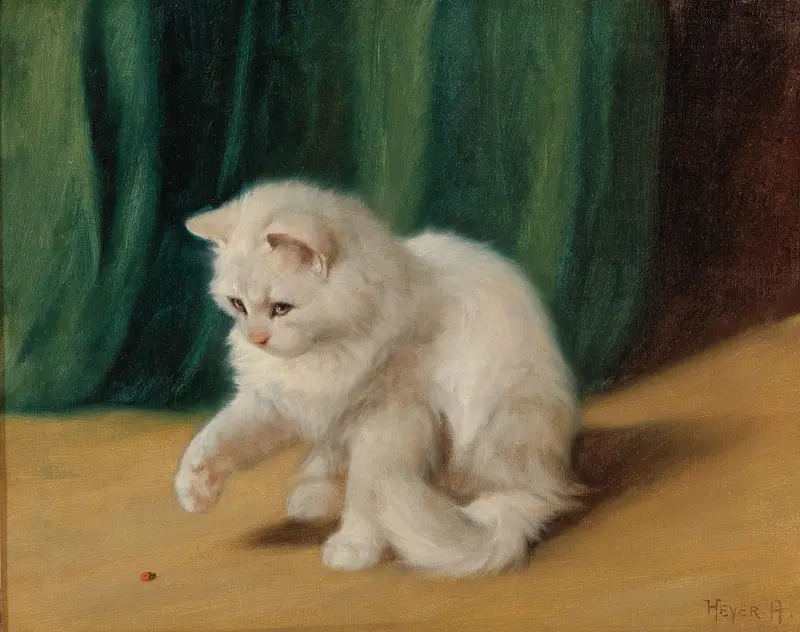
A white cat, impossibly plush and broad-shouldered, crouches in a patch of sunlit grass, its pale blue eyes locked on a pair of yellow butterflies that hover just out of reach. The animal’s body is a study in quiet tension—muscles gathered beneath thick fur, tail curled, every sense tuned to the delicate flutter overhead. The painter guides our gaze along the cat’s back, the creamy coat catching the light in cool blues and warm golds, until our eyes meet the butterflies’ bright, improbable presence.
The grass, rendered in swift, confident strokes, glows with dappled sunlight, while the shadowed background presses close, sharpening the drama of this small, private encounter. Painted in 1914, White Cat and Butterflies by Arthur Heyer belongs to a world that prized the intimate observation of animals, a genre especially beloved in Central Europe at the turn of the twentieth century. Such works were often commissioned by middle-class patrons who saw in these scenes a gentle, domestic poetry—nature tamed, yet still mysterious. The painting now appears in the Dorotheum collection, a reminder of a moment when artists like Heyer turned away from grand historical narratives to celebrate the everyday marvels found in a garden’s quiet corner.
Look again at the cat’s intent gaze and the butterflies’ playful dance, and the painting’s sense of suspended time becomes almost palpable.