Dog and Cats — History & Facts
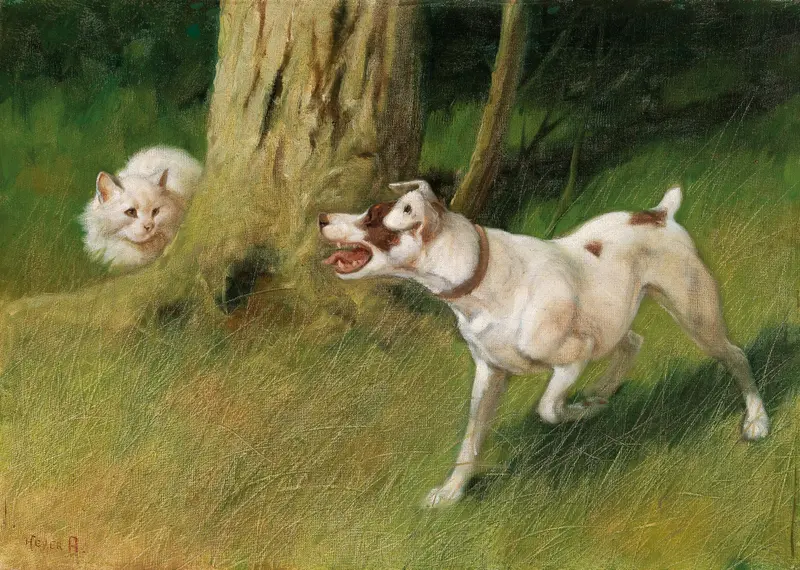
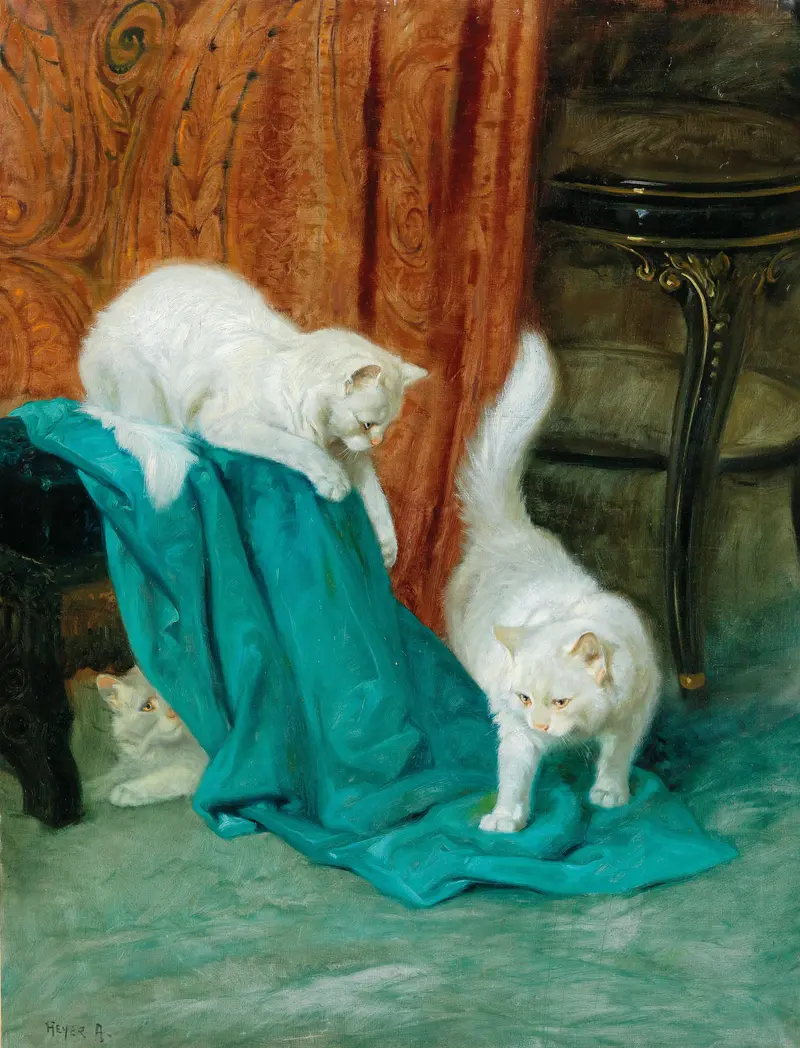
A moment of tense negotiation unfolds in Dog and Cats by Arthur Heyer, where the drama is measured in fur and posture rather than words. The artist captures the instant before a decision is made: will the dog’s curiosity be met with retreat or resistance? The white cats, their fur immaculate and their bodies poised, dominate the upper half of the composition, while the dog, muscular and intent, claims the floor with a stance that is both assertive and uncertain. The light falls warmly across the animals, emphasizing their forms and the subtle choreography of glances and tails—a silent conversation that anyone who has watched animals interact will recognize. Painted by 1931, this work belongs to a period when animal portraiture was both a celebration of domestic life and a showcase for technical skill.
Arthur Heyer was known for his affectionate, almost theatrical depictions of animals, and here he leans into the genre’s strengths: the careful rendering of fur, the play of light across bodies, and the psychological tension that animates the scene. Such paintings were often commissioned by pet owners or animal lovers, eager to see their companions elevated to the status of art. Though little is recorded about the specific journey of this painting before its appearance in the Dorotheum auction, its lively tableau invites us to linger, imagining the stories behind each wary glance and twitching tail.