
Donauufer in der Wachau — History & Facts
Where does light end, and longing begin? In Eduard Zetsche's Donauufer in der Wachau, the gentle embrace of dusk casts a serene spell over the landscape, inviting contemplation of life's fleeting moments and the shadows they leave behind. Look to the left, where the still waters of the Danube reflect a muted palette of blues and golds, echoing the fading day. Notice the way the trees, rendered in delicate brushstrokes, stand sentinel along the riverbank, their silhouettes soft against the luminous horizon. The artist’s choice of warm and cool tones creates a palpable tension, as if the scene teeters between the peacefulness of nature and the inevitability of twilight. Delve deeper into the nuances that echo mortality: the way the fading light suggests the end of a cycle, and the solitary figure near the water embodies both presence and absence.
Each element, from the winding river to the melancholy sky, evokes a sense of nostalgia and loss, reminding us that beauty often coexists with impermanence. This landscape becomes a meditative space, urging viewers to confront their own transient existence. Created in 1904, this work emerged as Zetsche was deeply engaged in capturing the nuances of nature, reflecting the broader Realist movement's embrace of everyday life. At this time, the world was on the brink of modernity, with advancements in technology and shifts in societal values, yet Zetsche chose to root his art in the timelessness of natural beauty, forever inviting contemplation amidst change.
More Artworks by Eduard Zetsche
Browse all →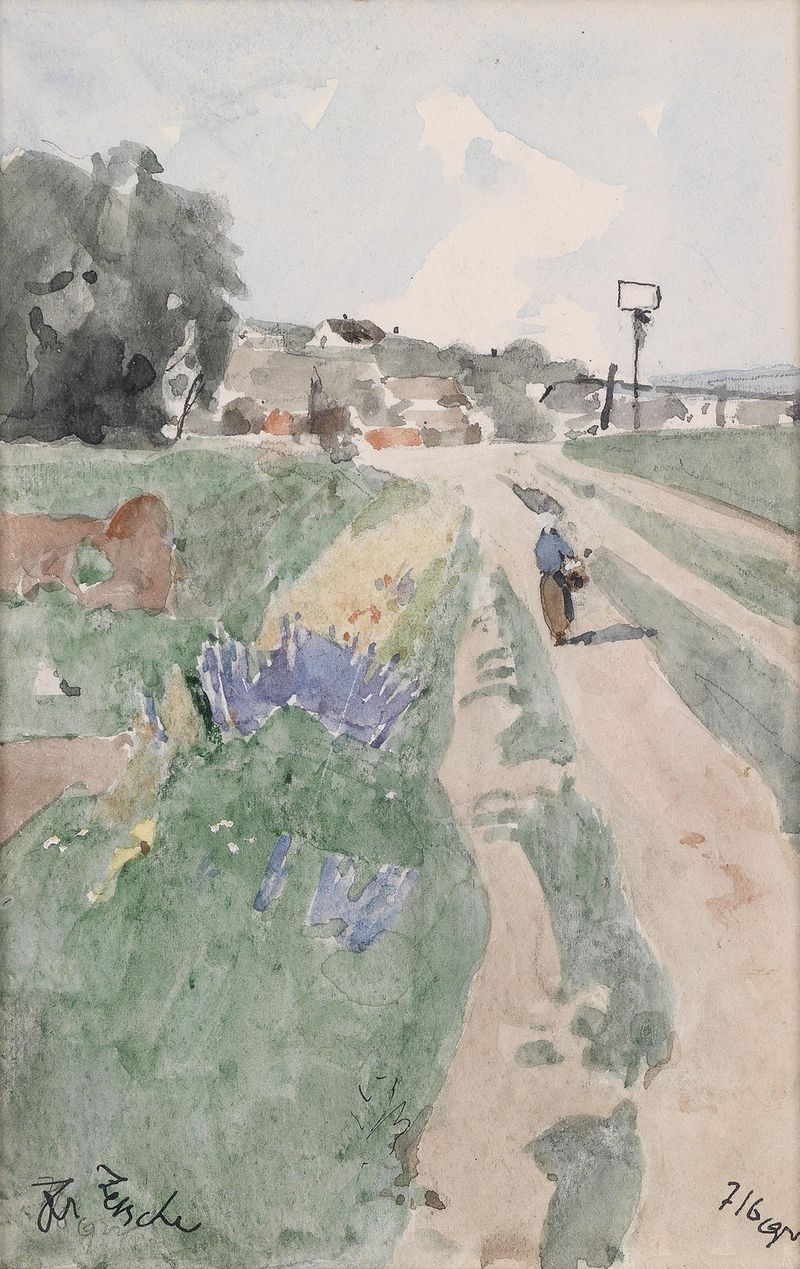
Weg bei Hadersdorf
Eduard Zetsche
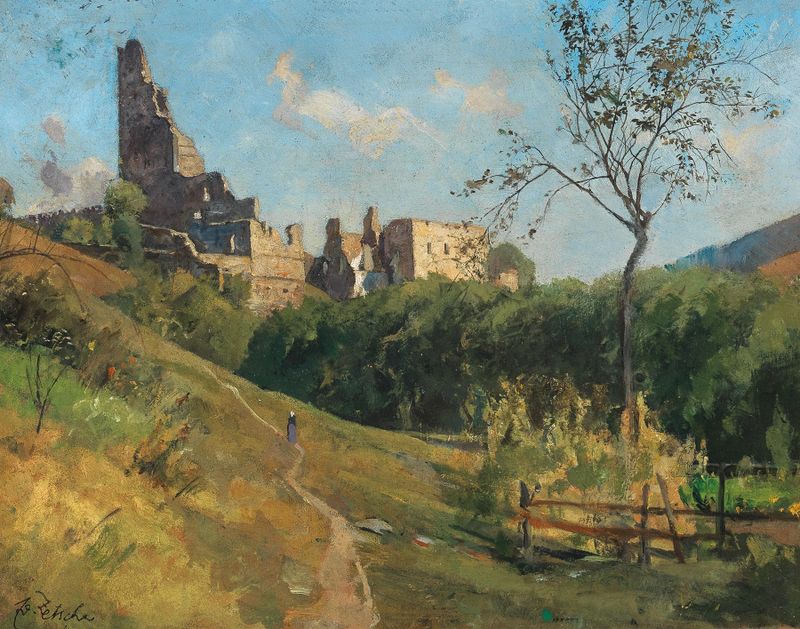
Ruins in the Wachau region
Eduard Zetsche
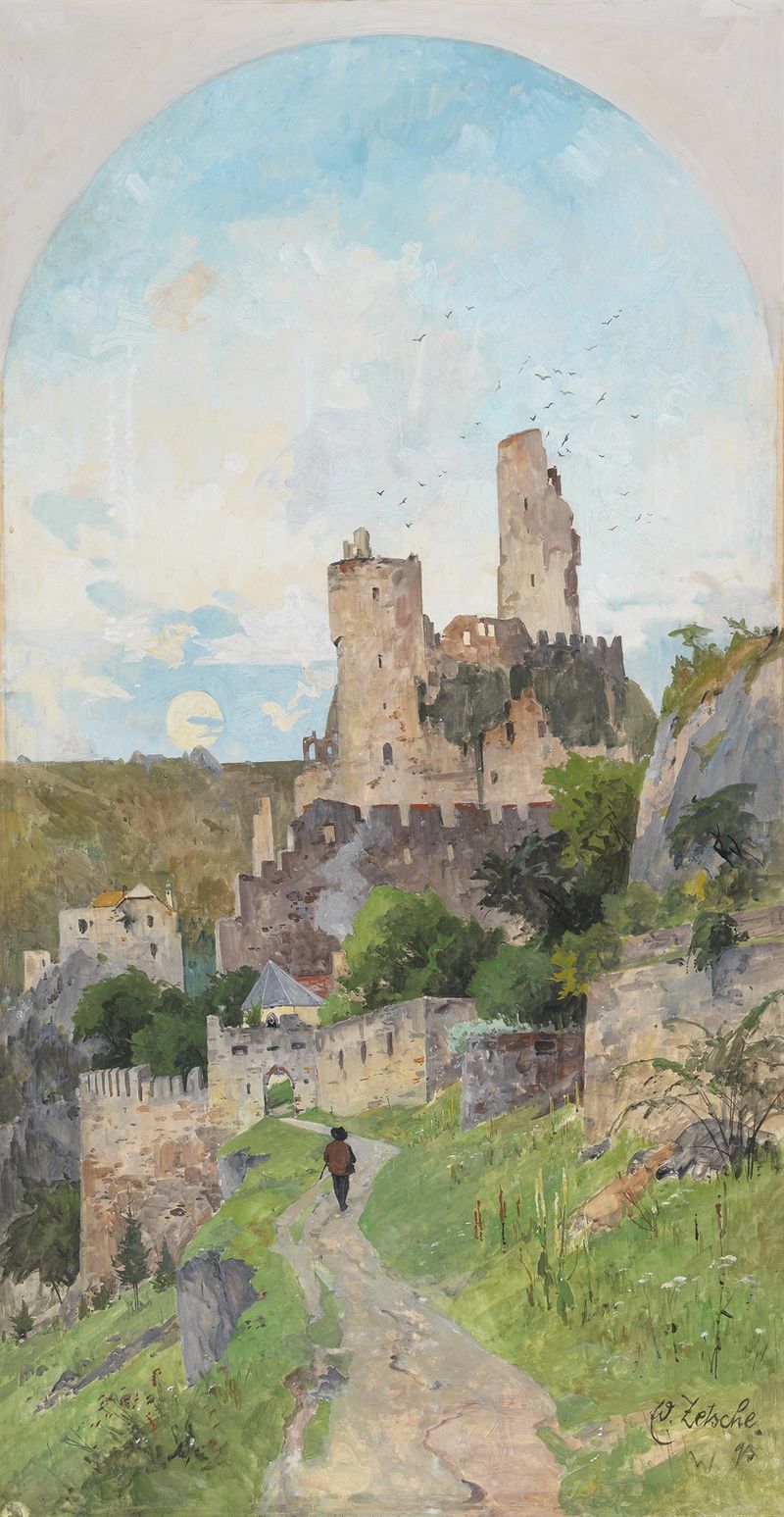
Blick auf die Ruine Dürnstein
Eduard Zetsche
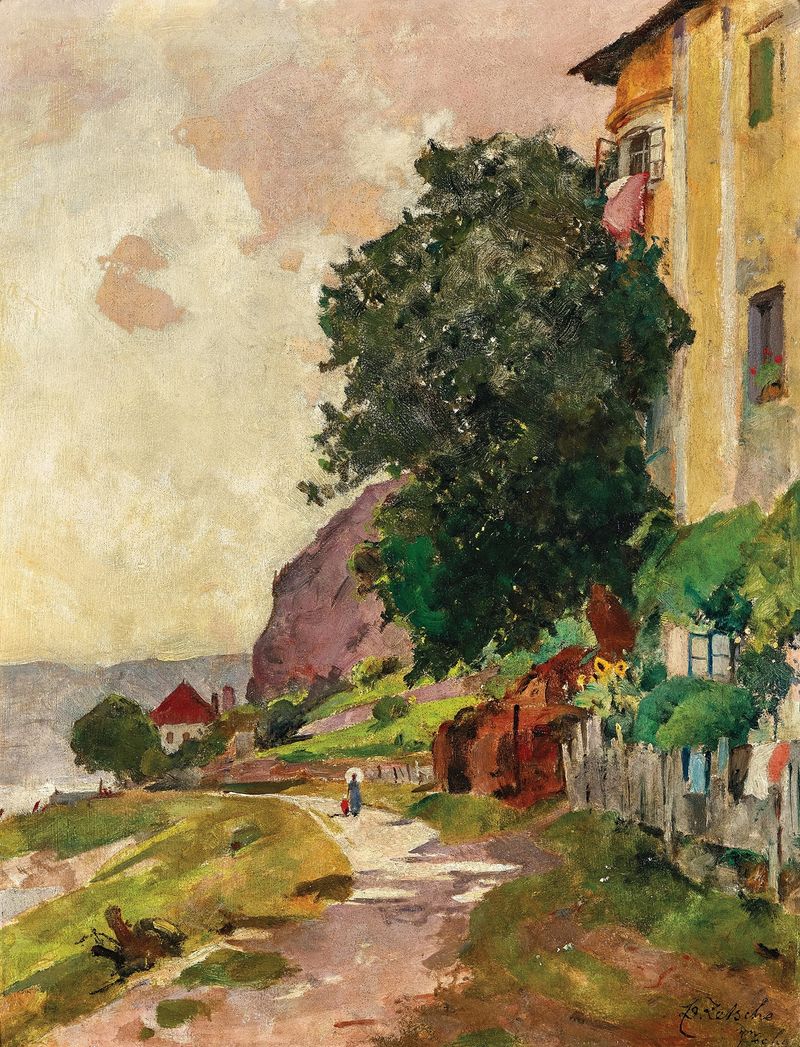
Beim Förthof, Ramsau
Eduard Zetsche
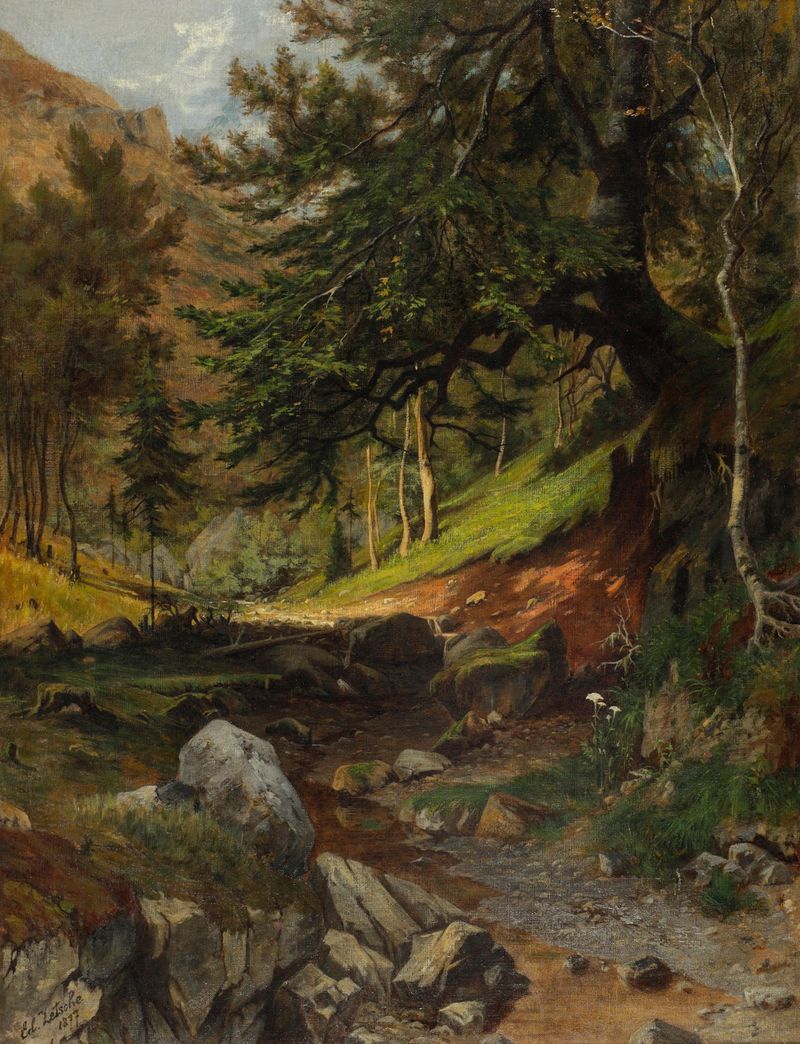
Waldpartie mit Bachlauf
Eduard Zetsche
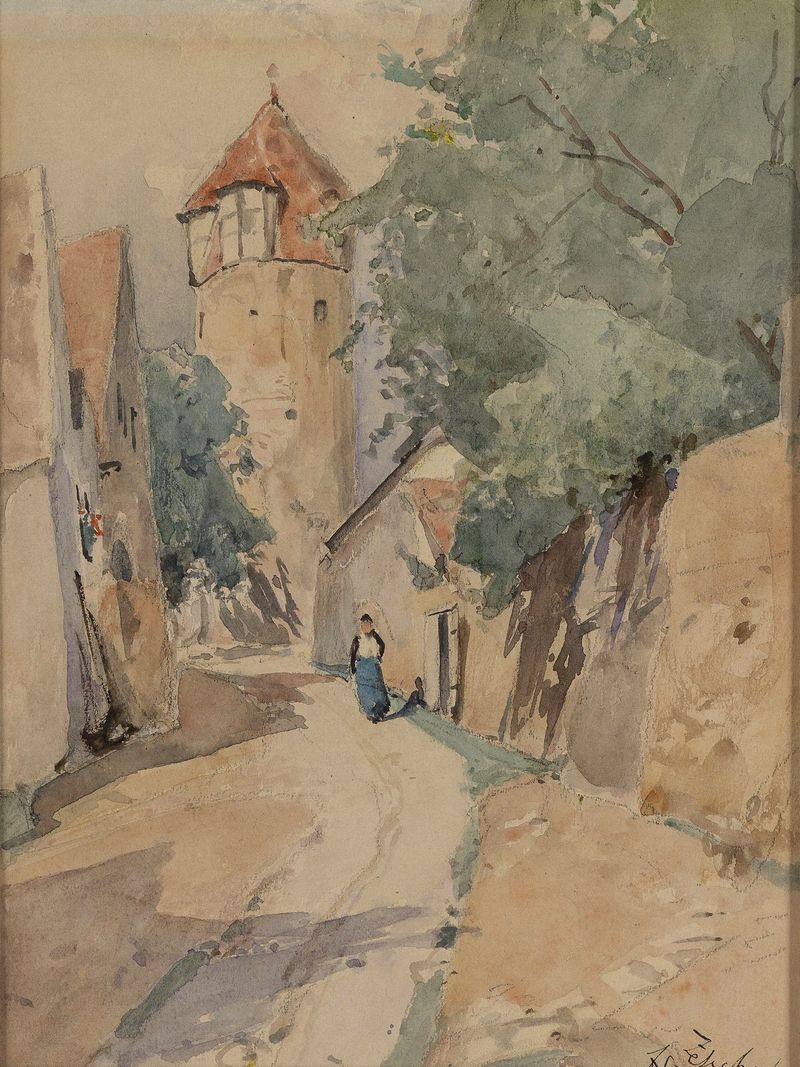
Sulzbach
Eduard Zetsche

Praterpartie
Eduard Zetsche
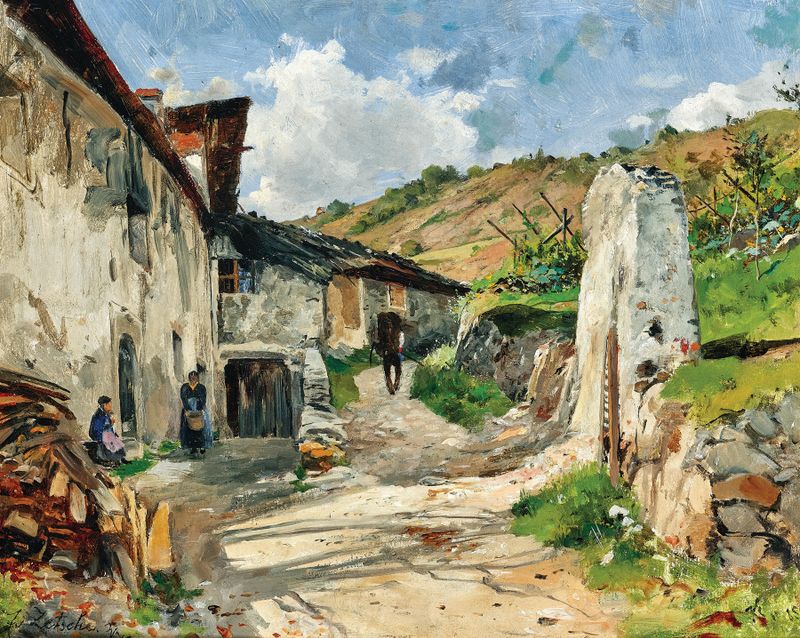
Wachau region, a path to a vineyard near a village
Eduard Zetsche

Motiv bei Lichtenwörth
Eduard Zetsche
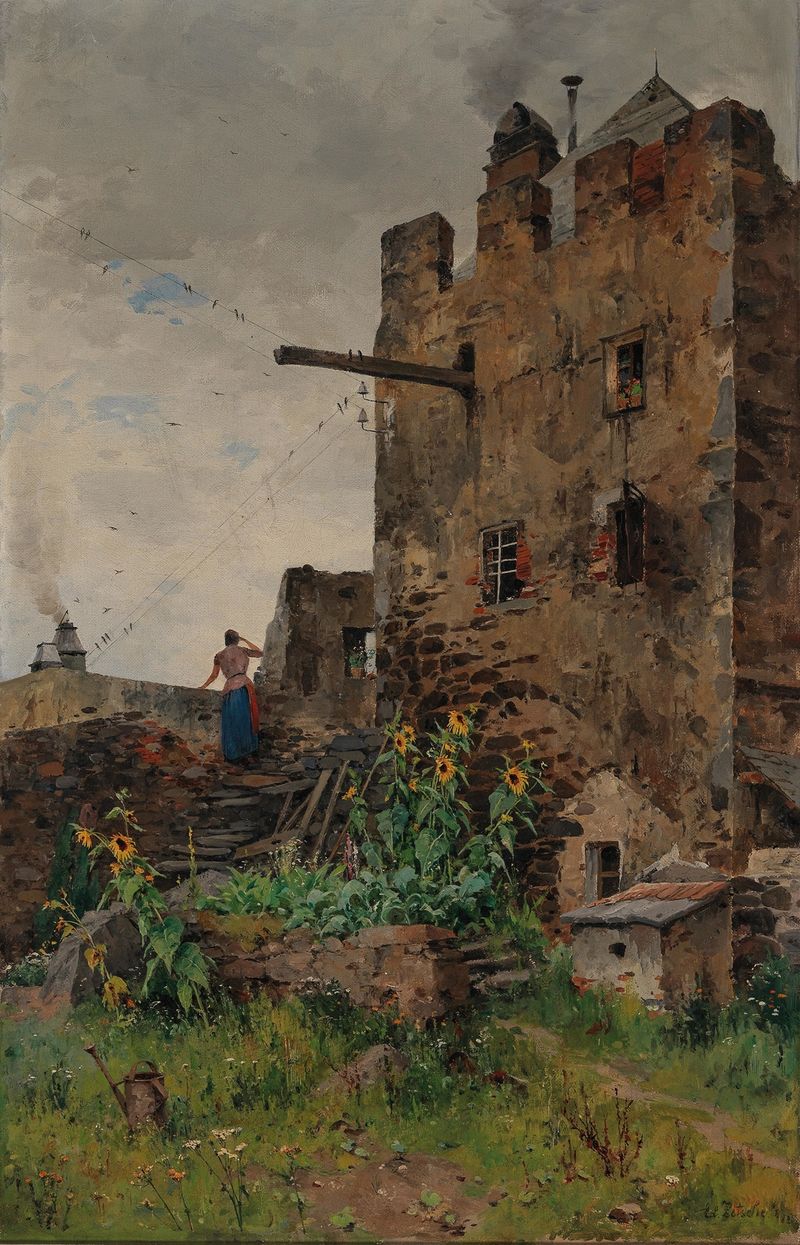
Wachau, Scene of Dürnstein, by the Old Town Wall
Eduard Zetsche





