
Doorway in Lamb’s Building — History & Facts
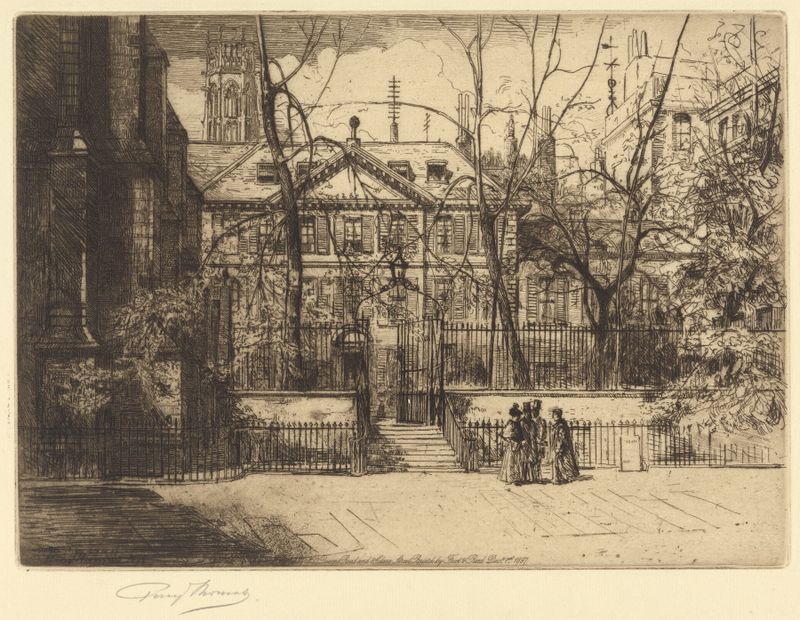
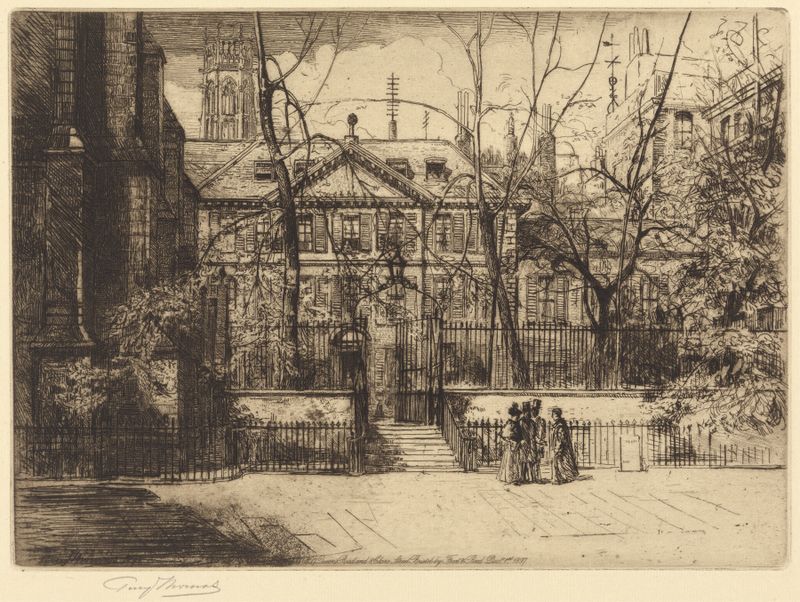
Can beauty exist without sorrow? In Doorway in Lamb’s Building, this question hovers like a ghost, inviting the viewer to confront the delicate interplay between fear and allure. Focus on the doorway at the center, framed by the weathered façade. The deep, muted colors evoke a somber atmosphere, while dappled light spills across the threshold, hinting at warmth just beyond the entrance. Look closely at the textured surfaces; the peeling paint and crumbling bricks narrate years of history, whispering the stories of those who once passed through.
The meticulous brushwork creates a visual rhythm, drawing one’s gaze through the portal, inviting contemplation of what lies on the other side. Yet, juxtaposed with the inviting light is a palpable tension. The doorway, both a passage and a barrier, symbolizes the choices we face — the known versus the unknown. Shadows lurk in the crevices, suggesting a lurking fear that accompanies the beauty of opportunity, reminding us that stepping forward often requires confronting our vulnerability.
The muted palette reinforces this duality, capturing the essence of a moment suspended between hope and trepidation. In 1897, when this piece was created, Percy Thomas was navigating the shifting tide of the British art scene, steeped in the influences of realism and romanticism. The late Victorian era was marked by industrial change and social upheaval, prompting artists to explore the nuances of human experience. This work reflects not only Thomas’s individual search for meaning but also the broader artistic inquiry of the time, as creators sought to capture the complexities of modern life.
More Artworks by Percy Thomas
Browse all →
The Temple, London
Percy Thomas
The Temple, London
Percy Thomas
The Temple, London
Percy Thomas
The Cloisters
Percy Thomas
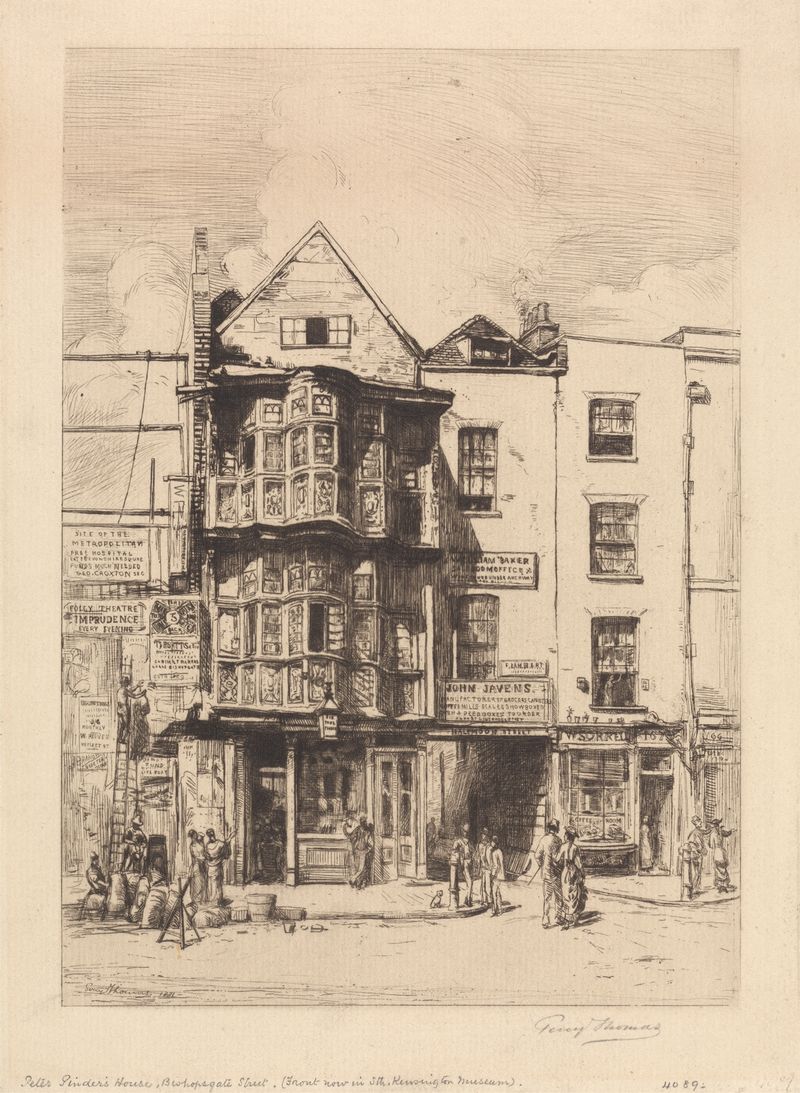
Peter Pinder’s House, Bishopsgate Street, London
Percy Thomas
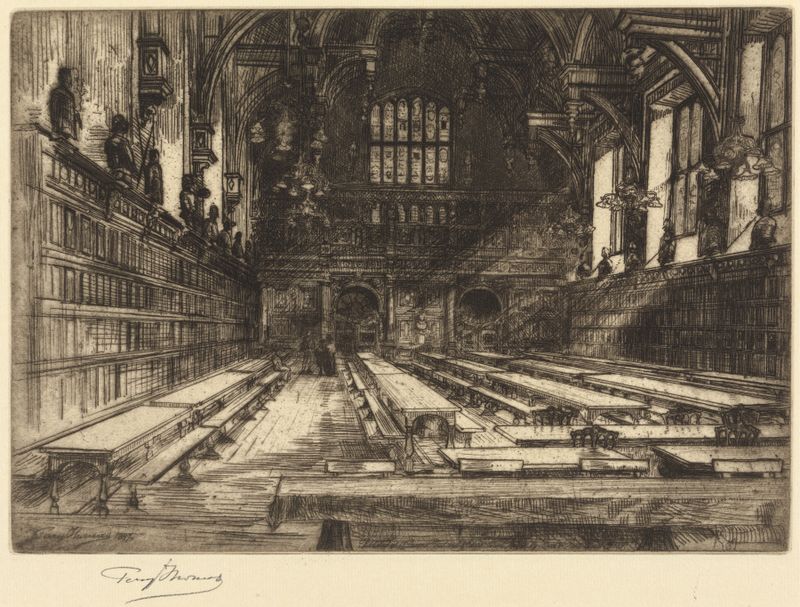
The Middle Temple Hall
Percy Thomas
The Temple, London
Percy Thomas
The Temple, London
Percy Thomas
The Master’s House
Percy Thomas
The Temple, London
Percy Thomas
More Architecture Art
Browse all →
The statue of Liberty
Frédéric Auguste Bartholdi

View of Houses in Delft, Known as ‘The Little Street’
Johannes Vermeer

View of Houses in Delft, Known as ‘The Little Street’
Johannes Vermeer

The Cathedral in Rouen. The portal, Grey Weather
Claude Monet

The yellow house
Vincent van Gogh

The Church in Auvers-sur-Oise, View from the Chevet
Vincent van Gogh