
The Temple, London — History & Facts
Did the painter know this moment would outlive them? In The Temple, London, Percy Thomas captures a fleeting essence of tranquility amidst the bustle of urban life, inviting us to consider the weight of time and memory. Focus on the foreground where the grand, architectural lines of the temple stand resolute against the soft enveloping haze of twilight. The brushwork is deft, rendering the building's stone textures with a palpable solidity, while the delicate play of light washes over its surfaces, conjuring an ethereal quality. Look closely at the contrasting colors—shimmering golds and deep blues—creating a harmonious yet poignant contrast that draws the eye upward, beckoning viewers to contemplate the heavens. As you explore the painting, subtle details emerge: the figures in the foreground appear to blend into the background, suggesting a fleeting interaction with the monumental structure.
This evokes a sense of longing, a tension between the permanence of the temple and the transient nature of human existence. The void hinted at in the painting—where the divine meets the mundane—whispers of aspirations and the inevitable passage of time, add depth to the scene. Percy Thomas painted this work in 1898, a year marked by the rise of the British Arts and Crafts Movement, which sought to celebrate craftsmanship and the beauty of the ordinary. During this period, he was deeply influenced by the changing urban landscape of London, where grand institutions coexisted with the throes of modernity.
This context underscores the painting’s resonance, as it captures not only a moment but also the spirit of an era on the brink of transformation.
More Artworks by Percy Thomas
Browse all →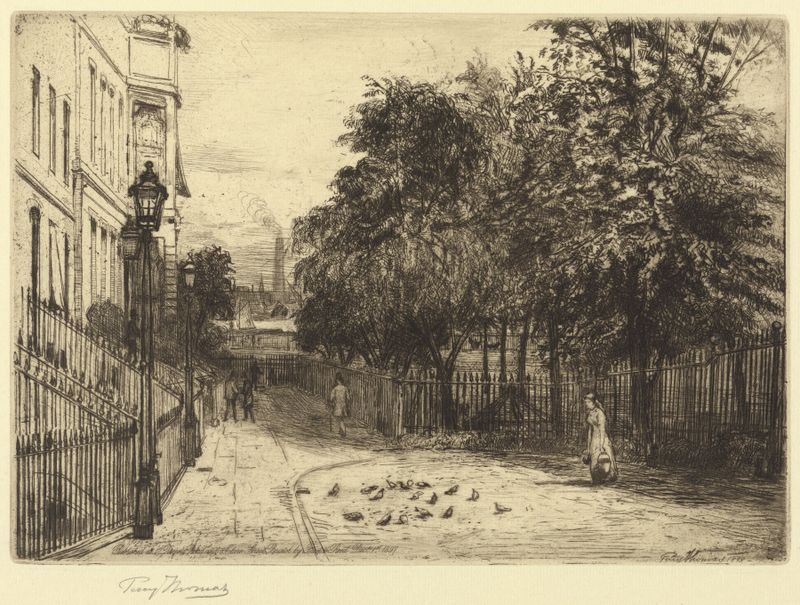
The Temple, London
Percy Thomas
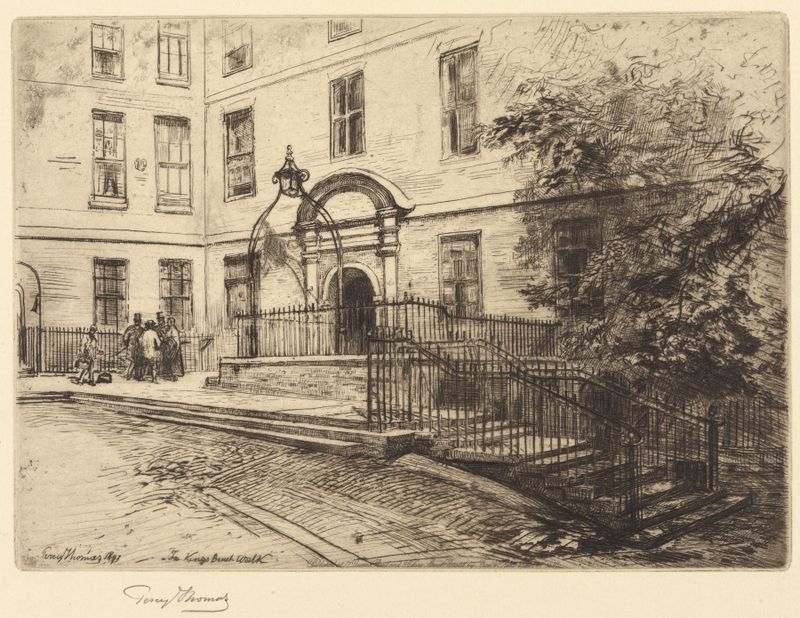
The Temple, London
Percy Thomas
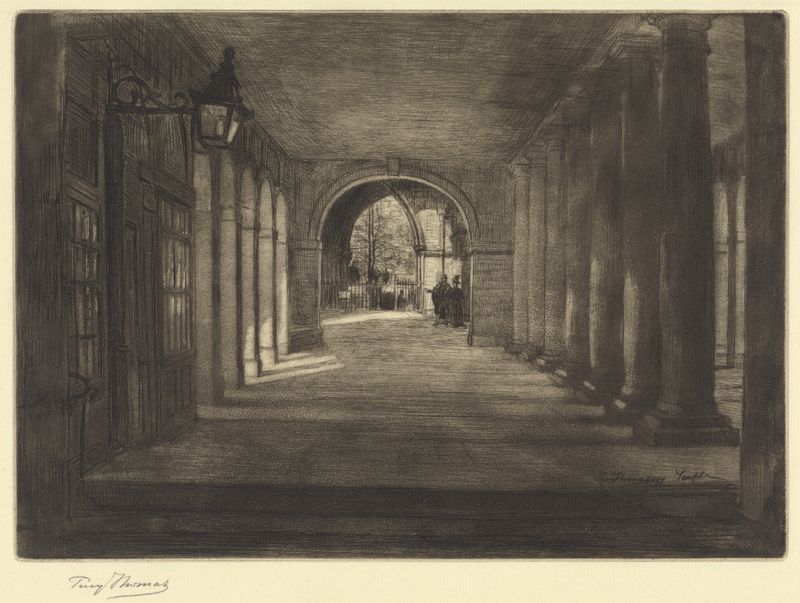
The Cloisters
Percy Thomas
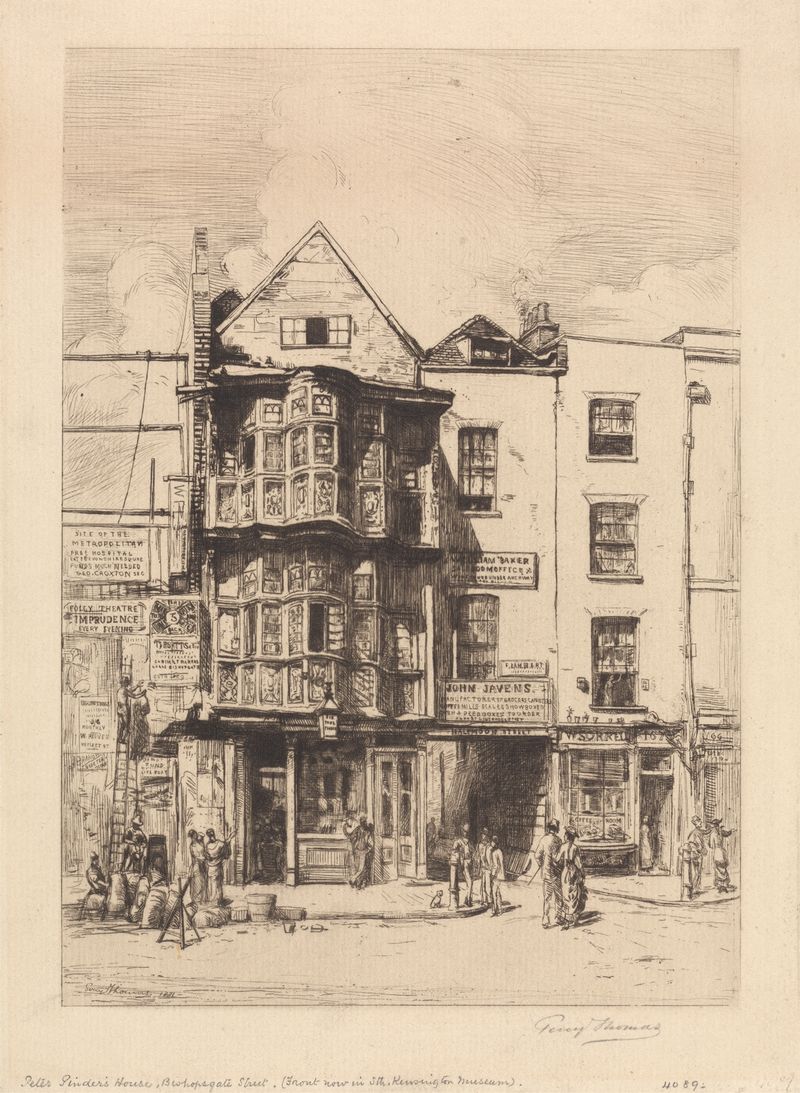
Peter Pinder’s House, Bishopsgate Street, London
Percy Thomas
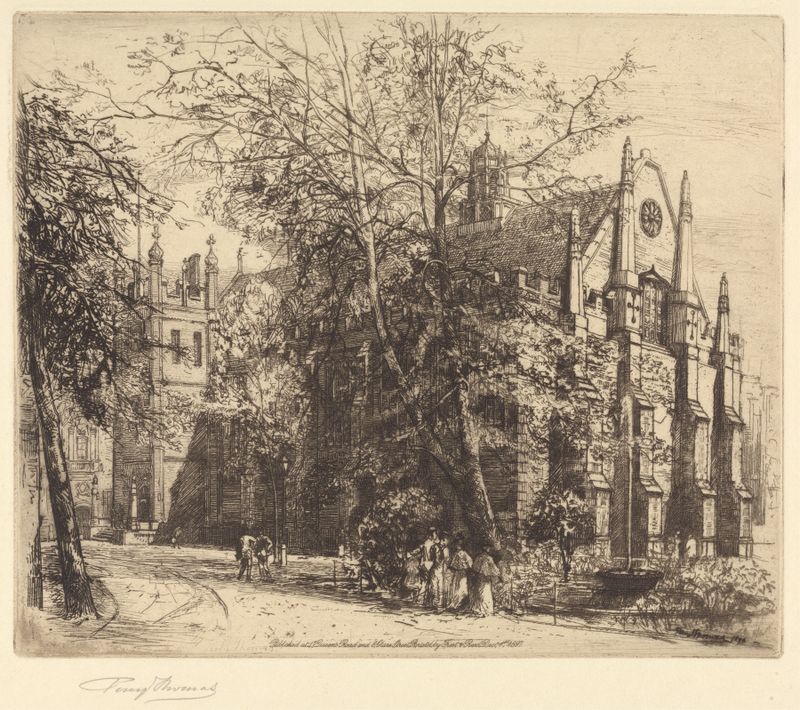
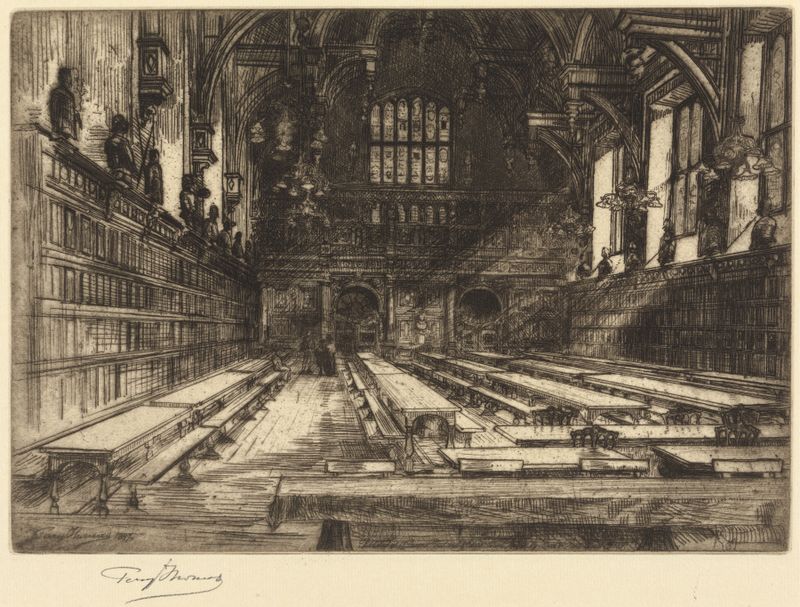
The Middle Temple Hall
Percy Thomas
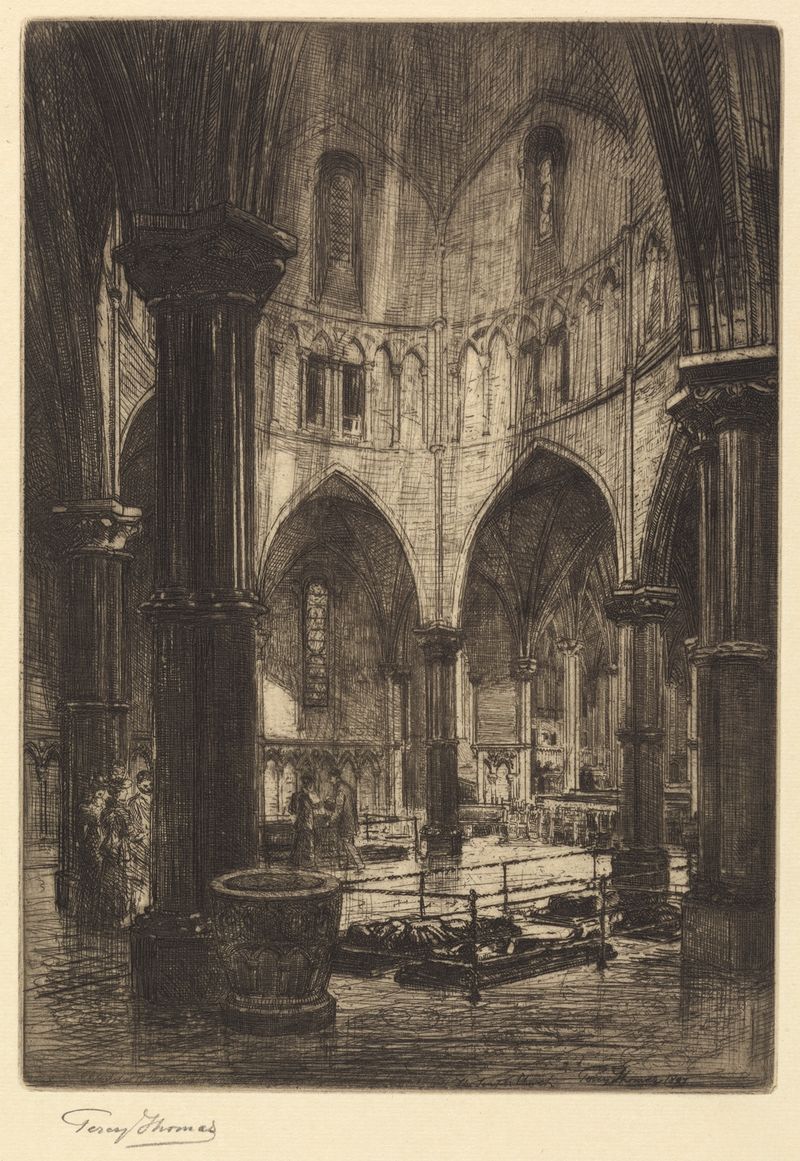
The Temple, London
Percy Thomas
The Temple, London
Percy Thomas
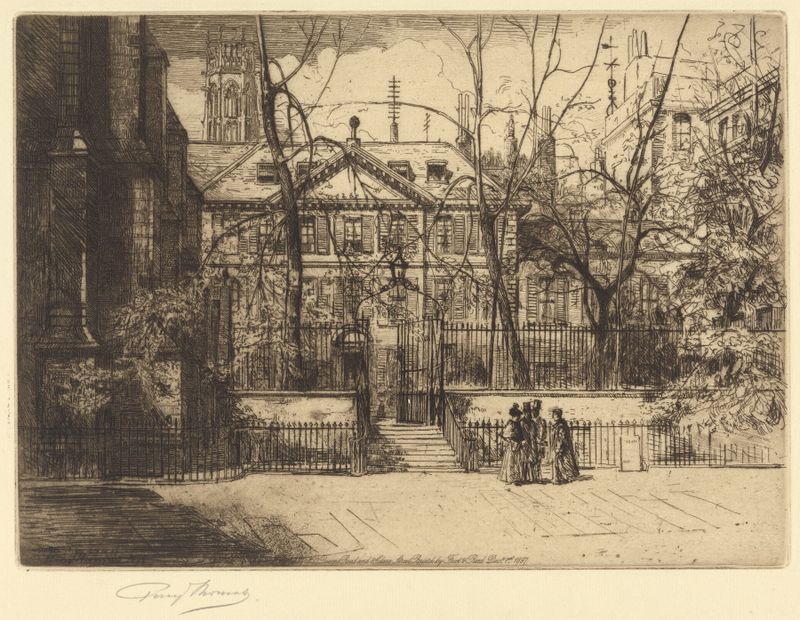
The Master’s House
Percy Thomas
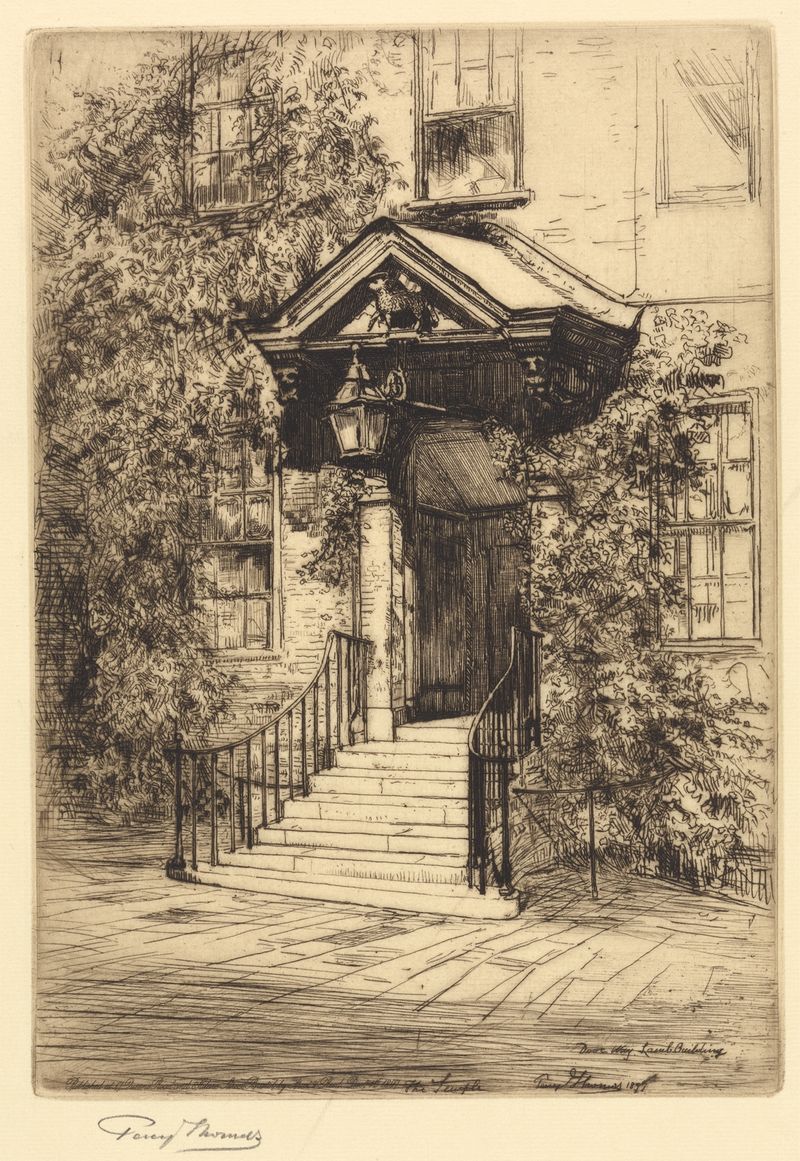
Doorway in Lamb’s Building
Percy Thomas
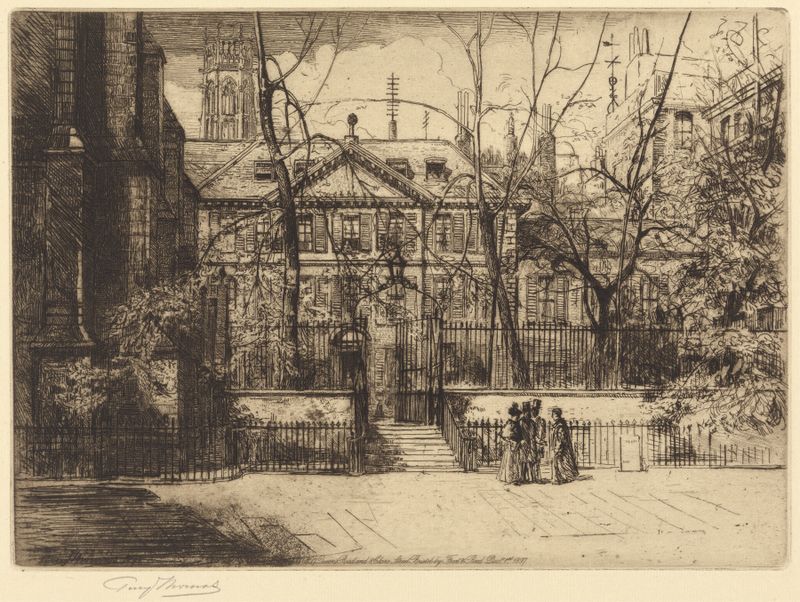
The Temple, London
Percy Thomas
More Architecture Art
Browse all →
The statue of Liberty
Frédéric Auguste Bartholdi

View of Houses in Delft, Known as ‘The Little Street’
Johannes Vermeer

View of Houses in Delft, Known as ‘The Little Street’
Johannes Vermeer

The Cathedral in Rouen. The portal, Grey Weather
Claude Monet

The yellow house
Vincent van Gogh

The Church in Auvers-sur-Oise, View from the Chevet
Vincent van Gogh