
Dorfschenke — History & Facts
What if beauty was never meant to be finished? The question lingers in the air, inviting contemplation of the transient nature of life and art itself. Focus on the gentle play of light cascading through the rustic tavern, illuminating warm wooden beams and the soft faces of patrons gathered in conviviality. Look closely at the figures, their expressions caught in a moment of laughter or quiet conversation, revealing camaraderie and the simple pleasures of existence. The rich earth tones juxtapose against the delicate highlights, giving the scene a vibrant yet comforting aura, and inviting the viewer to linger in this intimate space. As you explore the painting, notice the details that speak volumes—the clinking of glasses, a half-filled mug resting on the table, the way shadows dance in the corners of the room, whispering secrets of the past.
Each brushstroke breathes life into the canvas, capturing not just a moment, but the essence of awakening in a bustling community. The figures, though static, embody the warmth of human connection, their shared joy creating a subtle tension between the fleeting and the eternal. In 1865, the artist created this piece amidst a changing artistic landscape, one that embraced realism and the beauty of everyday life. Living in Austria, Passini was inspired by the vibrant social scenes around him, reflecting a world eagerly breaking away from strict academic traditions.
This painting encapsulates a moment in time, as he navigated the influences of his contemporaries while remaining rooted in the celebration of humble beauty.
More Artworks by Johann Nepomuk Passini
Browse all →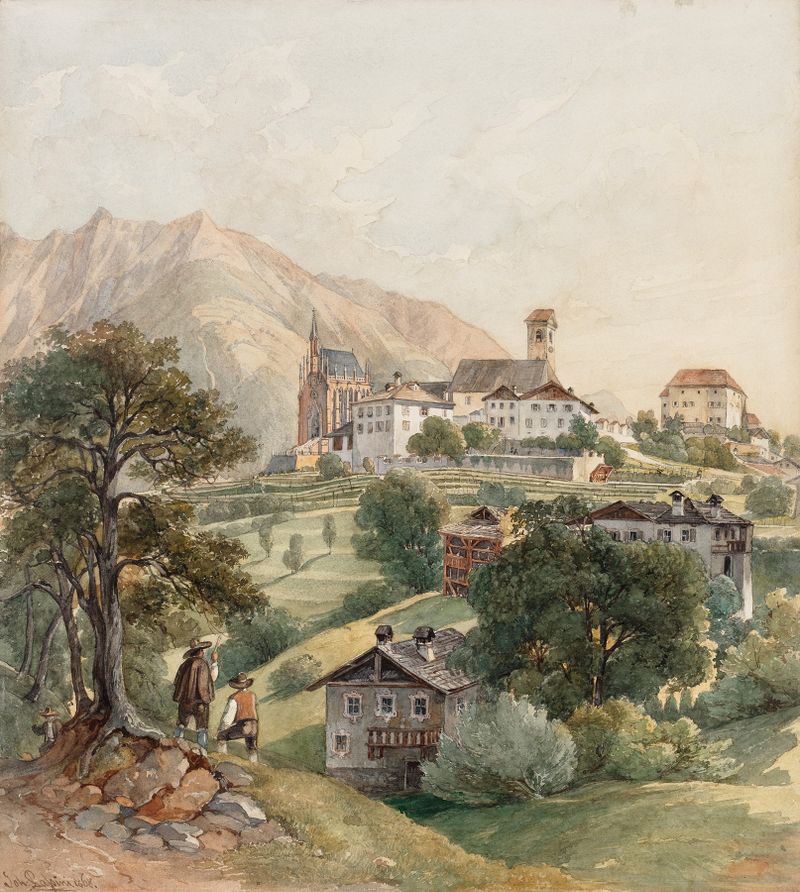
Schenna bei Meran
Johann Nepomuk Passini

An evening in the harbour of Triest
Johann Nepomuk Passini
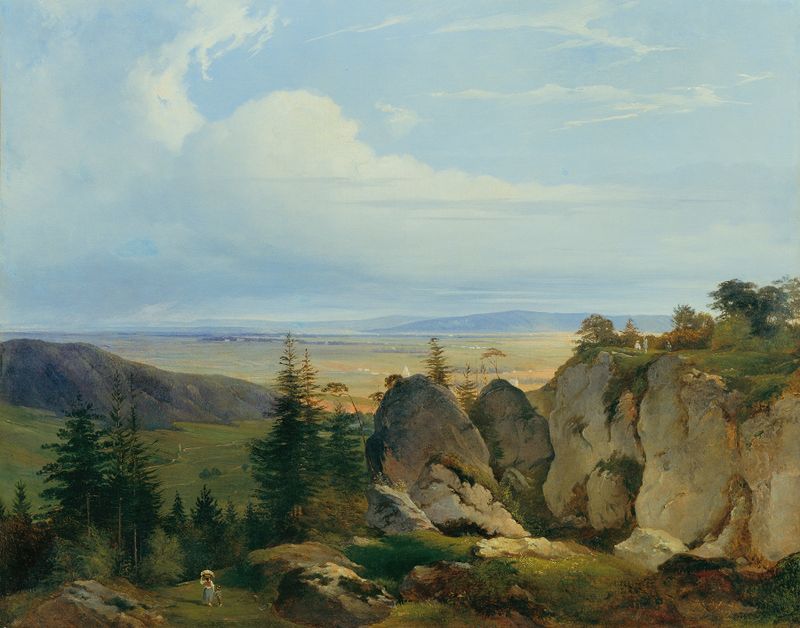
Die Wiener-Neustädter Heide von Wetzelsdorf aus gesehen
Johann Nepomuk Passini
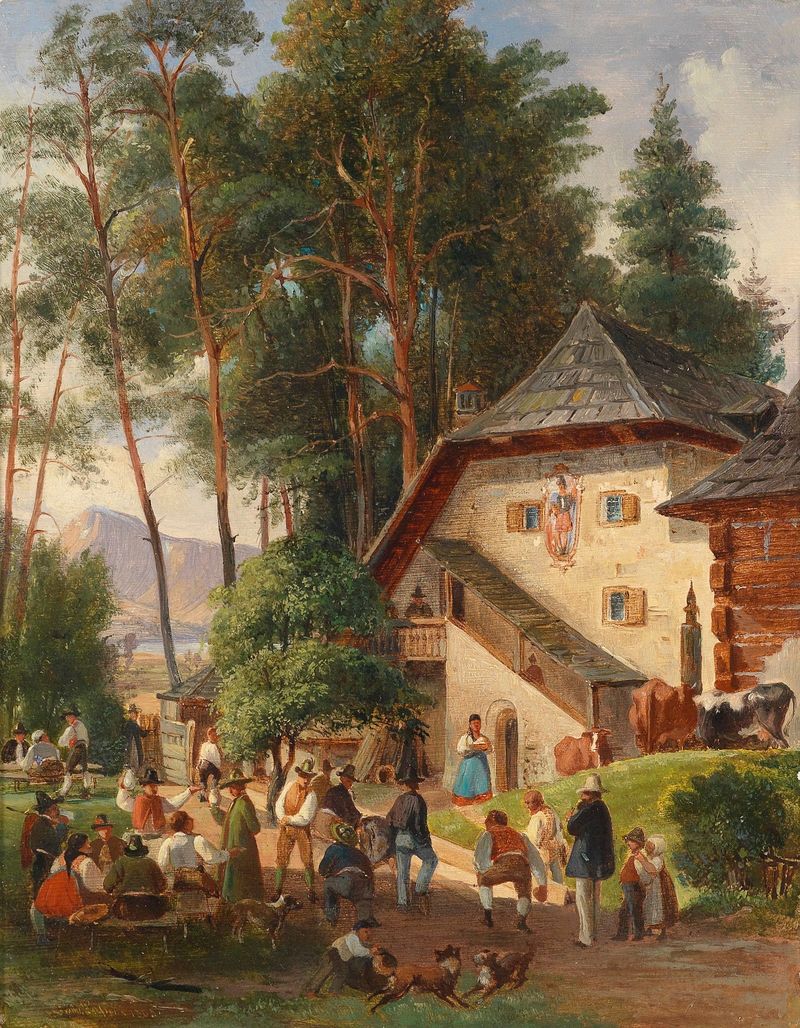
Dorffest
Johann Nepomuk Passini
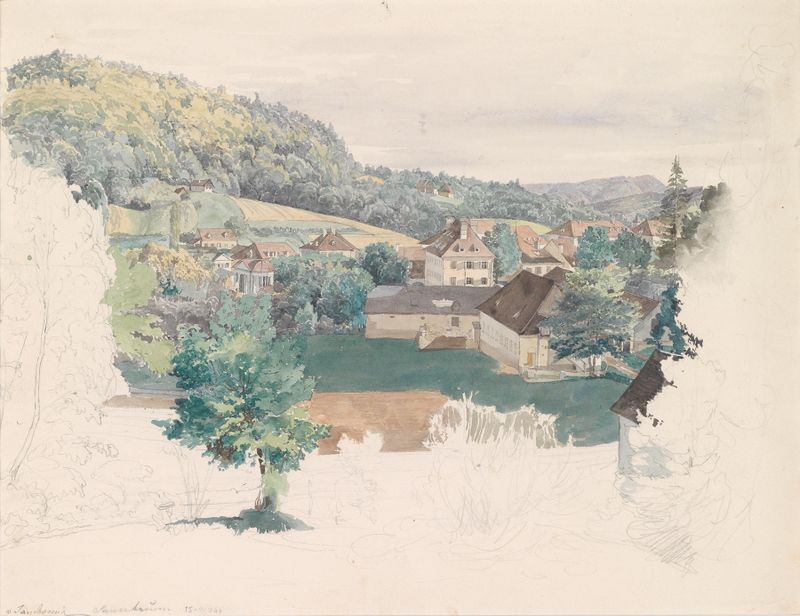
Blick über Bad Rohitsch-Sauerbrunn Skizze
Johann Nepomuk Passini

Im Tal von Bad Rohitsch-Sauerbrunn
Johann Nepomuk Passini
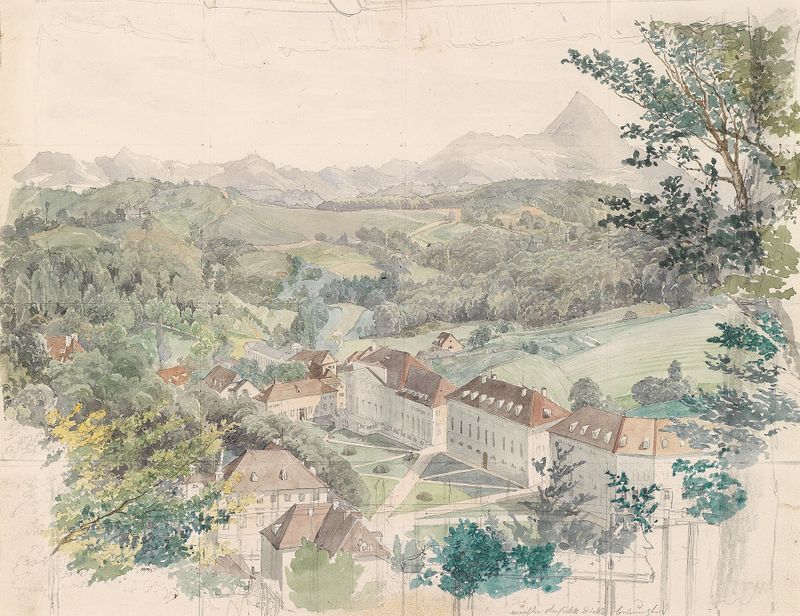
Blick über Bad Rohitsch-Sauerbrunn
Johann Nepomuk Passini

Kurplatz in Bad Rohitsch-Sauerbrunn
Johann Nepomuk Passini





