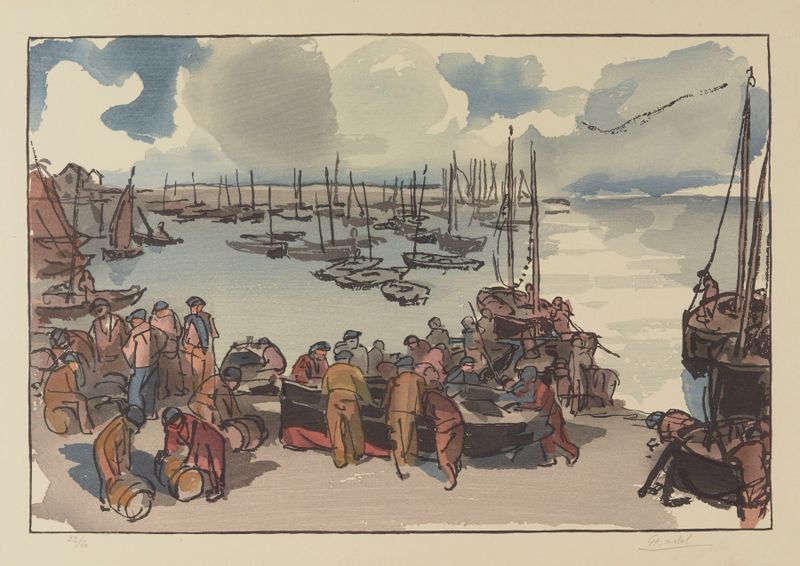
Douarnenez – entrée de la ria du Port-Rhu vu de Tréboul — History & Facts
Who listens when art speaks of silence? In the stillness captured on canvas, the essence of yearning transcends the visible, inviting an intimate dialogue with the soul. Look to the left at the gentle curves of the coastline, where the water cradles the boats in its embrace. The soft blues and greens merge harmoniously, reflecting the delicate interplay of nature’s palette. Notice how the light dances on the water’s surface, creating a symphony of shimmering reflections that lead your gaze towards the distant horizon, suggesting both destination and departure.
The composition draws the eye inward, revealing a quiet harbor alive with the potential of an unwritten story. Beneath the serene surface lies an undercurrent of longing. The boats, tethered yet free, embody the tension between movement and stillness — a metaphor for the human condition. The subtle play of light hints at time slipping away, evoking nostalgia for moments past or dreams unfulfilled.
Each brushstroke serves as a whisper, echoing the unspoken desires of those who have come and gone from this port, leaving traces of their presence in the soft lapping of the waves. In 1922, Jules Chadel painted this evocative work while residing in the coastal town of Tréboul, where the maritime landscape offered inspiration and escape. At this time, he was immersed in the vibrant art community of France, yet felt the weight of personal introspection, navigating the complexities of identity and place in an ever-changing world. The marriage of his artistic exploration with the serene setting birthed Douarnenez – entrée de la ria du Port-Rhu vu de Tréboul, a testament to the silent stories spoken through the language of nature.