Landscape I; Puy-de-Dôme — History & Facts
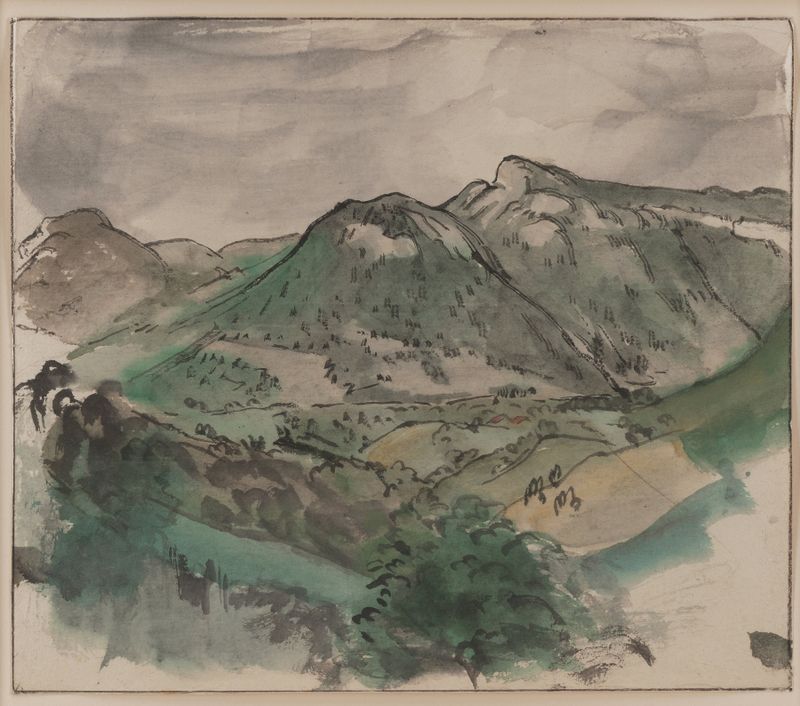
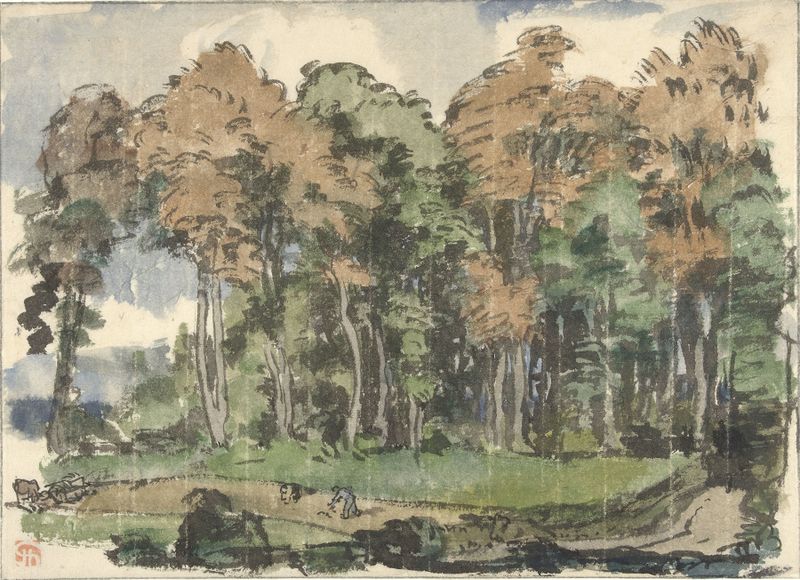
Could beauty survive in a century of chaos? In Landscape I; Puy-de-Dôme, the answer seems to hang delicately in the balance, a whisper against the storm of history. Look to the vibrant greens and bold blues that dominate the canvas, drawing your gaze to the serene hills that rise and fall like a gentle heartbeat. The artist employs broad, sweeping strokes that create an undulating rhythm, inviting you to wander through the landscape. Notice how the light spills over the peaks, casting soft shadows that dance across the foreground, while hints of warmth in the palette suggest a sun on the verge of setting — a fleeting moment of tranquility amidst an uncertain world. Yet beneath the picturesque surface lies a tension of betrayal.
The vivid colors, so inviting, mask a deeper struggle; they remind us of nature's resilience yet hint at humanity’s frailty. The seemingly idyllic scene contrasts with the upheaval of the early 20th century, suggesting a longing for stability in a time marked by conflict and despair. Each brushstroke encapsulates an emotional weight, reflecting both beauty and the loss that accompanies it. In the early 1920s, Chadel was immersed in the post-war landscape of France, grappling with the artistic shifts that accompanied the tumultuous changes in society.
This period saw the rise of modernism and a departure from traditional forms, as artists sought to find new ways to express their realities. Landscape I; Puy-de-Dôme captures this transitional moment, revealing a quest for serenity in a world desperately in need of healing.