Weg aan een bosrand, met landlieden aan het werk — History & Facts
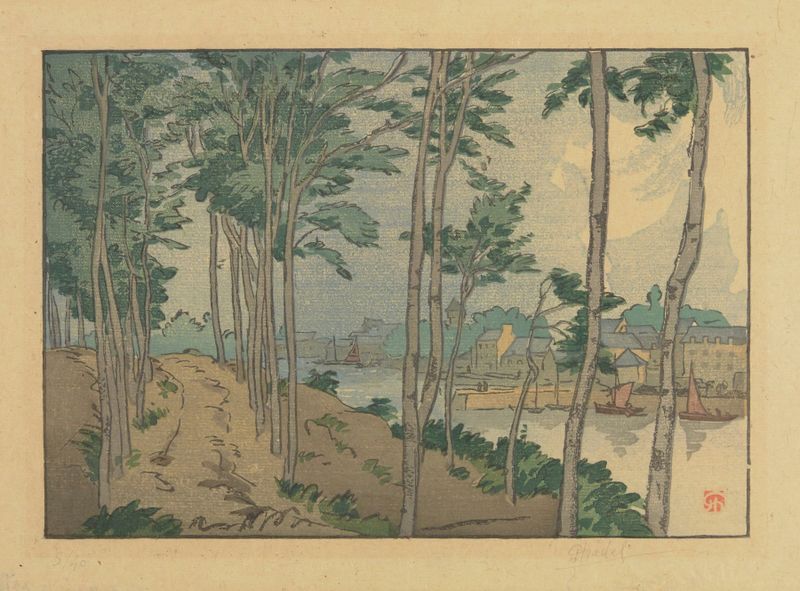
Can paint confess what words never could? In Weg aan een bosrand, met landlieden aan het werk, the quiet obsession of labor is immortalized in a landscape where dedication meets nature, revealing a dialogue between man and the earth. Look to the left at the path weaving through the trees, inviting exploration and echoing the journey of hard work. The brushstroke rhythms create a palpable movement, guiding the eye toward figures engaged in labor, their bodies slightly bent as they harvest the bounty of the land. Soft, earthy tones dominate the canvas, bathing the scene in a warm glow, while dappled light filters through the leaves, casting gentle shadows that evoke a sense of tranquility amidst toil. Yet, hidden beneath this serene surface lies a contrast between solitude and community.
The laborers, though physically present, seem isolated in their tasks, each lost in their thoughts, reflecting the broader human experience of persistence against the backdrop of nature’s indifference. The tranquility of the setting starkly highlights the weight of their work—an obsession with survival etched into their every gesture. It compels the viewer to ponder the sacrifices made in pursuit of earthly sustenance, a quiet testament to resilience. Jules Chadel painted this work during a time when the post-war world was grappling with change, both in society and the art world.
Created between 1880 and 1942, it reflects his connection to the rural lifestyle that defined much of his life. As an artist, Chadel found inspiration in everyday scenes, capturing the essence of laborers, thereby commemorating the unsung heroes of the land in a moment of peace amidst their relentless struggle.