Landscape II; Puy-de-Dôme — History & Facts
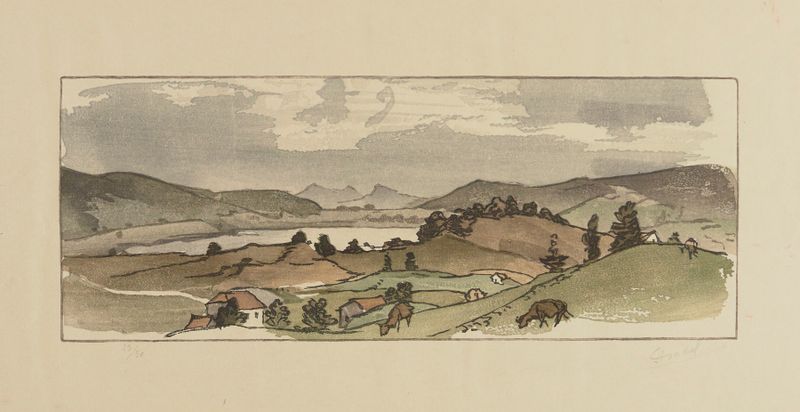
What if silence could speak through light? In Landscape II; Puy-de-Dôme, the muted hues and gentle forms invite a conversation with nature that transcends words. Look to the center where the rolling hills cradle the horizon, their soft contours bathed in a delicate golden light. The artist’s brushwork is both deliberate and fluid, creating a serene gradient that harmonizes the earth and sky. Notice how the subtle interplay of greens and blues blends seamlessly, evoking a sense of balance and tranquility that permeates the entire composition.
Each stroke seems to whisper the soft rustle of leaves, the distant call of a bird resting on the stillness of the scene. Beneath the serene facade lies a nuanced tension between light and shadow, inviting an exploration of emotional depth. The lighter tones seem to float above the earth, suggesting hope while the darker colors anchor the scene with a sense of grounding and reality. This duality of color reflects the artist’s profound understanding of nature’s dualities; the balance between tranquility and turmoil that exists in landscapes and within ourselves. Created around 1920, this piece emerged during a transformative period for Jules Chadel, who was living in France amidst the post-World War I landscape.
This era was marked by a shift in artistic expression, as artists sought to capture not just the physical world, but the emotions and psychological nuances behind it. Chadel’s work exemplifies this transition, merging impressionistic elements with a more personal exploration of balance in nature.