
Dresden Altarpiece — History & Facts
It is the hush of concentration that first draws the eye: the Virgin, absorbed and grave, bends over the sleeping Christ child, her gesture both protective and almost clinical, as if she is weighing the world’s fate in her palm. Around her, a swirl of cherubs fills the air with a sense of movement and music, their small forms tumbling through the upper reaches of the panels, while a crown hovers above her head—suspended by invisible hands, a sign of her heavenly role. The light, cool and northern, spills in from a window that opens onto a distant city, rooting the sacred story in a world of stone and timber, of streets and towers.
On either side, the flanking saints—one aged, lost in thought over a heavy book, the other youthful, bare-chested, and clasping a sprig of green—form a silent dialogue with the central scene, their faces marked by the weight of knowledge and hope. Painted in 1496, Dresden Altarpiece stands at the threshold of the German Renaissance, when artists like Albrecht Dürer were absorbing the lessons of Italy and Flanders, and transforming them with their own precision and intensity. Altarpieces of this kind were the heart of late medieval devotion, commissioned for churches or private chapels, meant to focus prayer and meditation on the mysteries of faith. The meticulous detail—the glint of glass, the textures of cloth and flesh, the miniature architecture glimpsed through the window—speaks to a world in which the divine was thought to be present in every corner of daily life.
Though history has kept few traces of this particular panel’s early journey, its survival allows us to witness the moment when German painting was discovering its own voice, balancing the miraculous and the material with unflinching clarity. Look again at the Virgin’s downcast eyes: in their shadow lies the quiet drama of an age.
More Artworks by Albrecht Dürer

Melancholia
Albrecht Dürer

St. George and the dragon.
Albrecht Dürer
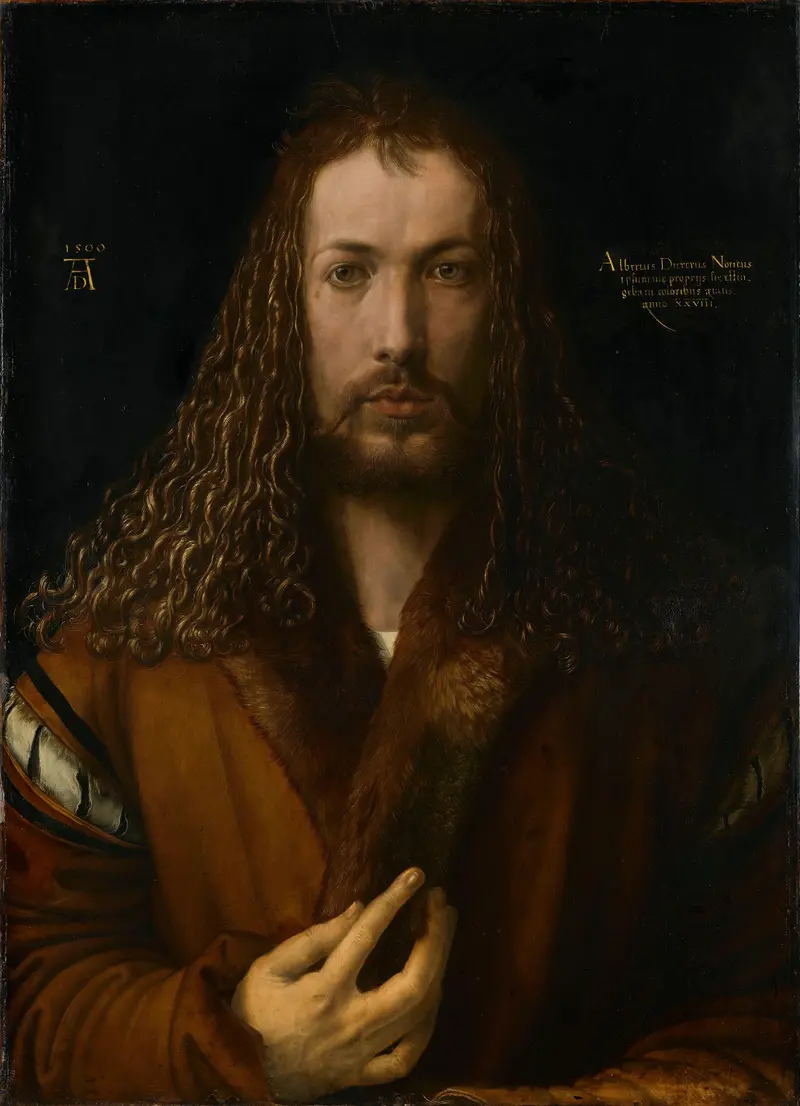
Self-Portrait with Fur-Trimmed Robe
Albrecht Dürer

Wing of a European Roller
Albrecht Dürer

Iris
Albrecht Dürer

The Great Piece of Turf
Albrecht Dürer
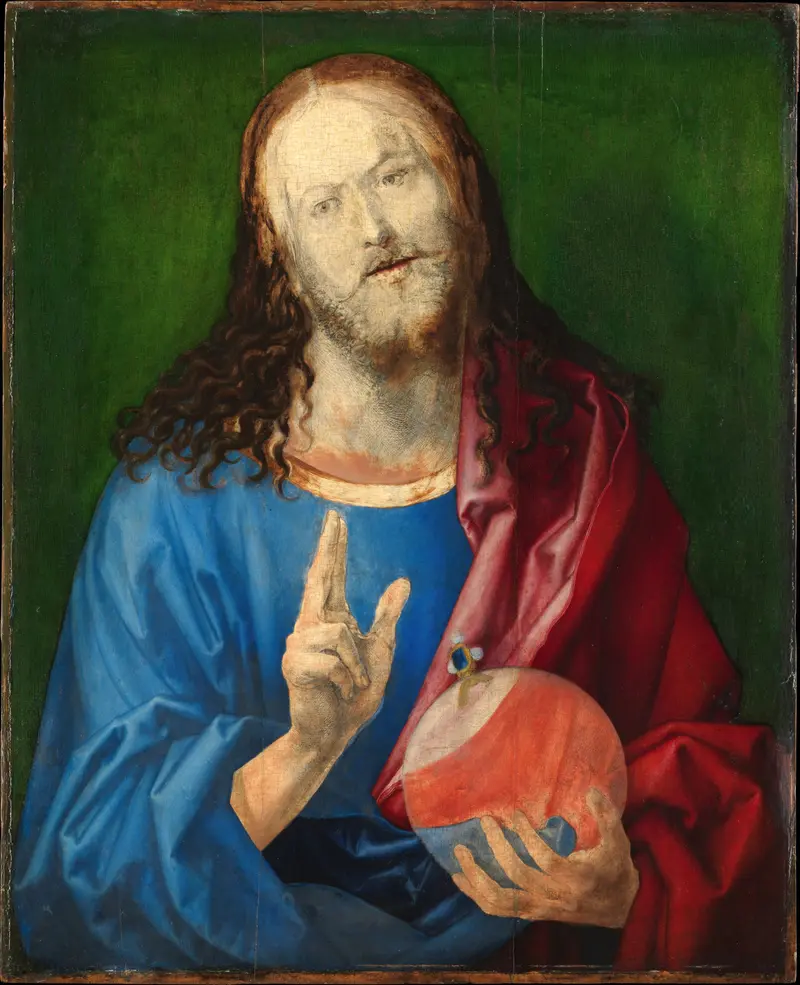
Salvator Mundi
Albrecht Dürer
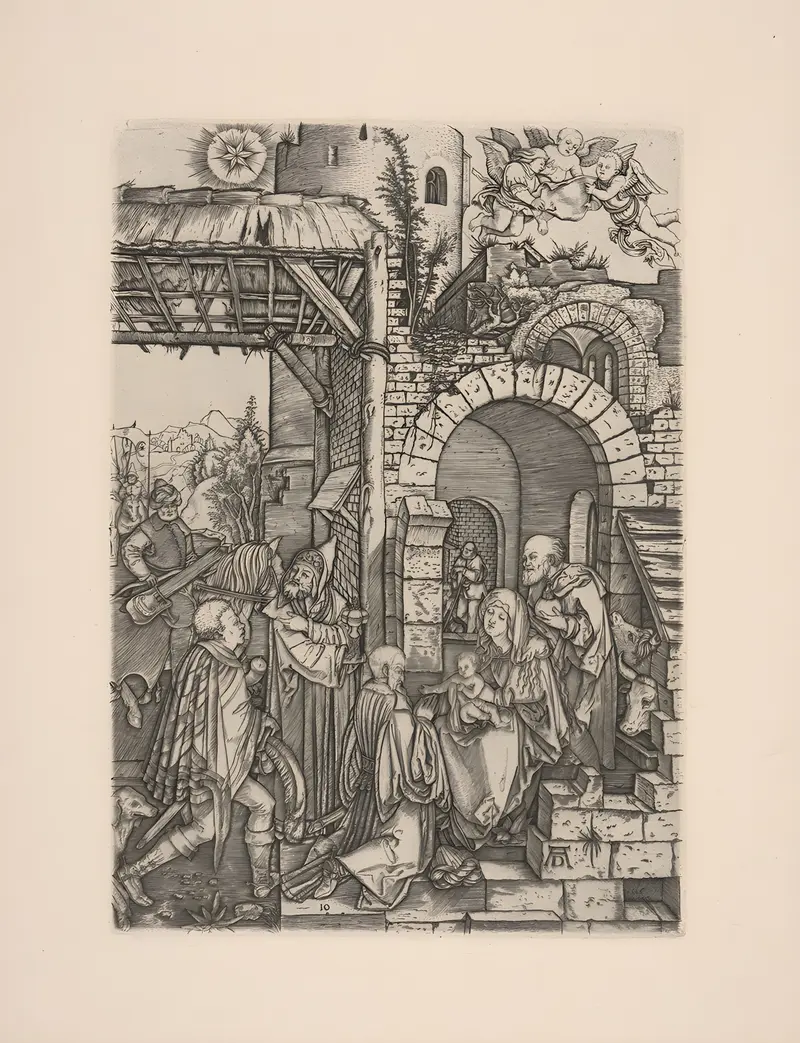
The Adoration of the Magi
Albrecht Dürer
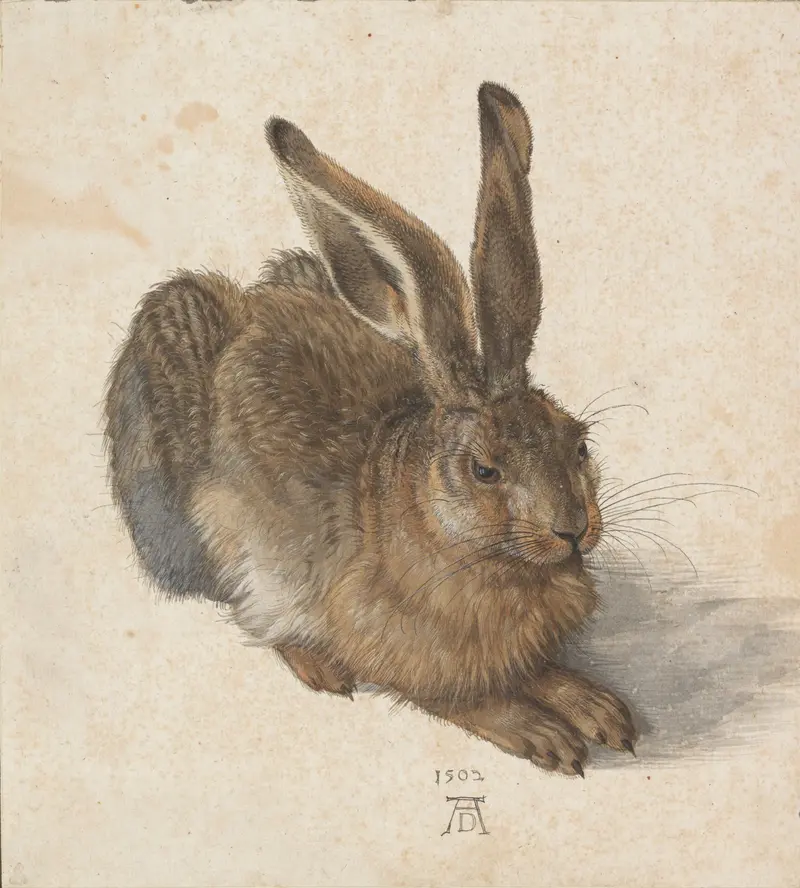
Young Hare
Albrecht Dürer
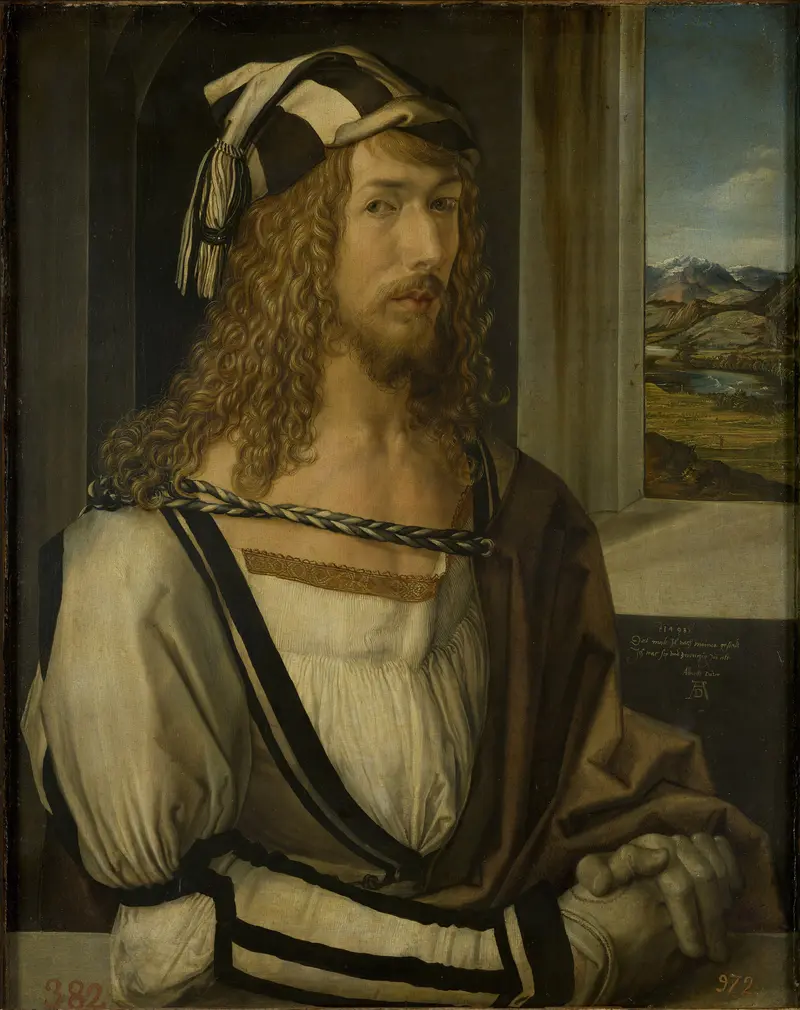
Self-portrait
Albrecht Dürer





