
Drie Maria's bij het lege graf — History & Facts
In a moment suspended between despair and hope, shadows gather around the empty tomb, whispering secrets of loss and renewal. A stillness envelops the three figures, each one a vessel for sorrow, their expressions cast in shades of grief as they confront the void left by absence. Look to the left, where the figure in the foreground kneels, hands clasped in prayer, her sorrowful gaze directed toward the hollow space of the grave. The drapery of her garments flows elegantly, rendered in soft, muted tones that contrast with the stark, pale stone of the tomb.
Notice how the light delicately caresses the contours of their faces, illuminating their features while deepening the shadows around them, creating a haunting atmosphere that draws the viewer deeper into their shared anguish. Within this somber composition, the emotional tension between the figures and their surroundings unfolds. The contrast of dark and light reflects not only their internal turmoil but also hints at the duality of death and the promise of resurrection. The empty grave, a powerful symbol of both despair and hope, invites contemplation on the transient nature of life, while the figures' proximity to this void emphasizes their connection to an unseen presence that lingers just beyond reach. Created between 1534 and 1535, this work emerges from Georg Pencz's time in Nuremberg, where Renaissance humanism flourished alongside religious upheaval.
Pencz, influenced by the Northern European tradition, sought to capture profound emotional depth through meticulous detail and composition, reflecting the zeitgeist of an era grappling with spiritual questioning and the enduring power of faith amidst uncertainty.
More Artworks by Georg Pencz
Browse all →
Parabel van de zaaier
Georg Pencz

Parabel van de arbeiders in de wijngaard
Georg Pencz
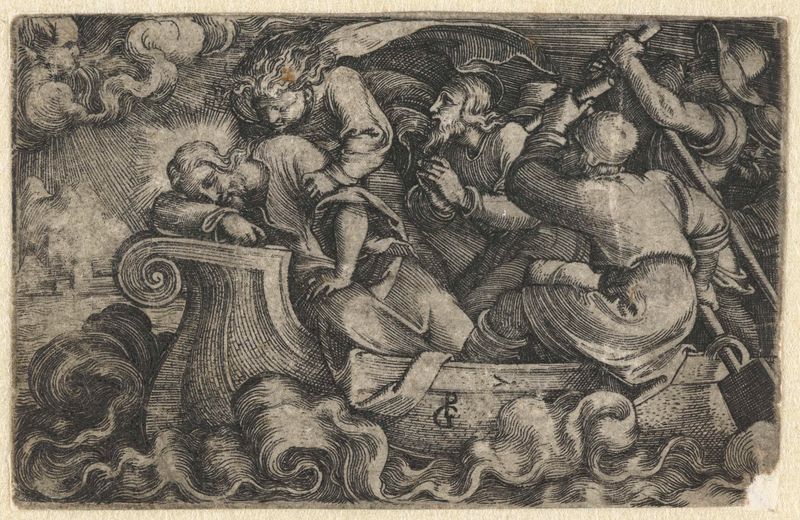
Discipelen wekken slapende Christus tijdens storm op Meer van Galilea
Georg Pencz

Afgunst (Invidia)
Georg Pencz
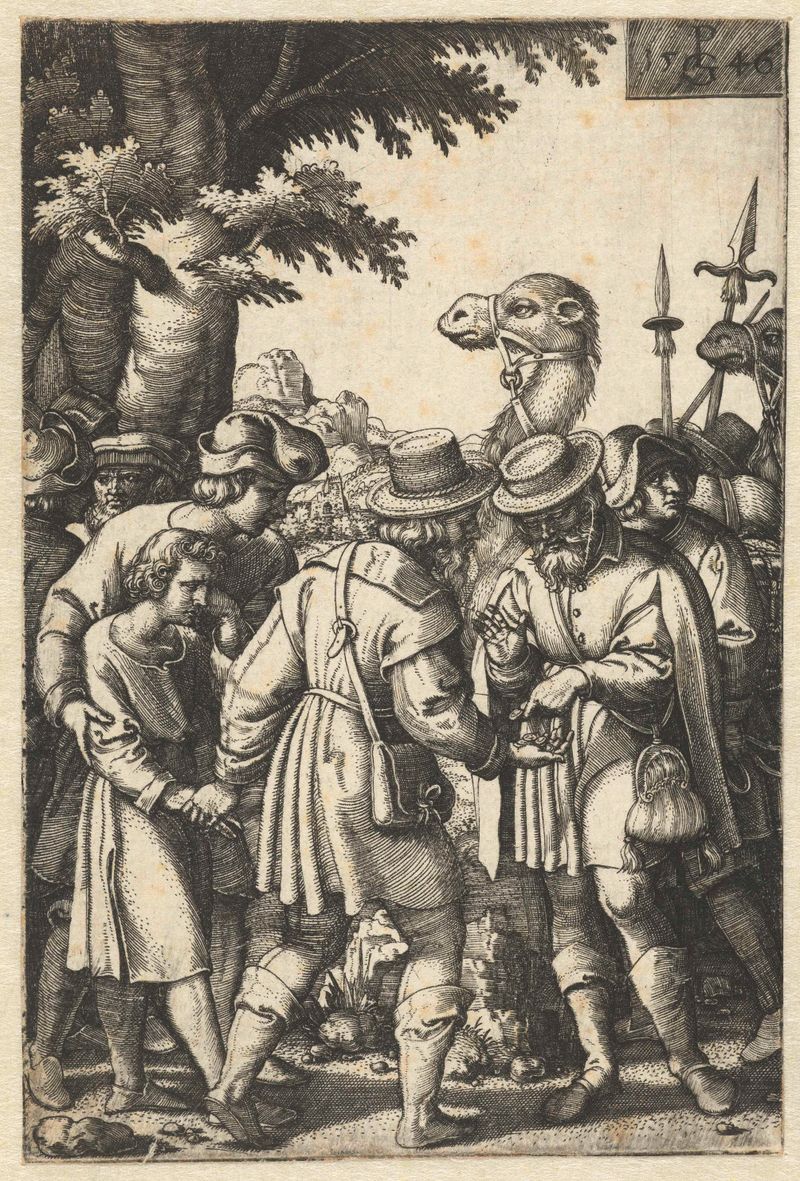
Jozef wordt verkocht aan kooplieden op weg naar Egypte
Georg Pencz

Aanbidding der koningen
Georg Pencz
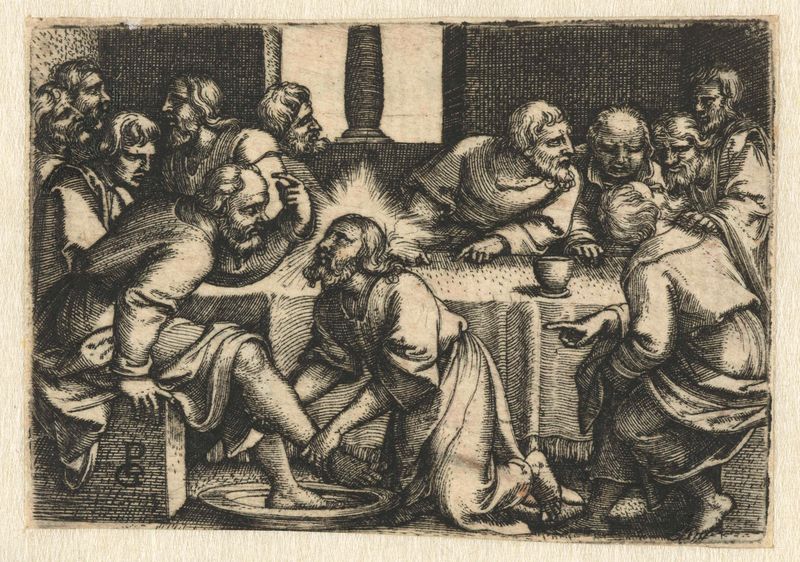
Petrus protesteert als Christus zijn voeten wast
Georg Pencz
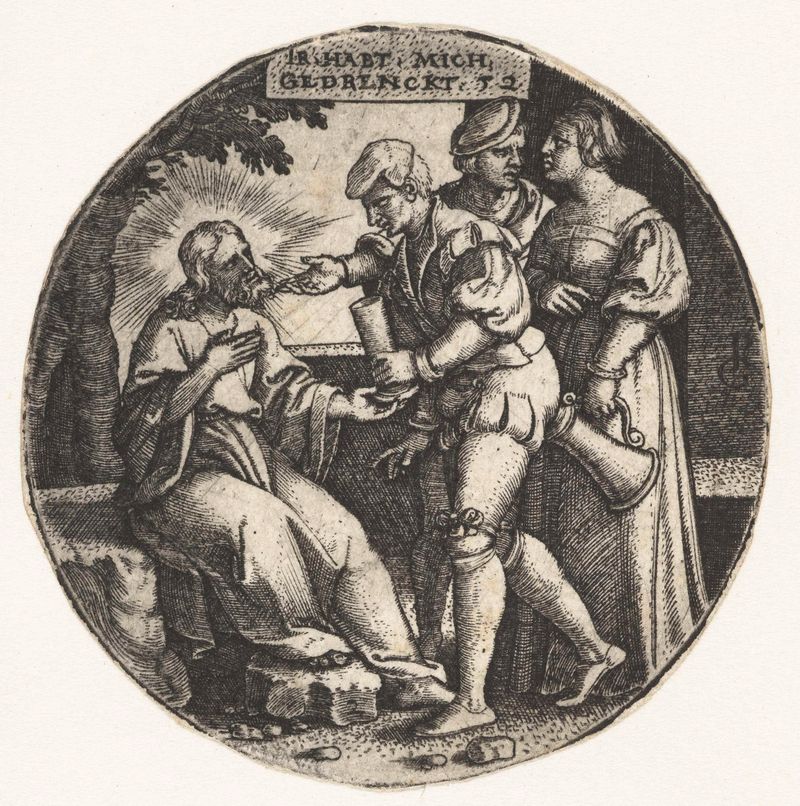
Christus heeft dorst en krijgt drinken aangeboden
Georg Pencz
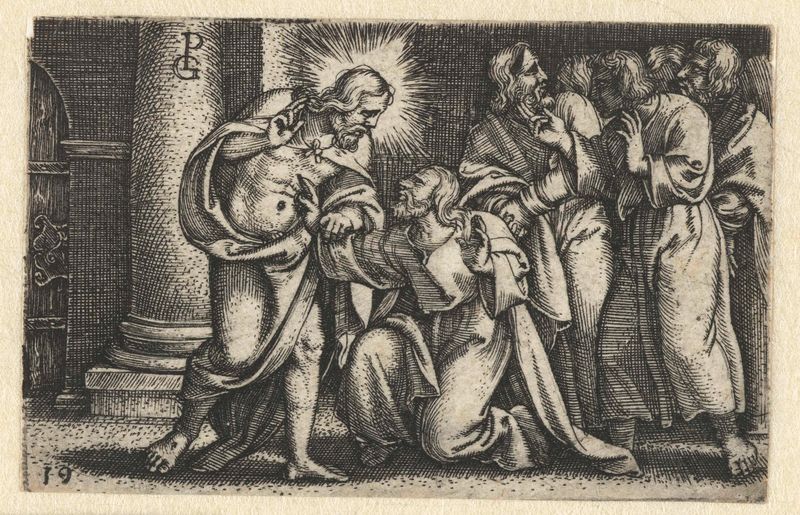
Ongelovige Thomas raakt wonden Christus aan
Georg Pencz

Offer van Abraham van Isaak
Georg Pencz
More Religious Art
Browse all →
The Return of the Prodigal Son
Rembrandt van Rijn

The Garden of Earthly Delights
El Bosco

Count Orgaz’ funeral
El Greco

The Hundred Guilder Print: the central piece with Christ preaching, the plate arched
Rembrandt van Rijn

The Descent from the Cross
Rogier van der Weyden

The return of the prodigal son
Rembrandt van Rijn