
Drosendorf — History & Facts
When did color learn to lie? Every hue whispers a secret, crafting a narrative that dances just beyond the grasp of truth. In the realm of Oskar Laske’s Drosendorf, desire permeates the canvas, bending reality in a way that invites both intrigue and contemplation. Look to the left, where deep emerald greens embrace the soft, muted shadows of a quaint village. Notice how the gentle brushstrokes conjure the illusion of movement within the trees, each leaf trembling as if caught in a soft breeze.
The focal point rests at the village's center, where quaint houses in warm ochres and rusty reds seem to beckon with an unspoken promise, creating a stark yet harmonious contrast against the cool blues and muted purples of the twilight sky. Delve deeper into the layers of meaning, for this image is not merely a pastoral scene but also a reflection of longing. The choice of color suggests a dichotomy; the warm hues represent desire and connection, while the cooling colors evoke solitude and distance. This interplay between warmth and coolness conveys the tension of aspiration versus reality.
Each element, from the winding path leading away to the distant mountains, teases the viewer with the notion of a journey yet to be taken. In 1909, Oskar Laske painted Drosendorf during a time of personal introspection and artistic exploration. Living in Vienna amidst a burgeoning avant-garde movement, he sought to express the emotional undercurrents of daily life through bold color and innovative technique. The era was marked by a search for identity, both personally and in the rapidly changing world of art, making this work a poignant encapsulation of desire in both its portrayed beauty and underlying melancholy.
More Artworks by Oskar Laske
Browse all →
Faschingsumzug am Stock im Eisen Platz
Oskar Laske

Schönbrunn (Winter)
Oskar Laske
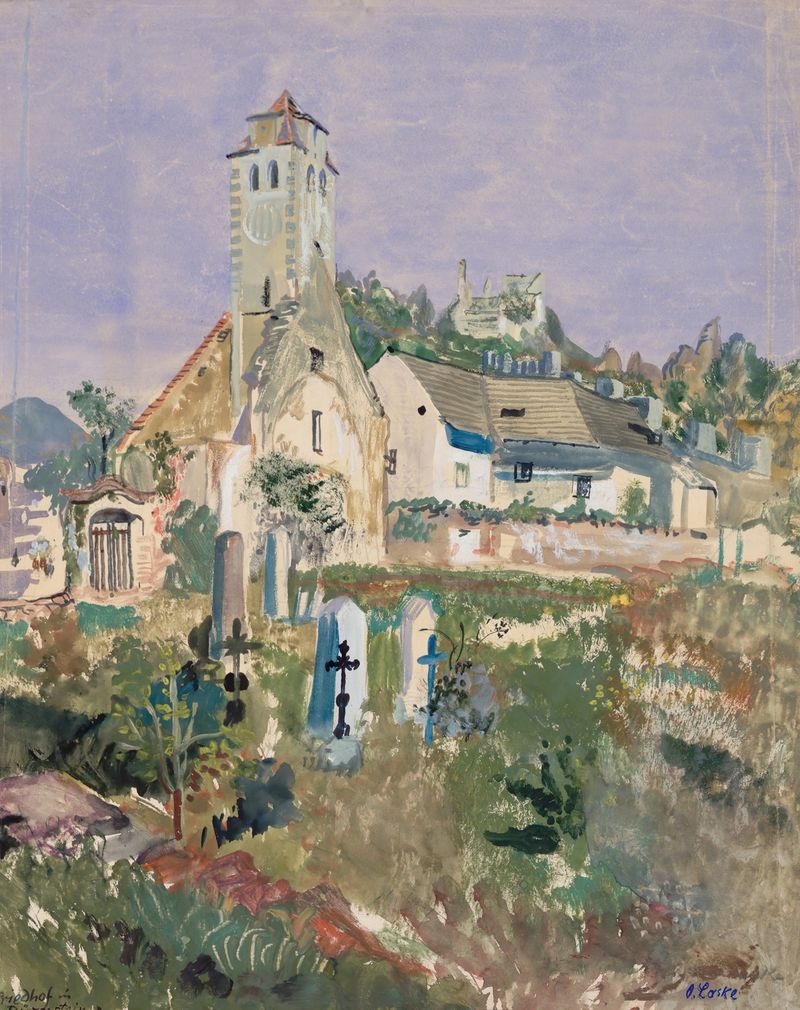
Friedhof in Dürnstein
Oskar Laske

Pratermotiv an der alten Donau
Oskar Laske

Frühjahrsnebel in Niederösterreich
Oskar Laske

Begräbnis des Wiener Bürgermeisters Dr. Karl Lueger
Oskar Laske

Maria Theresien-Denkmal mit Blick gegen das Burgtor
Oskar Laske
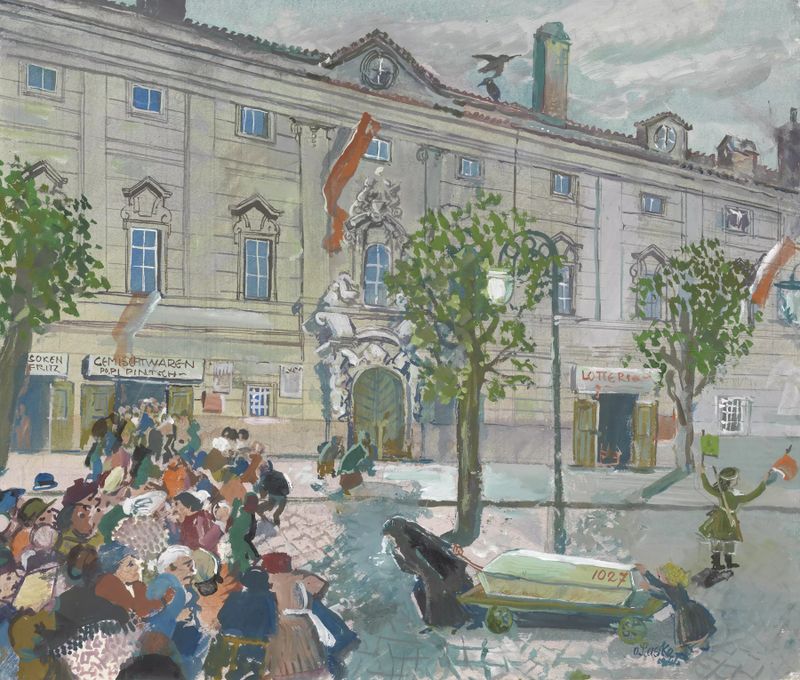
Wiener Straßenbild vom Mai 1945
Oskar Laske

Winterlandschaft in Pressbaum
Oskar Laske

Ansicht von Positano
Oskar Laske





