Dubrovnik bei Mondlicht — History & Facts
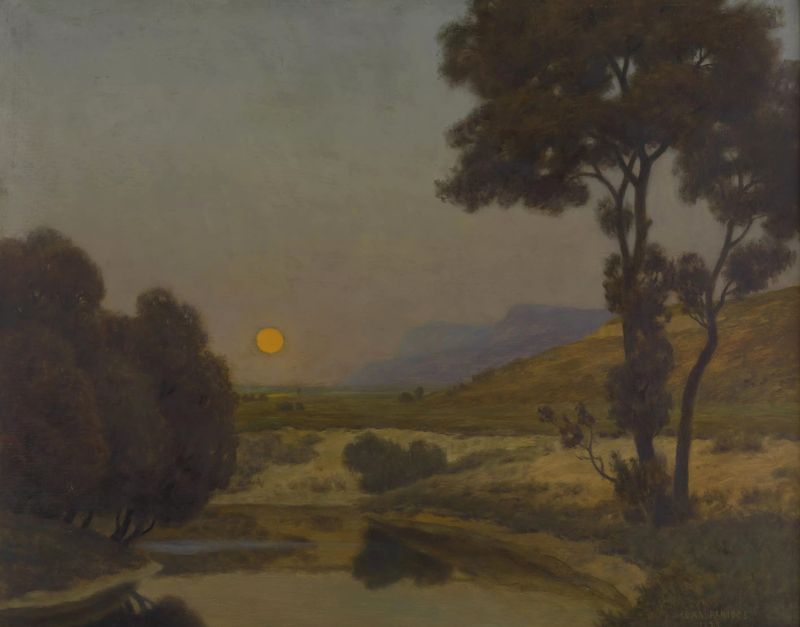
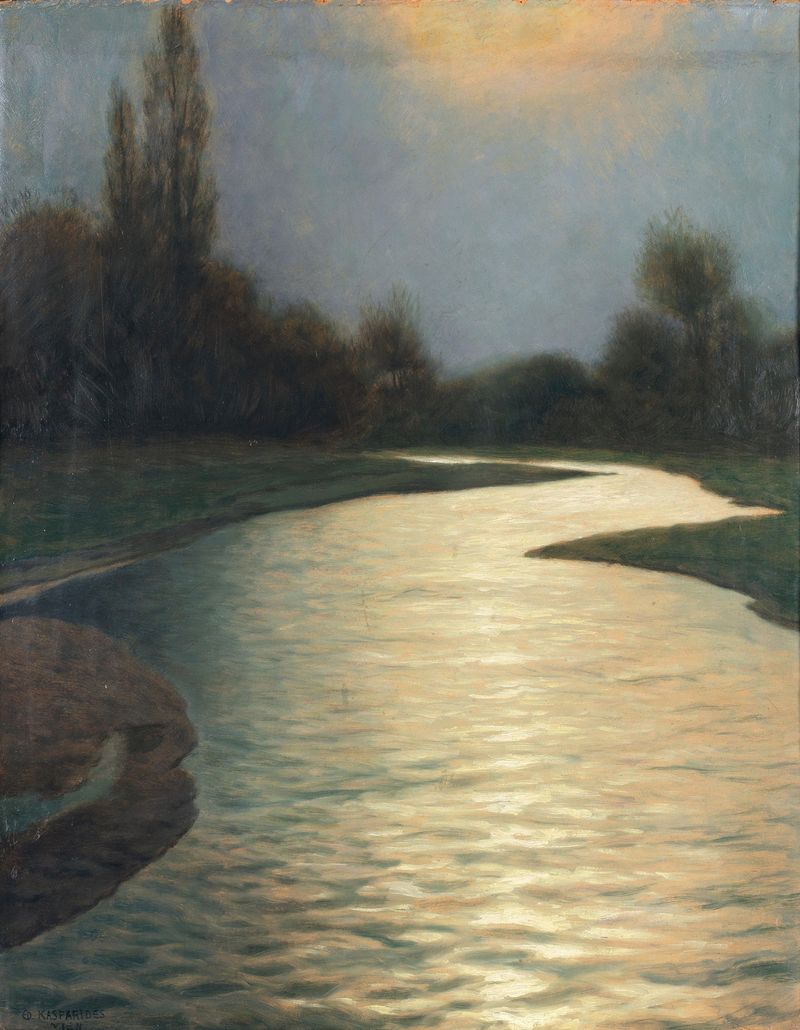
Could beauty survive in a century of chaos? In Dubrovnik bei Mondlicht, the delicate interplay of light and shadow suggests a poignant fragility, inviting viewers to contemplate the transient nature of splendor amid turmoil. Look to the bottom left, where the gentle lapping of the water reflects the moon's silvery glow. Notice how the artist has captured the historic architecture bathed in soft luminescence, with intricate stone facades softly illuminated against the night sky. The deep blues and muted grays harmoniously contrast with the bright highlights, crafting an ethereal atmosphere that feels both serene and haunting. The painting evokes a profound sense of nostalgia, drawing attention to the stillness that envelops the city.
This tranquility stands in stark contrast to the chaotic world outside the canvas, hinting at the fragility of peace during a time of conflict. The moonlight serves as a metaphor for hope, illuminating the beauty of a place steeped in history, even as it teeters on the brink of upheaval. Eduard Kasparides painted this piece in 1915 while living in Vienna, a city vibrant with artistic innovation yet overshadowed by the gathering storm of World War I. At this time, European art was undergoing significant transitions, with movements like Expressionism gaining traction.
The artist, influenced by both his surroundings and the tumult of the era, sought to capture the essence of Dubrovnik, a city symbolizing resilience against the backdrop of societal unrest.