Flußlauf im Vollmondlicht — History & Facts
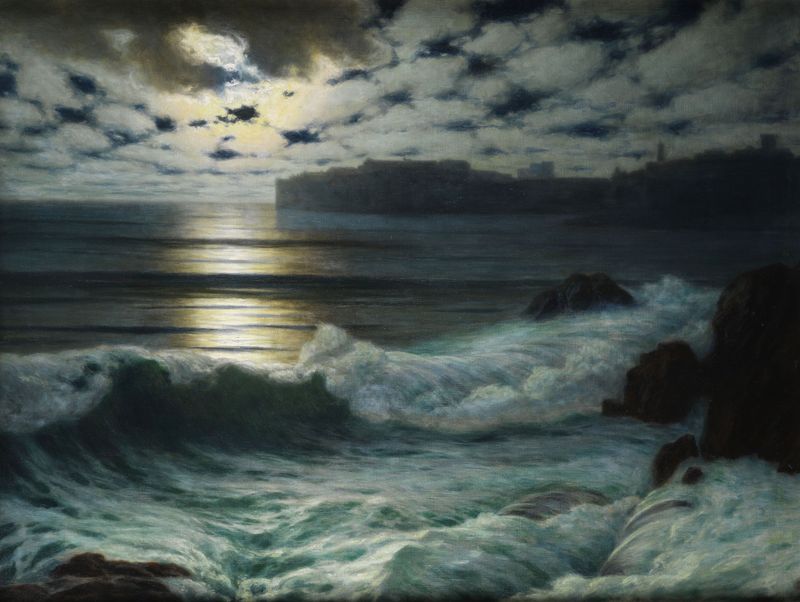
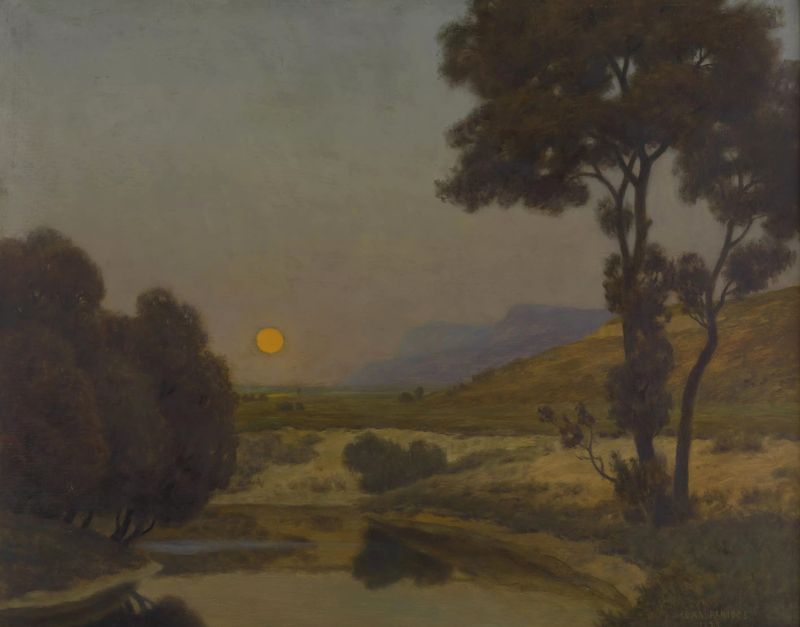
What if silence could speak through light? In the stillness of night, the moon’s luminescence dances across the flowing waters, whispering secrets of tranquility and wonder. Focus on the shimmering surface of the river, where the moonlight weaves a silver path through the depths. Notice how the brushstrokes capture the gentle ripples, each reflecting a spectrum of soft blues and silvers that evoke a sense of serenity. The delicate balance between shadow and light guides your eyes to the tranquil banks, where silhouettes of trees stand like guardians of the night, their forms intertwined with the quiet vibrancy of nature. Beneath this serene surface lies a richer tapestry of emotions.
The contrast between the luminous moon and the dark waters highlights the duality of night: calmness juxtaposed with the unknown. There’s an awe-inspiring stillness that invites contemplation, as the viewer perceives both the beauty of nature and the subtle, haunting reminder of its mysteries. The painting evokes a feeling of connection to something greater, urging the audience to lose themselves in the profound stillness of night, where every glimmer of light carries the weight of silence. Eduard Kasparides created this work during a time of introspection and artistic exploration, likely in the late 19th or early 20th century.
Living in an era teeming with artistic fervor, he was influenced by the Romantic movement’s emphasis on nature and emotion. This period saw artists turning their eyes towards the sublime, and in his own way, Kasparides embraced this ethos, capturing the serene beauty of night in a manner that spoke to the deeper human experience.