Glühwolken (Pratermotiv) — History & Facts
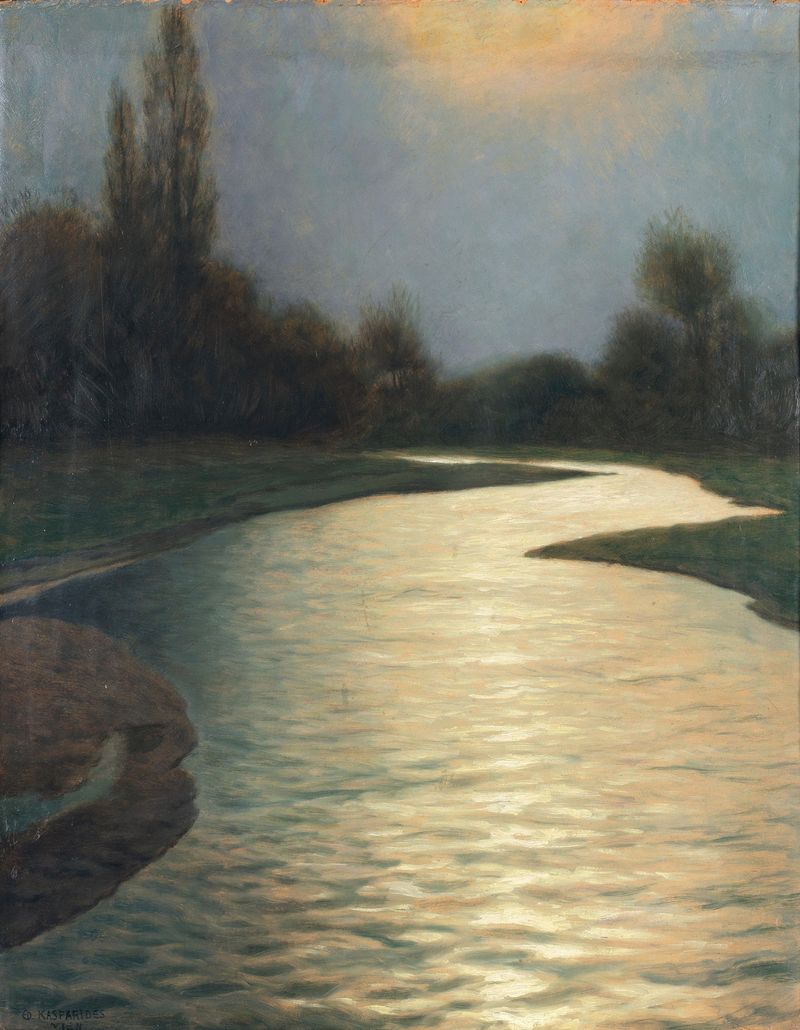
Is this a mirror — or a memory? In Glühwolken (Pratermotiv), the boundaries between reflection and nostalgia blur, inviting viewers to ponder the essence of their own experiences amidst the chaos of life. Look to the center where vibrant clouds pulse with hues of orange and pink, swirling like embers caught in a gentle breeze. Notice how the soft layers of paint create a sense of depth, inviting you to gaze deeper into the atmospheric expanse. The gentle brushstrokes and the interplay of light illuminate the dusky landscape, where the silhouettes of trees stand as quiet witnesses to the unfolding moment.
The composition balances turmoil and tranquility, suggesting a story that is both personal and universal. Within the swirling colors lies a tension between the fleeting and the eternal. The bright, glowing clouds evoke hope and possibility, while the darkened fringes hint at a looming change— a revolution not only in society but within the soul itself. As you study the delicate contrasts, you sense an emotional pull, an invitation to explore the memories tied to these ephemeral forms, revealing the complex relationship between beauty and uncertainty. Eduard Kasparides created this evocative piece before 1901 during a time of great artistic exploration and social upheaval.
Living in Vienna, he was surrounded by the vibrant currents of the Secession movement, which sought to break from traditional norms and embrace new ideas in art. This period of transition inspired his work, as he captured the essence of a city on the brink of modernity—reflecting both the struggle for change and the beauty that emerges from it.