Mondaufgang — History & Facts
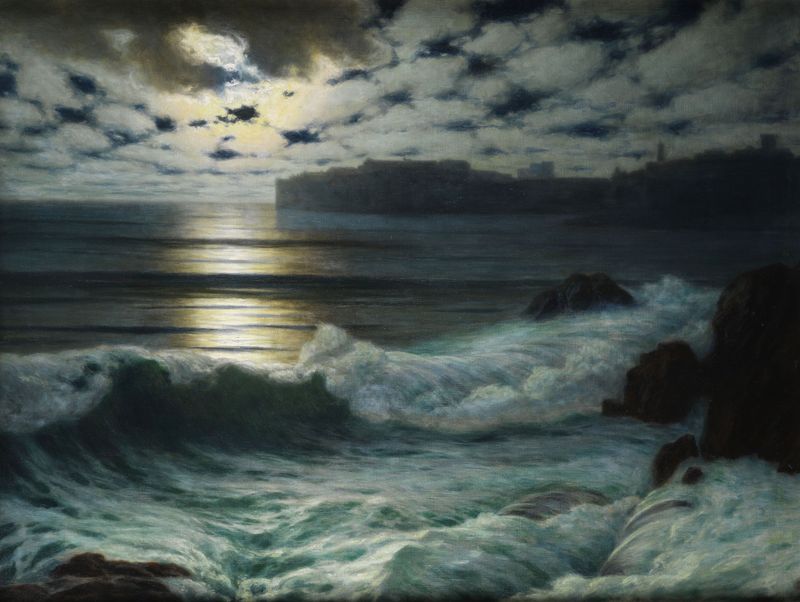
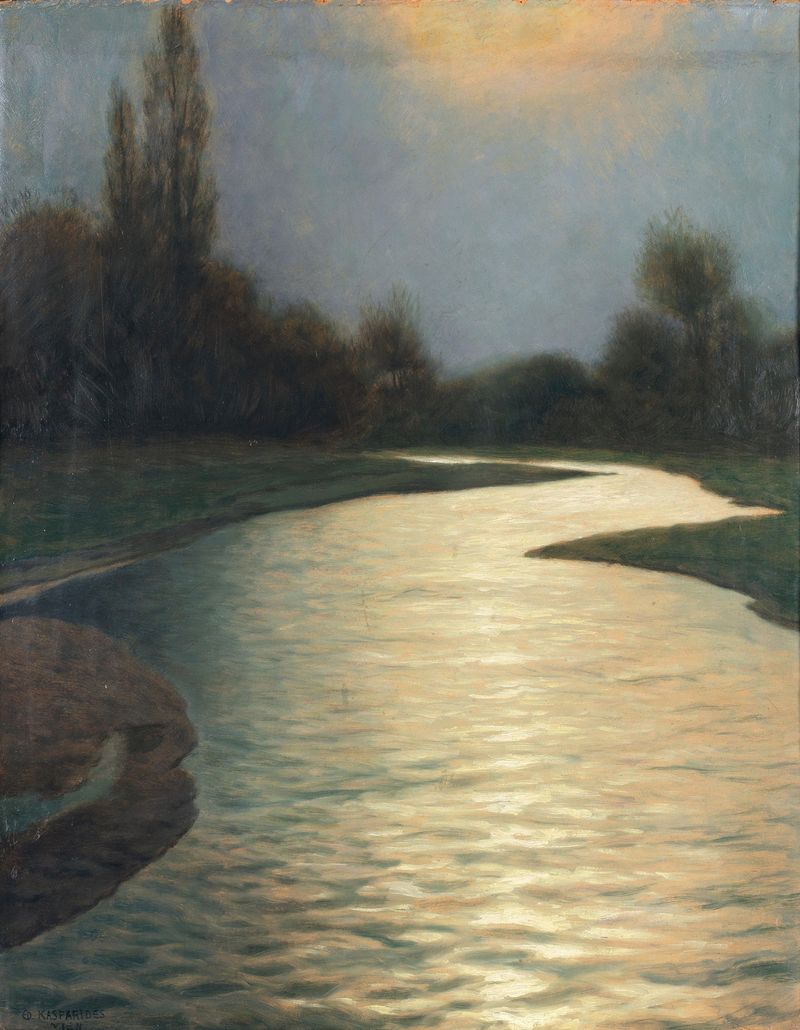
What if beauty was never meant to be finished? In Mondaufgang, the canvas vibrates with a sense of incomplete allure, inviting viewers to ponder the limits of creation and perception. Look to the horizon first, where a luminous moon begins its ascension, casting an ethereal glow across the landscape. The interplay of soft blues and muted greens forms a tranquil backdrop, while touches of silver highlight the moon’s surface, beckoning the eye to wander across the painting. The brushwork is delicate yet purposeful, creating a dreamlike quality that blurs the lines between reality and imagination. As your gaze roams deeper into the piece, notice the subtle contrasts between the serene sky and the rugged terrain below.
The juxtaposition of the celestial and the earthly evokes a tension between aspiration and grounding. Each stroke whispers of motion, suggesting that the night is still young, awakening a sense of wonder and anticipation for what lies ahead, while silence holds its breath in awe of the unfolding spectacle. Eduard Kasparides created Mondaufgang in 1923 during a period marked by a burgeoning interest in the interplay of natural forms and the cosmos. At this time, he was immersed in the vibrant art scene of post-World War I Europe, exploring themes of beauty and transcendence in a world grappling with uncertainty.
This work embodies both the hope and melancholy of its era, reflecting a yearning for connection with the sublime.